Barcelona Neighbourhood Safety Guide for Visitors
A Barcelona city break can move quickly: the airport transfer, a late tapas booking, an unfamiliar Metro exit and a busy street between sights. This Barcelona neighbourhood safety guide helps you make the decisions that matter before you book. Barcelona is generally straightforward for visitors who use normal city awareness, but opportunistic theft is a real consideration in crowded visitor areas and on public transport.
The practical aim is not to avoid whole districts. It is to choose accommodation that suits your plans, reduce the chances of a bag or phone theft, and know how to get back after dinner without unnecessary stress.
Barcelona neighbourhood safety guide: where to stay
For many first-time visitors, Eixample is the easiest all-round choice. Its grid layout is simple to navigate, streets are comparatively wide and well lit, and it puts major sights, shops and transport connections within easy reach. It is particularly useful for couples, families and travellers arriving for a short break who value convenience over a characterful old-town setting. As in any central area, keep an eye on belongings around busy junctions, major attractions and Metro stations.
Gràcia feels more residential, with smaller squares, local cafés and a calmer pace in the daytime. It suits travellers who would rather return to a neighbourhood atmosphere than a tourist-heavy street. It is well connected, although some accommodation is farther from the waterfront and Gothic Quarter, so check the nearest Metro station before booking. Walking back late is usually manageable on active streets, but use a taxi or ride-hailing service if your route is unfamiliar or very quiet.
Poblenou is a sensible option for travellers who want beach access without staying in the busiest waterfront zone. It has a more open, less congested feel than the old city and works well for families, remote workers and anyone planning a slower stay. The trade-off is journey time: you may rely more on the Metro, tram or taxis for evening plans in the centre.
Sants is often good value and highly practical, especially if you are arriving by train or taking day trips. It is a working, well-connected part of the city rather than a sightseeing base, but that can mean lower accommodation costs and less late-night noise. Choose a property close to a station or on an established route, rather than booking purely because a room looks cheap on a map.
Old-city areas need more attention, not avoidance
The Gothic Quarter is central, atmospheric and packed with restaurants and landmarks. Its narrow lanes can also be crowded, confusing and noisy late at night. It can work well if you want to step outside into the historic centre, but check recent property details for street noise, stairs, lift access and the exact entrance location. Keep your phone away when stopping to look at maps and avoid leaving bags on the backs of chairs at busy terraces.
El Raval has excellent food, culture and a central location, but its experience can change from one street to the next. Some visitors enjoy its energy; others prefer a quieter base. If you book here, favour a well-reviewed property on or close to a main street, arrive in daylight if possible, and use direct routes after dark. This is a booking decision based on your comfort level and itinerary, not a reason to write off an entire neighbourhood.
Barceloneta is convenient for the beach and seafood restaurants, though it is busy in summer and can feel more hectic at night. Beachfront crowds create easy opportunities for theft when people are distracted by swimming, cycling or watching their belongings from a distance. Stay here for the sea and late evenings by the coast, but do not assume a beach area requires less care than the city centre.
The main risk: distraction theft
Visitors are far more likely to encounter pickpocketing or bag theft than serious violent crime. The usual setting is not a deserted street. It is a crowded Metro carriage, a queue, a popular market, a café terrace or a packed street near a major attraction.
Carry only what you need for the day. A zipped cross-body bag worn in front is more useful than an open tote, and a phone on a wrist strap or kept in a secure pocket is less tempting than one held loosely near the kerb. Keep a separate payment card and a little emergency cash at your accommodation, rather than storing every bank card and document in one wallet.
Be alert to distractions. Someone may ask you to sign a petition, point out a supposed mark on your clothing, press close while boarding a train or create a minor commotion. A polite but firm “no, thank you” while continuing to walk is enough. Do not place a phone, wallet or room key on a café table, even briefly.
At the beach, take as little as possible and never leave valuables in a bag while you swim. If you are travelling as a group, take turns in the water or use a waterproof pouch for essentials. A refillable bottle is useful in the heat, but label it or keep it with you rather than leaving it beside a bag.
Getting around after dark
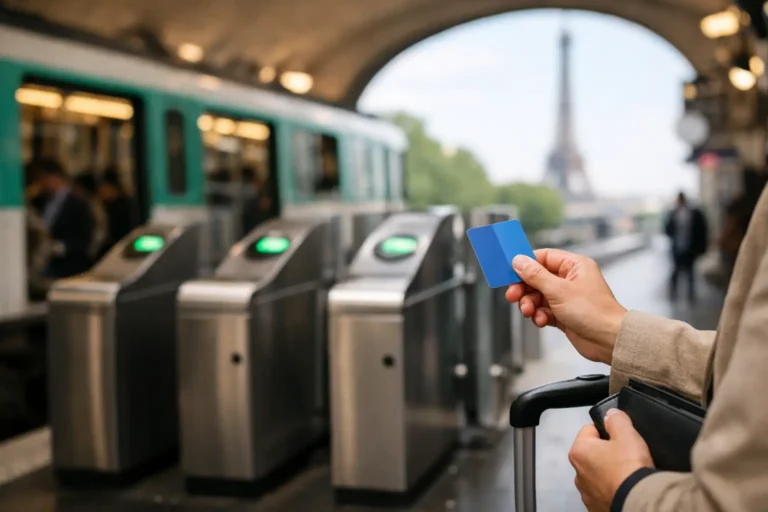
Barcelona’s Metro is efficient and usually the best way to cover longer distances during the day and early evening. Keep bags closed as you enter and leave carriages, particularly on busy lines and at interchanges. Stand clear of the doors with your belongings in front of you, rather than wearing a rucksack on your back.
For a late return, choose the option that matches the route and the group. A direct taxi can be worth the extra cost after a meal or event, particularly for families, solo travellers or anyone returning to a less familiar street. Use official taxi ranks where available and check that the meter is running. If using a ride-hailing app, confirm the vehicle registration before getting in and wait inside a venue or in a visible, active place.
Walking is often pleasant between central neighbourhoods, but avoid relying on a poorly lit shortcut simply because it saves five minutes. Use your map before setting off, keep one ear free of headphones and stay on streets with people, shops or passing traffic. If something feels off, enter a hotel, café or other open business and reassess your route.
Arrival and accommodation checks that prevent problems
Most safety planning is done before you leave home. Book accommodation with a clear address, recent guest feedback and an arrival process that does not leave you waiting outside with luggage late at night. If a self-check-in property sends instructions only on the day, download them while you have Wi-Fi and save the host contact details offline.
From the airport, decide your transfer before landing. Public transport is cost-effective for light packers arriving at a convenient time, while a pre-booked transfer or taxi may be better after a late flight, with children or if your accommodation is outside the central core. Avoid anyone offering unofficial transport inside or outside the terminal.
Make digital copies of your passport, travel insurance and booking confirmations, but protect them with a screen lock. Tell your bank you are travelling if required, enable transaction alerts and keep the number to freeze your cards somewhere separate from the cards themselves. These small steps turn an annoying loss into a manageable admin task.
If your phone, wallet or passport is stolen
Move to a safe, public place first. Freeze cards through your banking app or by phone, then report the theft to the police as soon as practical. A report can support an insurance claim, although it does not guarantee recovery. If your passport has gone, contact the relevant consular service for replacement guidance and allow extra time for your onward travel plans.
Call 112 for urgent emergencies. It is the general emergency number in Spain and can connect you to police, ambulance or fire services. For a non-urgent theft, focus on cancelling cards, securing accounts and obtaining the documentation your insurer requires. Do not chase a thief or put yourself at risk to retrieve an item.
A safer, lower-waste way to carry a day bag
A light, organised bag is safer as well as more practical. Carry a refillable water bottle, a small power bank, sunscreen, one payment method and a compact layer for air-conditioned transport or later evenings. Buying fewer disposable drinks and carrying less clutter means you spend less time rummaging through an open bag in crowded places.
Set a meeting point if your group separates, especially around busy sights or the beach. Families may also find it useful to give older children a written accommodation address and an agreed contact number. It is simple preparation, but it makes a lost phone or missed Metro stop far less disruptive.
Book the area that fits how you want to use Barcelona, then give yourself a sensible margin of safety through good routines. A central hotel near transport, a secure bag and a planned route home will do more for your confidence than trying to find a supposedly risk-free district.