Carry-On Only Family Packing for Easier Flights
A family can lose half an hour at baggage reclaim, then face a wait for a delayed case that contains the only spare shoes or a child’s bedtime comforter. Carry-on only family packing removes that risk, but it works only when you plan around the airline’s actual allowance rather than trying to squeeze your usual suitcase into smaller bags.
For a city break or a week in a warm European resort, travelling with cabin baggage can save money, simplify airport transfers and make public transport far more manageable. The trade-off is clear: every item needs a job, laundry may be part of the plan, and bulky “just in case” packing has to go. For most families, that is a fair exchange for arriving ready to start the holiday.
Carry-on only family packing starts when you book
Do not leave baggage rules until the night before departure. Low-cost fares may include only one small bag that fits beneath the seat, while other tickets include a larger cabin case. Dimensions, weight limits and whether children receive the same allowance vary by airline and fare type. Check the outbound and return flights separately, particularly if you have booked different carriers.
Add up the allowance for the whole family, then decide who carries what. An adult can usually manage a cabin case and a small personal bag; a school-age child may be comfortable with a light backpack, but should not be expected to haul a wheeled case across a long terminal. Toddlers need an adult to carry their essentials, so their ticketed baggage allowance is helpful only if it fits your wider plan.
Choose bags before choosing clothes. Soft backpacks are easier on trains, stairs and cobbled streets, while compact four-wheel cases suit families using taxis and staying in one hotel. A mix is often best: one or two cabin cases for shared clothing, plus daypacks containing items needed during the journey.
It is worth measuring packed bags at home, including wheels, handles and stuffed outer pockets. A bag that is technically cabin-sized when empty can fail at the gate once it has expanded.
Build a small wardrobe, not an outfit for every day
The most common packing mistake is assigning a fresh outfit to each day. Instead, pack clothes that can be worn in several combinations and repeated without fuss. Neutral trousers or shorts, two or three tops per person, one warmer layer and one weather layer will cover most short breaks. For a seven-night holiday, the same approach still works if your accommodation has a sink, drying space or laundry service.
Start with the forecast, but pack for the destination’s normal conditions rather than chasing hourly predictions. A Mediterranean resort may be hot in the afternoon but cool after sunset. European capitals can involve more walking and more sudden rain than families expect. One lightweight jumper and a foldable waterproof are usually more useful than a second smart outfit.
Shoes consume space quickly. Wear the bulkiest pair for travel and limit packed footwear to one genuinely necessary alternative. For many trips, that means trainers plus sandals, or walking shoes plus a lighter pair for evenings. If a child needs special footwear for an activity, decide whether that activity is valuable enough to justify the volume.
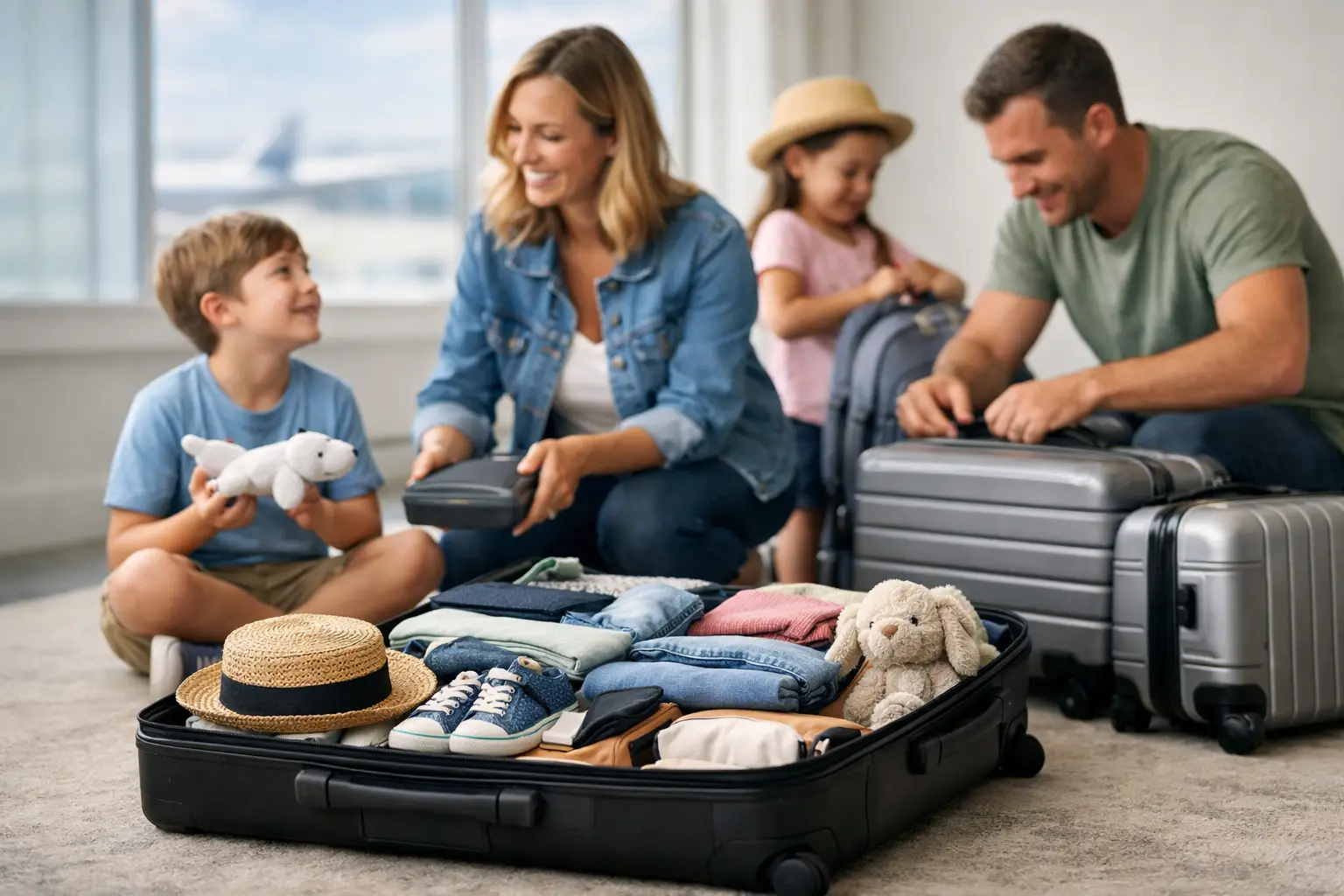
Roll softer clothes if it helps you see what you have, but do not treat rolling as a solution to overpacking. Packing cubes can keep each person’s items separate in a shared case, making hotel changes and security checks less chaotic. They do not create extra allowance.
Use a shared-kit approach
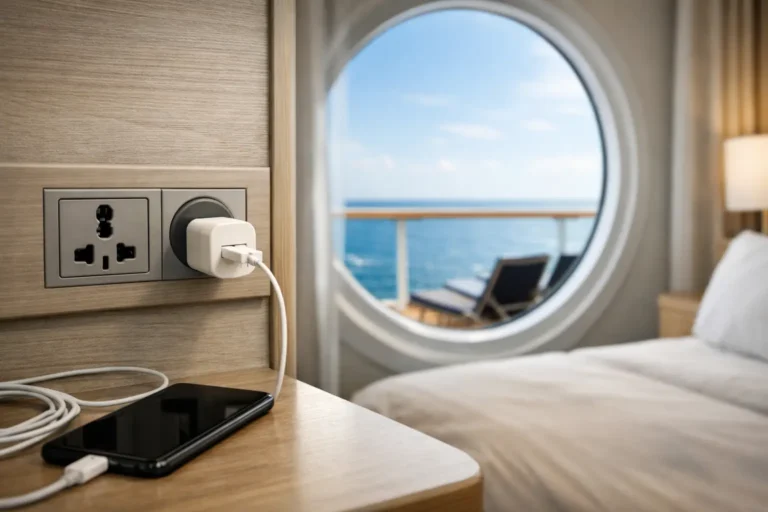
Families carry less when items are shared deliberately. One charging plug with several ports, one compact first-aid kit, one sun cream bottle where permitted, and one set of washing supplies can serve everyone. Give each person a named packing cube or bag section so shared luggage does not mean daily rummaging.
Avoid duplicating toiletries and entertainment without checking whether it is useful. Two children may each want a water bottle and a book, but a full set of games, colouring supplies and soft toys for every child can quickly overwhelm a daypack. Let each child choose one comfort item and one journey activity within a set space limit.
Liquids, medicines and food need their own plan
Airport liquid rules can change, so check the departure airport’s current guidance as well as the airline’s policy. The familiar small-container restrictions still apply at many airports. Keep permitted liquids in an accessible clear bag, rather than burying them among clothing, and remember that sun cream, toothpaste, gels and yoghurt-style snacks may count as liquids.
Buy larger toiletries after security or at your destination when it makes financial sense. Refillable bottles reduce waste and are practical for shampoo, moisturiser and children’s wash products, but label them clearly. An unidentified bottle is not helpful when you are trying to get everyone ready before breakfast.
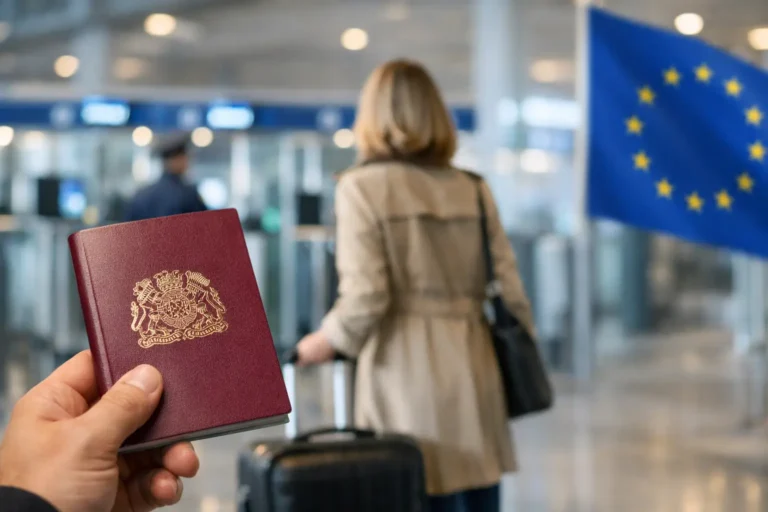
Prescription medicine should travel in an adult’s personal bag, not in a shared cabin case that may be separated from you. Bring enough for the trip plus a small buffer for disruption, and keep medication in its original packaging where possible. If you carry liquid medicine, medical equipment or food for a baby, check the relevant rules before travelling and allow extra time at security.
A few familiar snacks can prevent an expensive airport purchase or an avoidable queue, especially with young children. Keep them simple and non-messy. Once you arrive, use a refillable bottle and local food shops rather than relying on individually wrapped drinks and snacks throughout the holiday.
The carry-on only family packing list that earns its space
Before packing, place every proposed item into one of four groups: worn in transit, essential for the first 24 hours, shared family kit, or optional. The optional group is where most excess weight sits. If it is not needed for the journey, a planned activity or a realistic change in weather, leave it at home.
Your essential first-24-hours bag should stay with an adult and include travel documents, payment cards, phones, chargers, medication, a compact wash kit, wipes, snacks and a spare layer for each child. Add a change of clothes for younger children if needed. This is not because cabin baggage is likely to go missing, but because easy access matters when there is a delay, spill or long transfer.
For the main clothing bags, use this practical baseline and adjust for age, climate and trip length:
- Two bottoms and three to five tops per person, with one warmer layer and sleepwear.
- Underwear and socks for the trip, plus a small number of spares for younger children.
- One swimsuit and a lightweight towel only if your accommodation does not provide towels.
- One weather layer, one packed shoe alternative at most, and any genuinely required activity gear.
Do a final weight test. Adults should be able to lift their own bags into an overhead locker without straining, and children should be able to carry their own backpack comfortably for ten minutes. If not, remove items before you leave home rather than redistributing them at the airport.
Plan the holiday around lighter luggage
Carry-on travel is easiest when the itinerary supports it. Book accommodation that is straightforward to reach by public transport or taxi, rather than requiring a long walk with bags. Confirm whether there is a lift if you are staying above ground level, and check laundry facilities for longer breaks.
Arriving before check-in is another practical issue. A hotel luggage room can make a cabin-only trip feel effortless; without one, a family may spend the first afternoon managing bags instead of exploring. The same applies on departure day, when a late flight can make baggage storage more valuable than a slightly larger room.
There are occasions when checked luggage is the sensible choice. Ski equipment, a camping holiday, medical supplies, formal events and very young children with essential specialist gear can make cabin-only travel unrealistic. The aim is not to travel with the fewest possible items. It is to carry what your family can manage confidently, without paying for space you do not need.
Pack once, take a short walk with the bags, and make the cuts while you are still at home. The reward is a calmer airport, simpler transfers and more attention for the part of the trip your family will actually remember.