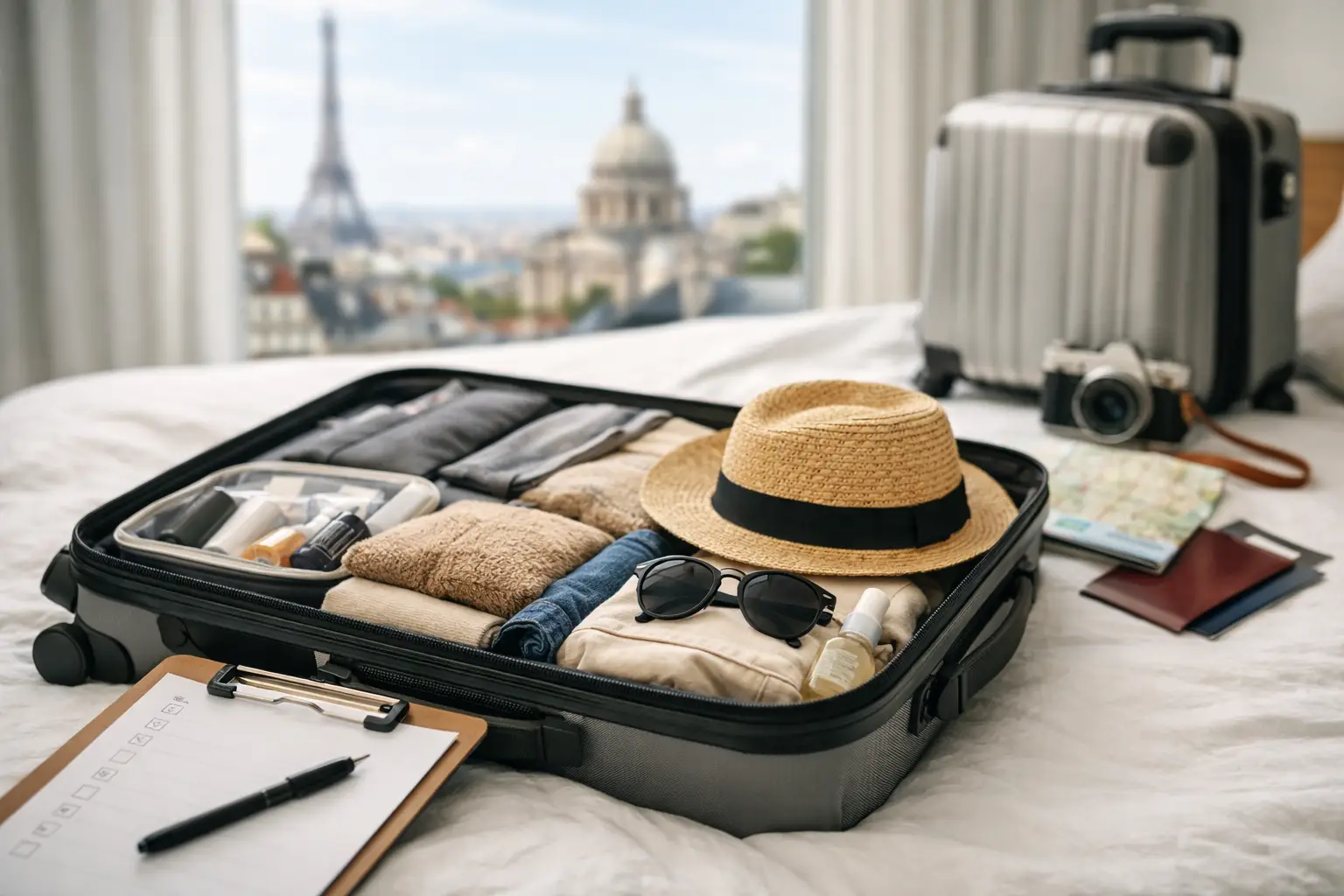
Carry-On Packing Checklist for Europe Trips
Affiliate disclosure: This article contains affiliate links. If you click through and make a purchase, Stafford Affiliates Travel may earn a commission at no extra cost to you.
That moment at the airport gate when staff start checking cabin bag sizes is exactly when a good carry on packing checklist Europe travellers can rely on stops being a nice idea and starts being genuinely useful. If you are flying from the UK for a city break, beach week or multi-stop rail trip, packing light can save money, time and hassle – but only if you pack with a plan.
Europe sounds simple because the flights are short and the destinations are familiar. In practice, it can be awkward to pack for. A few days in Paris need different clothes from a week on the Costa del Sol, and a spring trip that mixes flights, trains and cobbled streets puts pressure on every item in your bag. The aim is not to pack the least possible. The aim is to pack what you will actually use, while staying within airline rules and avoiding waste.
How to use a carry on packing checklist Europe travellers actually need
Start with your transport, not your destination photos. Cabin bag allowances vary far more than many travellers expect, especially on budget airlines. One airline may allow only a small underseat bag on the basic fare, while another includes a larger cabin case. Before you put anything in your suitcase, check the exact measurements and weight allowance on your booking.
This matters because the right packing list depends on the bag you are allowed to take. A four-day trip with a proper cabin case is one thing. The same trip with only a small personal item is another. If you get this wrong, the rest of the checklist falls apart.
Next, look at the shape of your trip. Ask three simple questions. Will you have access to laundry, even a sink wash? Are you changing hotels often? Will the weather vary a lot between stops? Those answers decide whether you can rewear clothes, whether bulky items are worth it, and how strict you need to be.
The essentials to pack first
Begin with documents, money and your phone setup, because these are the hardest items to replace quickly when you are already abroad. Your passport is obvious, but also check whether you need travel insurance details, boarding passes, train tickets, accommodation confirmations and any attraction bookings stored offline as well as online. If your battery dies or signal drops, screenshots are often more useful than an inbox full of confirmation emails.
Take one payment card you plan to use and one back-up kept separately. A small amount of local cash can still help for public toilets, market stalls or smaller cafés, though you rarely need much in most major European destinations. If you use an eSIM or data package, set it up before you travel rather than trying to sort it out in arrivals.
Medication should always go in your carry on bag, even if you normally travel with checked luggage. Include prescriptions if needed, along with a few basic painkillers, plasters and anything you know you regularly use. Keep this practical. You do not need to carry a mini chemist.
Clothes: pack for a week, even if you are away for longer
The most useful rule for a carry on packing checklist Europe holidays require is to pack enough outfits for around five to seven days max, then plan to rewear or wash. For most trips, that means wearing your bulkiest items in transit and packing lighter layers you can combine in different ways.
A sensible base is tops you can rotate, bottoms that work with all of them, underwear and socks for the number of days you are away if space allows, and one sleepwear set. If your trip is longer, wash items rather than doubling the wardrobe. Fabrics matter here. Quick-drying layers are far more useful than heavy cotton that stays damp overnight.
Shoes are where many cabin-only plans go wrong. Take one comfortable pair for travel and daily walking, then only add a second pair if there is a real purpose for it. Sandals for a beach destination make sense. Extra trainers “just in case” usually do not.
Weather layers deserve more thought than extra outfits. A lightweight waterproof, a thin jumper or cardigan, and perhaps a scarf can solve far more problems than another change of clothes. Even in summer, air-conditioned transport, late evenings and sudden rain can catch you out.
Toiletries without the usual waste
Toiletries need to match both airport security rules and the length of your trip. For hand luggage, liquids must fit within the current airport rules, so decanting into smaller reusable bottles is often the easiest option. This is also the lower-waste choice, especially for trips you take more than once a year.
Focus on what you use daily: toothbrush, toothpaste, deodorant, skincare, contact lens supplies if needed, and any hair essentials you genuinely rely on. Hotel toiletries can fill some gaps, but depending on them completely is not ideal if you have sensitive skin or a tight arrival schedule.
Solid toiletries are worth considering if you travel often. Shampoo bars, soap bars and solid cleanser can reduce both plastic use and liquid-bag pressure. The trade-off is convenience. Some people love them; others find them messy if they do not dry properly between uses. A small soap tin or pouch helps.
Tech and travel admin
For most European trips, tech should stay simple. Your phone, charging cable, plug adaptor and a power bank will cover most needs. Add earbuds if you use them on flights or trains. A camera, tablet or laptop should only come if you know exactly why you need it.
Remember that every device creates extra admin: more charging, more cables, more risk of leaving something behind. If the trip is mainly sightseeing and meals out, your phone is usually enough. If you are travelling as a family, one shared charging set kept in the same pouch makes life easier.
A pen is still worth packing. It takes almost no space and is surprisingly useful for forms, luggage labels or jotting down directions.
Items that earn their place in a cabin bag
Some small items make travel noticeably smoother without taking up much room. A reusable water bottle is one of the best examples, especially once you are through security. A foldable tote is useful for snacks, laundry or market shopping. A small laundry bag keeps worn clothes separate from clean ones and makes repacking easier between stops.
If you are visiting churches, smarter restaurants or places with stricter dress expectations, one modest extra layer can be more useful than another casual top. Likewise, sunglasses and a compact umbrella depend entirely on season and destination, but either can save you from buying poor-quality replacements on arrival.
Neck pillows, large travel wallets and bulky “just in case” organisers are less clear-cut. They can be helpful, but they often use valuable space for little return on shorter flights within Europe.
What to leave out
The easiest way to pack better is to be honest about what you never use. Full-size toiletries, too many outfit changes, multiple jackets and spare shoes are the usual culprits. So are books you will not finish, makeup bags packed for every possible evening plan, and technology carried out of habit rather than need.
Food is another area where travellers often overpack. A snack for the journey is sensible. Half a day’s worth of provisions from home is usually not. Most European airports, stations and city centres make it easy to buy what you need once you arrive.
If you are taking a budget airline, do not gamble on squeezing an overfilled bag into the sizer. Soft bags can help, but only up to a point. Pack to the actual allowance, not to what you hope staff will ignore.
A realistic packing approach by trip type
For a two or three-night city break, keep things especially tight. One pair of comfortable shoes, one weather layer, compact toiletries and versatile clothes are enough. You are rarely away long enough to need duplicates of anything beyond underwear.
For a beach holiday, your list shifts slightly. Swimwear, sun protection and lighter clothes matter more than evening outfits. A thin long-sleeved layer is still worth bringing for airports, coaches or breezy evenings.
For a multi-city trip, organisation matters more than volume. Use packing cubes if they help you repack quickly, but do not treat them as a licence to carry more. The real benefit is being able to move between stops without emptying your whole bag every time.
At Stafford Affiliates Travel, the most useful packing advice is usually the least glamorous: choose a smaller wardrobe, better layers and fewer backups. That is what gets you through airports faster and onto trains, metro systems and hotel check-ins with less stress.
A good carry on bag should leave you with room to move, room to think and just enough spare space for the things that genuinely come back with you.