Do I Need an eSIM Abroad for My Holiday?
Landing in a new city with no map, no booking confirmation and no way to message your accommodation is a problem most travellers would rather avoid. So, do I need an eSIM abroad? For many UK holidaymakers, the answer is yes – but it is not automatic. The right choice depends on where you are going, how long you are away, how much mobile data you use and what your existing network charges.
An eSIM is often the simplest way to get mobile data outside the UK without relying on costly daily roaming passes or hunting down a physical SIM after arrival. It can be particularly useful for city breaks, multi-country European trips and holidays where you will use public transport, online tickets and mapping apps every day. However, travellers who only need occasional access to messages may be better served by their usual roaming allowance or carefully planned Wi-Fi use.
What an eSIM does on holiday
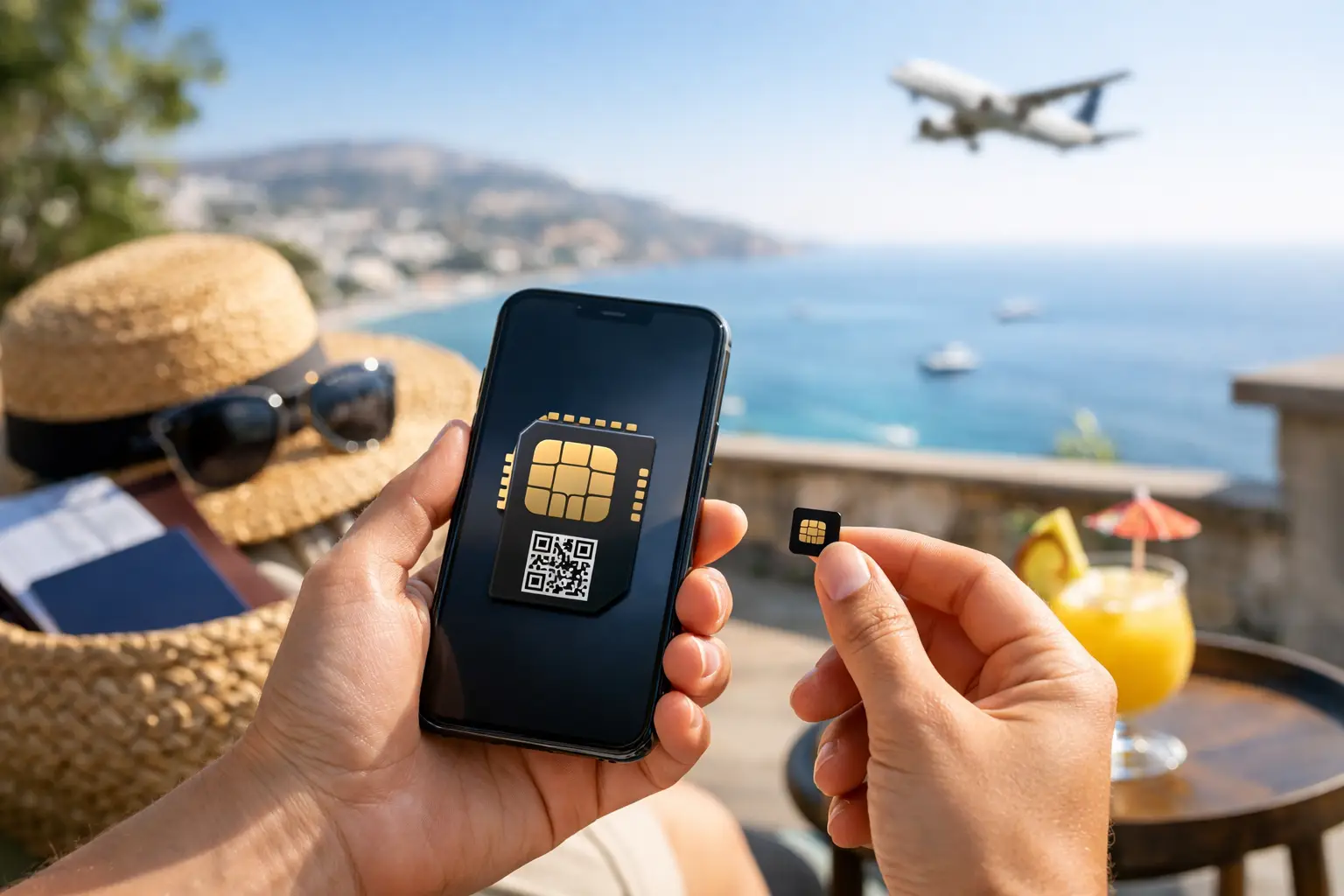
An eSIM is a digital SIM profile installed on a compatible phone. Instead of removing your normal SIM card, you download a travel data plan before you leave or once you arrive. Your phone can then use the eSIM for mobile data while keeping your regular UK number active for calls, texts and security codes.
That last point matters. Many travel eSIMs are data-only. You can still use WhatsApp, FaceTime, Messenger and similar services for calls and messages, but you will not usually receive a new local phone number. Keeping your normal SIM switched on for calls can also create roaming charges, so check your phone settings before departure.
For a weekend in Madrid, Rome or Amsterdam, an eSIM can mean you are connected as soon as the aircraft doors open. For a fortnight split between several countries, a regional eSIM may save the effort of buying and changing physical SIMs at each border. It also avoids the small but real risk of losing your usual SIM card while travelling.
Do I need an eSIM abroad if my network includes roaming?
Not necessarily. Start with your mobile contract, not an eSIM advert. Some UK providers include a limited amount of EU roaming, while others charge a daily fee or apply fair-use limits. Outside Europe, charges can rise sharply, particularly if you use maps, upload photos or allow apps to refresh in the background.
If your allowance covers your destination and you are away for only a few days, using your existing SIM may be the most convenient option. There is nothing else to set up, and you can make standard calls if needed. Just read the terms carefully. A plan that says it includes roaming may still have a daily data cap, restrictions on tethering or higher prices beyond a certain number of days.
An eSIM usually makes more sense when your network charges daily roaming fees, your trip covers more than one country, or you expect to use plenty of data. It can also be a sensible backup for travellers whose normal allowance is small. You do not need to choose one option permanently: keep your UK SIM for your number and use an eSIM only for data.
When an eSIM is worth paying for
An eSIM earns its place when it removes a likely travel headache. If you will navigate from the airport, use rail and bus apps, access attraction tickets, arrange taxis or stay in touch with family, mobile data is more than a convenience. It is part of the trip plan.
Families can benefit too. Giving one adult reliable data makes it easier to coordinate meeting points and check changes to opening hours or transport services. If several people need data, compare the cost of individual eSIMs with your network’s roaming options. Tethering one phone can work for short periods, but it drains battery life quickly and is not ideal when the group separates.
An eSIM is also useful when you arrive late. Airport mobile shops may be closed, queues can be long, and a physical SIM often requires you to find a shop before you can get online. Installing a plan while you still have home Wi-Fi means you can avoid that first-hour scramble.
There is a lower-waste benefit as well. A digital plan does not involve a plastic SIM card, packaging or a discarded card at the end of the trip. It is a small saving rather than a reason to buy one on its own, but it fits a more considered approach to travel.
When you probably do not need one
If you are staying at a resort, plan to use hotel Wi-Fi and only need data for the occasional message, an eSIM may be unnecessary. The same applies if your UK network provides genuinely good-value roaming for your destination and length of stay.
Be realistic about Wi-Fi, though. Hotel connections vary, public networks are not always dependable, and you may need data before check-in or after leaving your accommodation. Free Wi-Fi should be treated as useful extra access, not the only part of your connectivity plan, particularly on a self-guided city break.
A physical local SIM can still be better value for longer stays, heavy data users or travellers who need a local number for calls. This is more common on extended trips outside Europe. The trade-off is time: you may need to visit a shop, show identification and change SIM cards. Check whether your handset is unlocked before relying on this route.
How much data should you buy?
For a short break, 1GB to 3GB is often enough if you use hotel Wi-Fi, download maps in advance and avoid streaming video on mobile data. A week of regular maps, messages, ticket apps and light social media use is more comfortable with around 5GB. Consider 10GB or more if you plan to share photos frequently, tether another device or work while away.
Data use is not always obvious. Cloud photo backups, app updates, video autoplay and social media uploads can use far more than route planning. Before you travel, set photo uploads to Wi-Fi only, turn off automatic updates and download entertainment, translation packs and offline maps at home. These steps reduce costs regardless of whether you choose an eSIM, roaming or a local SIM.
Do not simply buy the largest plan because it feels safer. Unused data is wasted money. Choose a plan that allows a top-up if possible, then add more only if your usage shows you need it.
Check these points before buying an eSIM
Not every phone supports eSIMs, and compatibility differs by model and region. Check your handset settings or manufacturer information before paying for a plan. Your phone should also be unlocked if you intend to use a travel eSIM alongside another network.
Look beyond the headline data amount. Check the countries covered, the plan validity period, whether it uses 4G or 5G where available, and whether tethering is permitted. A Europe plan is not always valid in every European destination, while a plan described as regional may exclude places you are visiting.
Also check activation rules. Some plans start when you install them, while others begin only when the eSIM first connects to a network abroad. Installing a plan too early could waste valid days. Save the installation instructions somewhere accessible offline, including any QR code or activation details.
Set up your phone before leaving
Install the eSIM while connected to reliable Wi-Fi, but do not necessarily activate its data line until the provider instructions say to do so. Name the line clearly, such as “Travel Data”, so you do not accidentally use your UK SIM for data.
Then set mobile data to the eSIM and switch off data roaming on your UK line. In most cases, data roaming needs to be enabled on the travel eSIM for it to connect to partner networks abroad, but follow the plan provider’s instructions. Turn off mobile-data switching, too, if your phone offers it. This prevents the handset from quietly falling back to your more expensive UK connection.
Take a screenshot of your booking reference, accommodation address, onward transport details and eSIM instructions. A portable charger is equally practical: data is only useful while your phone has power.
A sensible choice for most short holidays
For many UK travellers, an eSIM is worth it when normal roaming is costly or limited and you want reliable data from arrival. It is especially well suited to independent European city breaks, where digital tickets, navigation and live transport information can save time every day.
But do not buy one by default. Compare its full cost with your existing roaming terms, check your handset works with eSIMs and choose data based on your actual plans. A few minutes of preparation gives you the useful part of being connected abroad: confidence that you can find your way, adapt to changes and get on with enjoying the holiday.