Your Ultimate Guide to Choosing Lake District Accommodation
Affiliate disclosure: This article contains affiliate links. If you click through and make a purchase, Stafford Affiliates Travel may earn a commission at no extra cost to you.
Book the wrong base in the Lake District and even a short break can become harder work than it needs to be. A hotel with no parking, a cottage miles from the walks you actually want, or a pretty village that leaves you reliant on the car can all turn a simple trip into a logistical headache. If you are wondering how to choose Lake District accommodation, the best approach is to work backwards from how you want to spend your days.
How to choose Lake District accommodation for your trip style
The biggest mistake is choosing somewhere because it looks charming in photos without checking whether it suits your plans. The Lake District is not one uniform destination. Staying in Bowness is very different from staying in Keswick, Ambleside, Grasmere or a rural hamlet with one pub and limited bus service.
If your priority is walking straight from the door, a small village or countryside inn may suit you better than a busy lakeside town. If you want restaurants, shops and easy evening strolls, somewhere larger such as Keswick or Bowness can be more practical. Families often benefit from staying near attractions, simple food options and easier parking, while couples on a short break may prefer a quieter base with a stronger sense of escape.
It also helps to be honest about pace. If this is a two-night weekend, you do not want to spend half of it driving from one side of the national park to the other. If you have a full week, splitting your stay or choosing a slightly quieter area can make more sense.
For walking holidays
Look at access first, not decor. Check whether footpaths begin nearby, whether you will need to drive to popular trailheads, and whether drying space for boots and waterproofs is available. A stylish room matters less at the end of a wet hiking day than practical storage and a warm place to come back to.
For a sightseeing break
If your plan includes lake cruises, market towns, scenic drives and a few easy walks, staying in a well-connected town usually gives the best balance. You will have more choice for meals, easier access to buses and less risk of feeling stranded if the weather changes your plans.
For families
Space, parking and meal flexibility tend to matter more than character. A family room in a central hotel can work for one or two nights, but for longer stays a self-catering property often gives better value and less stress, especially with younger children.
Pick the right area before you compare properties
Most booking mistakes happen at area level rather than property level. A lovely place to stay in the wrong location is still the wrong booking.
Keswick suits travellers who want a lively base in the northern Lakes, with strong access to walks, cafés, shops and public transport. Ambleside is convenient for a mix of walking and sightseeing and sits well for exploring central areas. Bowness and Windermere are popular for first-time visitors who want easy access to the lake, boat trips and plenty of accommodation options. Grasmere is smaller and often feels more relaxed, which appeals to couples and walkers.
Quieter villages can be excellent if you know what you are trading for the peace. You may get better views, lower evening noise and more character, but often with fewer places to eat, patchier transport and longer drives on narrow roads. That is not a bad choice, just one that needs to match your expectations.
How far will you really travel each day?
On a map, distances in the Lake District can look manageable. In practice, winding roads, traffic in peak season and limited parking can slow everything down. A 15-mile journey is not always a quick one. If there are three places you definitely want to visit, choose a base that cuts daily backtracking.
Budget means more than the nightly rate
When comparing accommodation, look at the full cost of the stay rather than the headline price. A cheaper room outside town may become poor value if you need to drive everywhere, pay for parking every day and book taxis in the evening.
Likewise, a self-catering stay can save money on meals, but only if you actually plan to cook. For a short break, many travellers find that a central B&B or hotel with breakfast included is simpler and better value overall.
Check for extra charges before booking. Parking fees, pet fees, late check-in charges, cleaning costs in holiday cottages and breakfast add-ons can quickly change the maths. This matters even more in peak school holiday periods, when prices rise sharply and availability narrows.
If your dates are flexible, midweek stays often offer better value and a calmer experience. The Lake District feels very different on a Tuesday than on a sunny Saturday in August.
How to choose Lake District accommodation if you are not driving
If you are arriving by train or planning to rely on buses, your accommodation choice needs extra care. Not every attractive village works well without a car, and some properties describe themselves as nearby to a station when they are still awkward with luggage.
Prioritise places within easy reach of bus routes, train stations or walkable town centres. Windermere, Kendal and Keswick are often easier bases for car-free trips than smaller rural spots. Check the final leg properly. A 10-minute drive from the station is not useful if you are arriving on foot with bags.
Also think about your evenings. If you stay outside a main town, make sure you know whether you can get back after dinner without relying on an expensive taxi. This is where many travellers overestimate how flexible rural public transport will be.
Parking matters if you are driving
If you are bringing a car, never assume parking is included or straightforward. Some central properties have very limited spaces, others use off-site parking, and some older inns have no dedicated parking at all. In busy areas, that can mean circling for space or paying more than expected.
For a driving-based trip, on-site parking is often worth paying slightly more for. It saves time, reduces friction and makes day trips easier, especially in bad weather or with children.
Choose the property type that fits the stay
Hotels work well for short breaks, especially if you want breakfast sorted and minimal effort. Guest houses and B&Bs can offer better value and more personal local advice, though room sizes and facilities vary. Self-catering cottages or flats suit longer stays, families and travellers who want more independence.
There is also the question of what you will actually use. A spa hotel sounds appealing, but if you are out walking all day and leaving after breakfast the next morning, you may be paying for facilities you barely touch. On the other hand, if your trip is meant to be restful rather than active, those extras may be worth it.
Pet-friendly accommodation needs an extra layer of checking. “Dog-friendly” does not always mean dogs are allowed in all rooms or nearby eating areas, and some places have limits on size, number or access to outdoor space.
Read reviews with a planning mindset
Reviews are useful, but only if you filter them properly. Look for comments that affect your trip directly: noise, cleanliness, mattress comfort, heating, parking, breakfast reliability and check-in ease. Ignore complaints about things the property never claimed to offer.
The most helpful pattern is repetition. If several recent reviews mention poor soundproofing, difficult access roads or tired bathrooms, take that seriously. If one person complains that a village was “too quiet”, that may be irrelevant if quiet is exactly what you want.
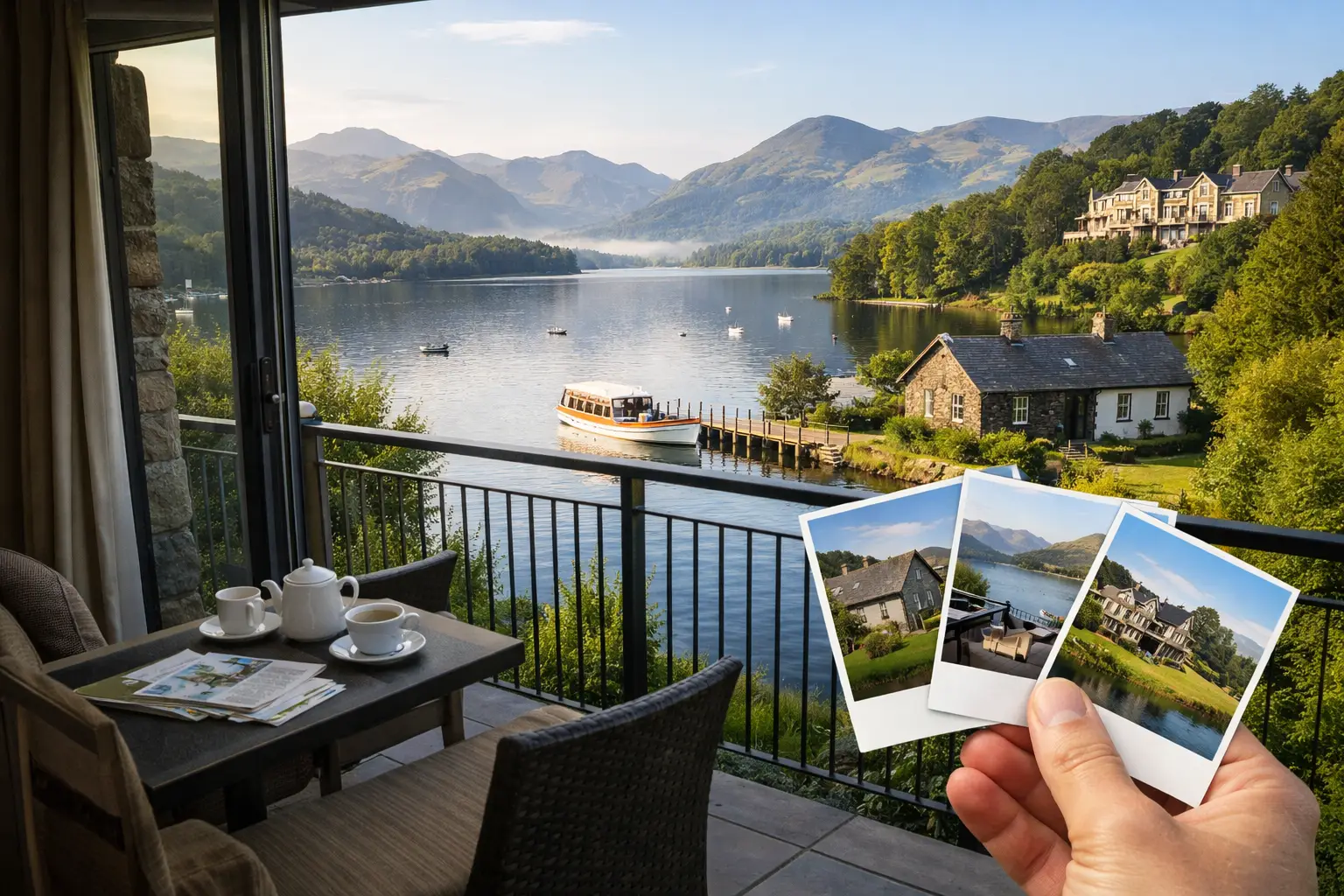
Photos deserve the same caution. Wide-angle lenses can make rooms look bigger, and attractive exterior shots tell you very little about the quality of the bed, bathroom or parking setup.
A quick booking filter that saves time
Before you book, run the property through a simple filter. Is it in the right area for your plans? Does the total cost still look reasonable after extras? Can you park easily or reach it without a car? Does the room or property type fit the length and style of your stay? Are the recent reviews strong on the things you care about most?
If the answer is yes to all five, you are probably close to the right choice. If one answer gives you pause, it is worth stopping there rather than hoping the issue will not matter on the day.
The best Lake District stay is rarely the fanciest one on the list. It is the one that makes your days easier, your travel simpler and your time in the area feel well used. Book for your real plans, not the imaginary version of the trip, and you will usually get it right.