
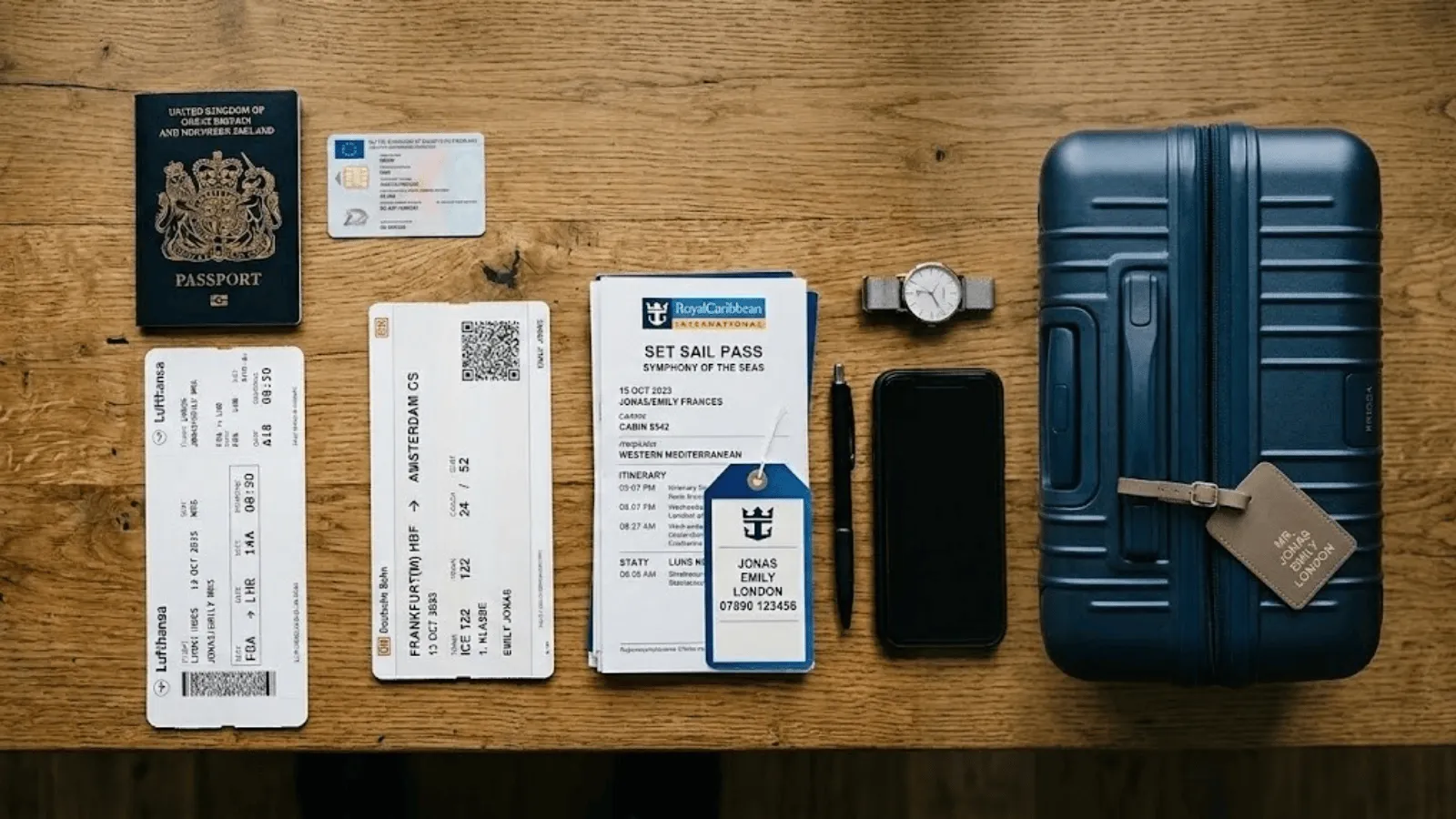
The Importance of Having the Correct Travel Documents
Having the correct travel documents is one of the most important parts of any trip. Whether you are flying, taking an international train, boarding a cruise, or travelling through several countries on one journey, the wrong passport, missing visa, absent travel authorisation, or expired document can stop your trip before it even begins.
For a United Kingdom (UK) audience, to ensure you have the correct travel documents the best starting point is to check the Foreign, Commonwealth & Development Office (FCDO) Foreign Travel Advice for your destination and work through the FCDO Foreign travel checklist before departure. GOV.UK says Foreign Travel Advice includes entry requirements, safety and security, health risks, and legal differences, and the checklist specifically tells travellers to check their documents for travel.
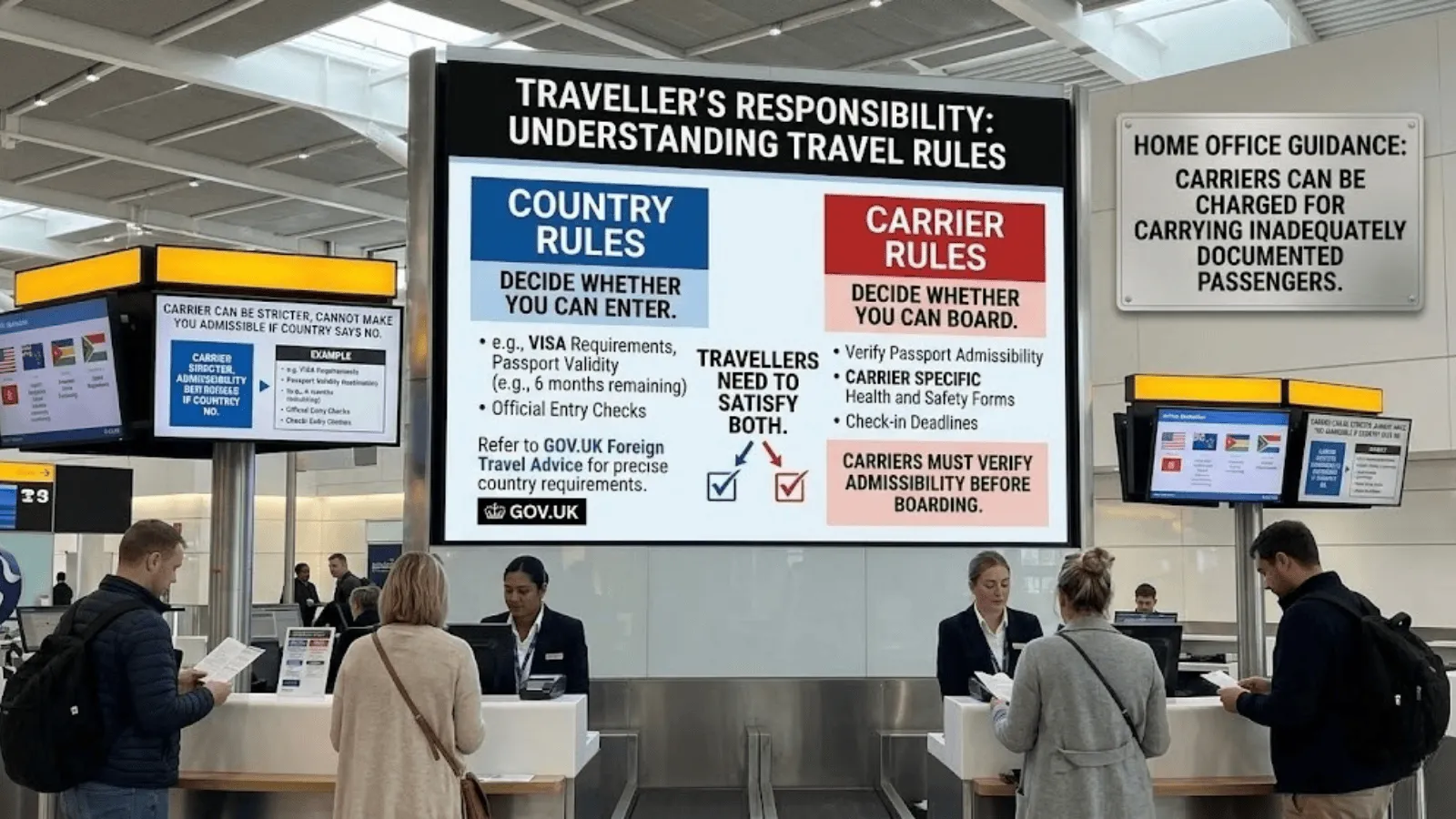
Quick takeaway
Country rules decide whether you can enter. Carrier rules decide whether you can board. Travellers need to satisfy both. A carrier can be stricter than the minimum country rule, but it cannot make you admissible if the country says no. GOV.UK explains entry requirements through Foreign Travel Advice, while Home Office guidance explains that carriers can be charged for passengers not carrying the correct travel documents
Why the correct travel documents matter
Travel documents are not just a booking formality. They are what connect your journey to your legal right to travel, transit, and enter another country.
If a passport is expired, damaged, or short on validity, or if a required visa or travel authorisation is missing, the problem is often discovered when there is little time left to fix it.
The FCDO Foreign travel checklist tells British travellers to check up-to-date entry requirements and to check their documents for travel before they go.
For travellers, the consequences can be expensive and stressful. You may be denied boarding, lose non-refundable bookings, miss connections, miss embarkation, or face emergency rebooking costs.
Not having the correct travel documents can also affect your ability to continue your trip or return home smoothly if your itinerary changes unexpectedly. That is why checking both government rules and carrier requirements before departure is so important.
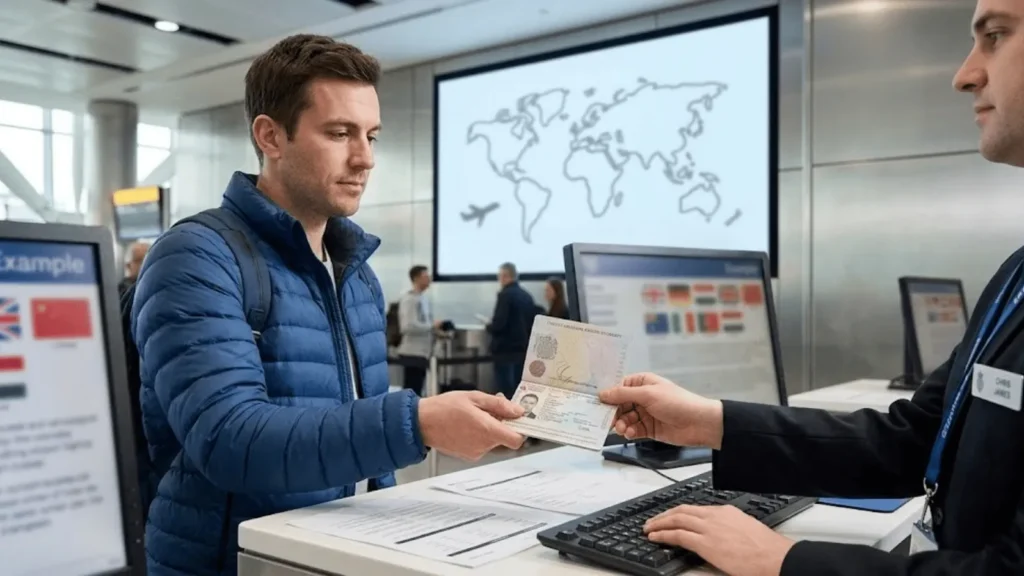
Why carriers are so strict about checking documents
Carriers do not check documents so carefully just to be awkward. They do it because they are the first practical gatekeeper in the journey.
If they allow an improperly documented passenger to travel, they can face fines, removal costs, disruption, and additional staff time. GOV.UK says that under section 40 of the Immigration and Asylum Act 1999, carriers are liable to charges if they carry a passenger to the UK who is not properly documented, and the current charge for each inadequately documented arrival is £2,000.
This applies across transport types, not just aviation. GOV.UK’s carrier guidance is specifically aimed at air, sea, and rail carriers, which is why document checks can feel strict at airports, ports, and international rail terminals alike.
What can happen to the traveller
- denied boarding
- lost bookings and missed departures
- extra hotel and rebooking costs
- missed cruise embarkation or missed connections
- difficulty getting home if the journey changes
- stress, delays, and possible insurance complications
What can happen to the carrier
- financial penalties
- detention and removal cost exposure
- delays and operational disruption
- more manual checks at departure
- reputational damage
- stricter document screening procedures
This is why carriers often seem stricter in practice than travellers expect. Their risk starts before the journey begins. GOV.UK says carriers may face charges for inadequately documented arrivals and that immigration liaison managers work with carriers to help prevent those cases.
Country entry requirements vs carrier terms and conditions
This is where many travellers get confused. Country entry requirements and carrier terms and conditions are not the same thing.
Country entry requirements decide whether you are legally allowed to enter or transit through a country. Carrier terms and conditions decide whether the airline, cruise line, ferry operator, or rail operator will carry you. These are separate decision points. GOV.UK Foreign Travel Advice is the right place to check the government side of the rules, while the carrier’s own travel-document page tells you what it expects at boarding.
That means it is not accurate to say that carrier rules override a country’s laws. The country’s rules prevail at the border because immigration authorities decide admission. The carrier’s rules prevail at boarding because the carrier decides whether to transport you.
In practice, travellers must satisfy both, and the stricter practical requirement is often the one that stops the journey first.

Best way to think about it
Country rules decide entry. Carrier rules decide boarding. You need to satisfy both..
Rail travel and travel documents
Rail travel is sometimes treated as more relaxed than air travel, but that is a mistake on international routes. Cross-border rail services can involve passport checks, border checks, and passenger data requirements before departure.
Eurostar says passports are required for all passengers travelling to & from the UK, including children, and that passengers will not be allowed to travel if they have not received their passport in time for the journey.
Eurostar also says it is required by the UK government to collect Advance Passenger Information (API) before travel to or from the UK.
For eligible visitors, GOV.UK says an Electronic Travel Authorisation (ETA) lets someone travel to the UK for certain short stays, but it does not guarantee entry.
Eurostar adds that travellers who need an ETA cannot travel to the UK without one, so this is a clear example of government rules and carrier checks working together.

What is a closed-loop cruise?
A closed-loop cruise is a United States (U.S.)-specific term. U.S. Customs and Border Protection (CBP) says U.S. citizens on closed-loop cruises, meaning cruises that begin and end at the same U.S. port, are able to enter the United States with a birth certificate in some circumstances.
These itineraries are commonly associated with round-trip cruises from U.S. ports to destinations such as the Caribbean, Bermuda, Mexico, and nearby regions.
This differs from one-way cruises, repositioning cruises, or itineraries starting or ending in a foreign country, where those narrower document allowances will not apply in the same way.
In that sense, a closed-loop cruise is a special U.S. document category rather than a general cruise rule for all nationalities and all sailings.
What documents are normally expected on a closed-loop cruise?
For certain U.S. citizens, a closed-loop cruise may allow proof of citizenship in some circumstances rather than a passport book alone.
However, Travel.State.gov strongly recommends carrying a passport because you may need it in the event of an unexpected medical evacuation or if the ship docks at a different port.
It also says your cruise company may require you to have a passport even if CBP or a foreign port of entry does not, and that travellers should have the right foreign visas for all stops on the cruise, even if they do not plan to disembark.
In practical terms, a passport book remains the safest and most resilient option for cruise travel, especially if the itinerary changes, a medical issue arises, or you need to leave the ship unexpectedly and fly home.
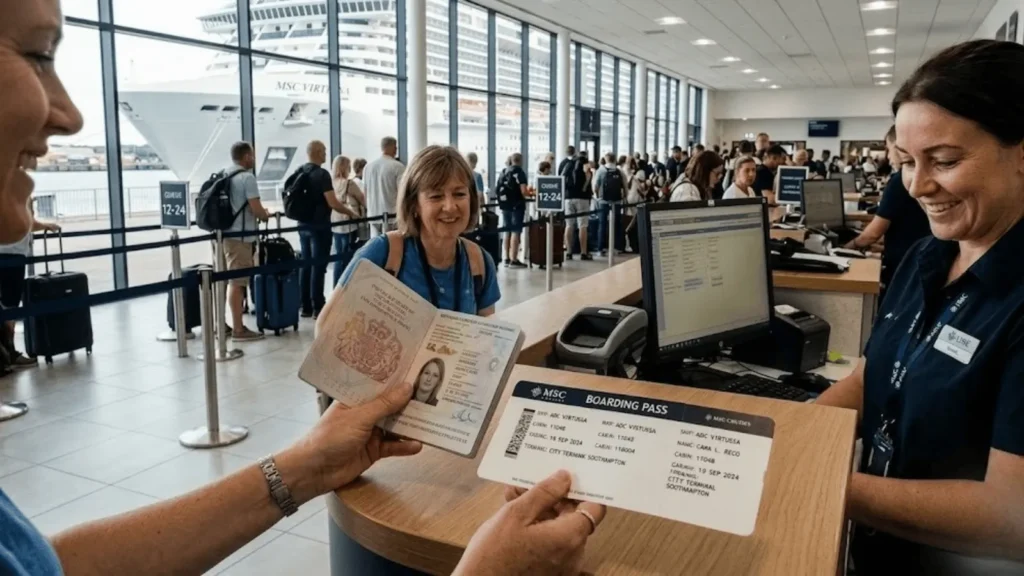
Best practical advice
Do not travel on the bare minimum you think might be accepted. Check the destination country’s official entry rules, any transit rules, and the carrier’s own document requirements before you travel. The FCDO Foreign travel checklist says to check up-to-date advice and warnings, including entry requirements, and to check your documents for travel before you go.
A simple travel document checklist before any trip
Before you travel, check:
- Passport expiry date
- Passport validity rules for the destination
- Blank page requirements where relevant
- Visa requirements
- Electronic travel authorisation requirements where relevant
- Carrier rules for flights, rail, cruises, or ferries
- Transit-country requirements
- Children’s document requirements
- What happens if you need to return home unexpectedly
Getting your documents right protects more than your booking. It protects your money, your holiday, your itinerary, and your ability to get home again. The most reliable traveller is the one who checks both the government rules and the carrier rules before the journey starts. The FCDO checklist is a good final pre-travel sense check for UK travellers.