
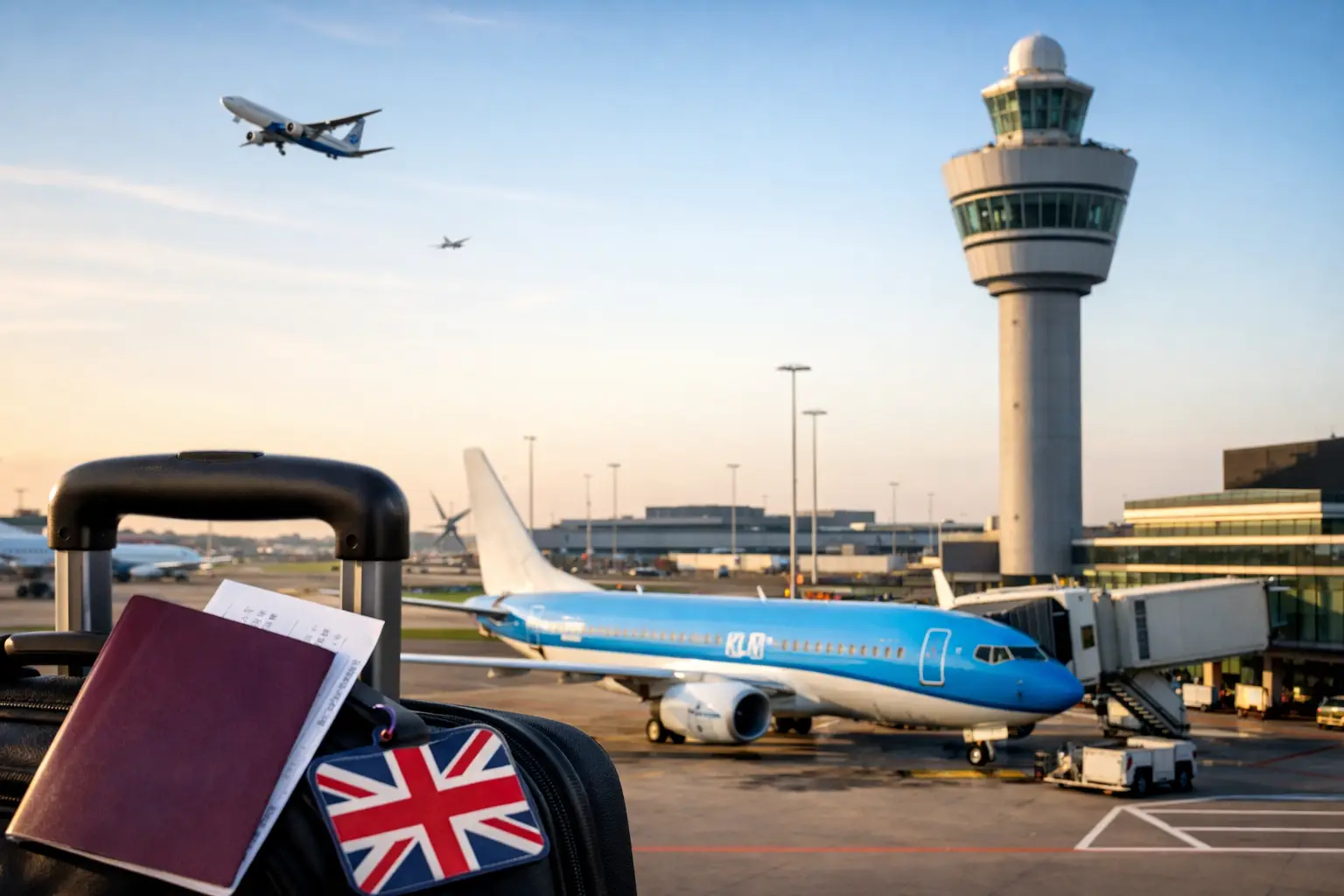
Amsterdam Schiphol Airport Guide for UK Travellers
Affiliate disclosure: This article contains affiliate links. If you click through and make a purchase, Stafford Affiliates Travel may earn a commission at no extra cost to you.
Miss your train connection at Schiphol and the whole first day of your trip can start to unravel. This Amsterdam Schiphol Airport guide is built to stop that happening, with the practical details UK travellers usually need most: how the airport is laid out, how long to allow, how to reach Amsterdam, and where people most often get caught out.
Schiphol is one of Europe’s busiest airports, but it is generally easier to use than first-time visitors expect. The main reason is simple: despite its size, it works as a single-terminal airport. That does not mean short walking distances everywhere, but it does mean you are not usually dealing with separate terminals in the way you might at other major hubs.
How Amsterdam Schiphol Airport is laid out
The first thing to understand in any Amsterdam Schiphol Airport guide is the layout. Schiphol has one main terminal building split into departure halls and piers rather than fully separate terminals. For most travellers, that makes wayfinding more straightforward. You check in, clear security if needed, then walk to your gate area.
The trade-off is distance. Some gates are a long walk from central facilities, and if your flight departs from a far pier you should not assume you can leave everything until the last minute. Screens are clear and frequent, so keep checking your gate, especially if it has not appeared early on.
Arrivals are usually efficient, but queues at passport control can vary a lot. If several long-haul or non-Schengen flights land close together, waits can stretch. UK travellers should be prepared for standard non-EU entry checks, even for a short city break.
Arrival basics for UK travellers
If you are arriving from the UK, have your passport ready before you reach border control. Since the UK is outside the EU, you should expect passport stamping unless rules change for your travel date. It is also sensible to know your accommodation address and return travel details, as border officers can ask for them.
Baggage reclaim at Schiphol is usually well signposted, but delays do happen during peak periods. If you are travelling with hand luggage only, you can save a noticeable amount of time here, especially on a weekend break. That is often the simplest way to keep your arrival low-stress.
Once you are landside, signage to trains, taxis, buses and pick-up zones is good. Schiphol’s biggest advantage is that the rail station sits directly below the airport. For many visitors heading into Amsterdam or elsewhere in the Netherlands, train is the most practical next step.
Getting from Schiphol to Amsterdam city centre
For most independent travellers, the train is the best choice. It is fast, frequent and usually the simplest option if you are staying near Amsterdam Centraal or somewhere connected by tram or metro. The station is directly under the terminal, so you do not need a shuttle bus to reach it.
The main thing to watch is not the journey time but the onward connection. If your hotel is a long walk from the station over cobbles and bridges, dragging a heavy case through the centre can quickly become frustrating. In that case, a pre-booked transfer or taxi may be better value in practical terms, especially for families, late arrivals or anyone carrying more luggage than is comfortable.
Buses and coaches can work for certain districts, and taxis are straightforward if you want door-to-door convenience. The downside with road transfers is traffic. At busy times, what looks easiest on paper can take much longer than the train.
If you are staying outside central Amsterdam, check your route in full before you travel. A hotel near the airport, in Haarlem, Utrecht or another connected city may be easier to reach by direct rail than somewhere in the canal belt that requires multiple changes.
Departures: how early should you get there?
This is where travellers either build in sensible buffer time or create avoidable stress. Schiphol can run smoothly, but queues at bag drop, security and passport control can all fluctuate. For short-haul European flights, arriving around two hours before departure is usually a safe baseline. If you are checking bags, travelling at school holiday times, or flying with children, give yourself more.
For long-haul flights, three hours remains the safer rule. Even if you move through quickly, extra time is easier to absorb than a rushed departure. Schiphol has enough places to sit, eat and refill a bottle that getting there a little early is rarely wasted time.
Do not rely on old advice from forums or social media posts. Airport operations can change from season to season. What matters is the conditions on your day, your airline, your baggage situation and whether you need special assistance.
Security, passport control and common pinch points
Security at Schiphol is generally organised, but morning waves can be busy. If your flight departs early, expect lots of business and leisure traffic moving through at once. Keep liquids and electronics packed in a way that is easy to manage, even if screening rules have improved. Processes can differ by lane or by operational need.
Passport control can be another pinch point on departure for non-Schengen routes, including flights to the UK. If you are heading home, do not assume that because the flight is short the airport process will be quick.
The most common mistake is spending too long in the central shopping and food area before checking the actual gate distance. Some gates are much further away than they first appear. Once your gate is assigned, head in that direction earlier than you think you need to.
Food, facilities and where to wait
Schiphol is well equipped for eating, drinking and last-minute airport tasks. You will find cafés, grab-and-go counters, sit-down options, toilets, baby changing facilities, water points and charging spots across the airport. Prices are airport-level rather than bargain-level, so if you want to keep costs down, buying selectively helps.
If you are travelling with a refillable bottle, bringing it empty through security is one of the easier lower-waste choices. It also saves money, which matters on a short break where small costs add up quickly.
Seating can be inconsistent depending on gate area and time of day. If your group wants to sit together and eat before boarding, do it before heading to a quieter remote gate where options may be more limited.
Lounges, rest areas and longer stopovers
If you have a long layover, Schiphol is manageable, but not every stopover feels comfortable by default. Lounges can make sense if you want a quieter space, food, power and cleaner seating, especially if you are working or travelling overnight. Whether they are worth paying for depends on the length of the wait and how full the public areas are.
For shorter waits, public seating and food courts are often enough. For longer ones, comfort becomes more important. If you are travelling with children, look at your stopover in practical blocks of time: food, toilet break, movement, then seating near the gate. That usually works better than settling too early and then having to move again.
Baggage, trolleys and tight connections
If Schiphol is your connection airport rather than your final destination, pay attention to your minimum connection time when booking. A single terminal helps, but long walks and security or passport checks can still make tight connections risky.
If your flights are on one booking, the airline has more responsibility if delays affect your connection. If they are separate tickets, the risk shifts to you. That can make a cheap fare poor value if a small delay causes a missed second flight.
Travelling with cabin baggage only gives you more flexibility. Checked bags add waiting time on arrival and more variables on departure. That does not mean never check baggage, but for a two- or three-night trip, lighter is usually easier.
Practical tips that save time at Schiphol
A good Amsterdam Schiphol Airport guide should help you avoid the small mistakes that create disproportionate hassle. Check in online where possible, but still confirm your baggage rules. Budget airlines and full-service carriers do not always apply the same cabin bag allowances.
Keep your passport, boarding pass and any entry documents in one easy-to-reach place. Have your accommodation address saved offline. Charge your phone before you leave for the airport and carry a power bank if you rely on mobile boarding passes.
If you are arriving late, decide in advance how you will reach your accommodation. Public transport may still run well, but late-night arrivals leave less room for indecision. If you prefer certainty, pre-arranged transfers can be worth it simply for a calmer arrival.
Finally, do not overcomplicate Schiphol. It is a large airport, but it is built for volume and generally works best when you keep your plan simple: know your route from plane to train or from check-in to gate, allow extra time where queues can build, and travel as light as your trip allows. That one bit of planning usually does more than any airport hack.