
Paris neighbourhood guide for first timers
Introduction
If you book the wrong area on your first trip, the city can feel harder than it needs to. A good Paris neighbourhood guide for first timers is really about reducing friction – shorter journeys, easier evenings, and a base that suits how you actually travel rather than how a map looks at home.
The main mistake first-time visitors make is chasing a postcard view at any cost. That can leave you paying more, sleeping less, and spending half your holiday in crowded streets. In practice, the best area for your first stay depends on three things: your budget, your pace, and whether you want classic landmarks on the doorstep or a calmer base with better value.
How to use this Paris neighbourhood guide for first timers
Think in terms of trip style, not just district names. If you are in the city for two or three nights and want to walk to major sights, it often makes sense to pay more for location. If you are staying longer, travelling as a family, or prioritising food and day-to-day convenience, a slightly less central area can work far better.
Transport matters, but not every well-connected area feels the same. Some neighbourhoods are lively from morning to late evening. Others are quieter, more residential, and better for travellers who want a predictable base. Neither is automatically better. It depends on whether you want to step straight into busy streets or come back to somewhere calmer after a full day out.
Best neighbourhoods for first-time visitors
Le Marais
Le Marais is one of the safest recommendations for a first visit because it balances atmosphere, walkability and convenience. You can reach plenty of major sights on foot, there are lots of cafés and shops, and the area still feels active in the evening without relying entirely on nightlife.
It suits couples, solo travellers and short-break visitors who want to make the most of limited time. The trade-off is price. Rooms can be small for the money, and some streets stay noisy later than you might expect. If you are a light sleeper, check reviews carefully and look for accommodation on a quieter side street rather than above bars or busy restaurant rows.
Saint-Germain-des-Prés
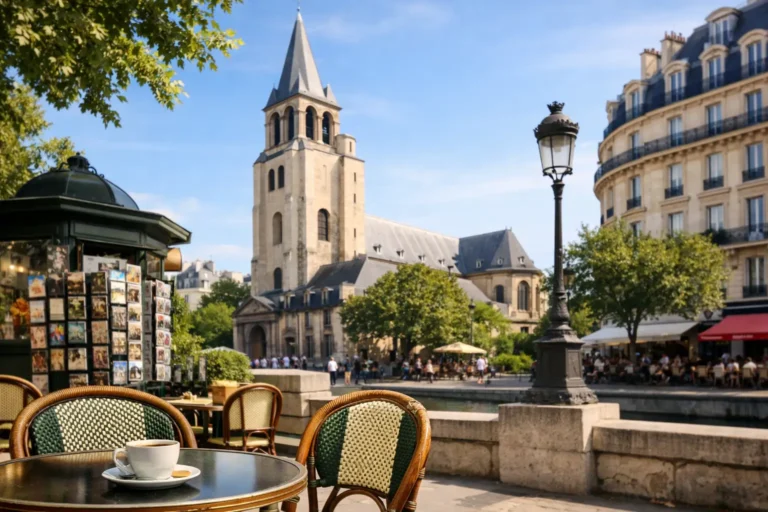
If your priority is a classic first-trip base with a polished, central feel, Saint-Germain-des-Prés is a strong choice. It is convenient for walking, has good metro access, and gives you an easy rhythm for museums, river walks and long café stops. It works particularly well for travellers who want a straightforward, low-stress stay and do not mind paying extra for that ease.
The downside is value. This is not usually the best place for bigger rooms or lower nightly rates. Families and cost-conscious travellers may find they get more space elsewhere. Still, if your trip is short and you want convenience over square footage, it is hard to dismiss.
The Latin Quarter
The Latin Quarter often works well for first timers because it is central, lively and generally practical for sightseeing. You will find plenty of places to eat at different price points, and the area can feel easier on the budget than some neighbouring central districts.
It is a good option for travellers who want a busy, energetic base and do not mind crowds. That said, parts of it can feel very tourist-heavy. If you want local calm and quieter evenings, it may not be the best fit. It is worth checking the exact street, not just the neighbourhood label, because the atmosphere changes quickly from one block to the next.
The 7th arrondissement
For travellers with a higher budget who want a quieter, more polished stay near major landmarks, the 7th can be appealing. It is tidy, residential in parts, and often feels less hectic than other central areas. This can be ideal for couples wanting a calmer base or for anyone who values a more settled atmosphere at the end of the day.
The limitation is that it can feel subdued at night, and dining options may be less varied or less affordable than in livelier districts. For a first trip built around long evenings out and spontaneous food stops, other areas may feel easier.
Canal Saint-Martin
Canal Saint-Martin makes sense for first-time visitors who want a more relaxed, everyday feel without being cut off from the main sights. It is popular with younger travellers, returning visitors and anyone who prefers neighbourhood character over being in the thick of the busiest tourist zones.
For a first trip, this is a good middle ground if you are happy to use public transport more often. You may get better value than in the classic central districts, and the area can feel more liveable. The trade-off is that you lose some of the easy walk-everywhere convenience that many first timers appreciate.
Montmartre
Montmartre appeals for obvious reasons: character, views and a memorable setting. It can be a rewarding choice if atmosphere is high on your list and you do not mind hills, steps and a slightly less direct relationship with the rest of the city.
For some first-time visitors, that charm outweighs the inconvenience. For others, it becomes tiring fast. If mobility, luggage handling or late-night returns are a concern, choose carefully. As with the Latin Quarter, the exact location matters. Some parts feel charming and residential, while others are crowded and less relaxing than the photos suggest.
Where to stay based on your trip type
For a short first break of two or three nights, Le Marais, Saint-Germain-des-Prés and the Latin Quarter are usually the easiest options. They reduce travel time and make it simpler to fit more into each day.
For families, quieter parts of the 7th or a well-connected residential area can be more practical than the busiest central streets. Slightly more space, less evening noise and easier local food shopping often matter more than being five minutes closer to a landmark.
For travellers on a tighter budget, it is often better to stay just outside the most expensive central areas but close to a reliable metro line. The nightly saving can be significant, and in many cases the extra journey time is modest. What matters most is not chasing the lowest price blindly. Cheap rooms in awkward locations often cost you more in time and convenience.
For couples after a classic city-break feel, Saint-Germain-des-Prés and Le Marais are usually the simplest starting points. For a more local, less polished atmosphere, Canal Saint-Martin can be a better fit.
Areas first timers should book with extra care
Places near major stations can look convenient on paper and sometimes are, especially for early trains or quick arrivals. But convenience at arrival is not the same as convenience for the whole trip. Some station-adjacent areas feel more functional than enjoyable, particularly at night. If you are considering one, read recent reviews for evening atmosphere, street noise and the walk back from the nearest station.
The same goes for outer districts with tempting prices. A lower rate can be worthwhile, but only if the transport connection is straightforward and frequent enough for your plans. If you expect to come back to your hotel mid-afternoon, head out again for dinner, and fit in an early start the next day, a long commute soon becomes irritating.
Practical booking tips that matter more than the postcode
Once you have narrowed down the area, check the exact address against your transport needs. A hotel described as being in a well-known neighbourhood may still be a long walk from the station you actually need.
Room size matters more on a short city break than many people expect. If you are travelling with children, bulky coats in winter, or more than hand luggage, an unusually cheap room in a premium area may feel cramped very quickly. Paying slightly more for comfort can be better value than paying extra for a famous postcode.
Look closely at lift access if you are carrying heavy cases, travelling with older relatives or bringing a pushchair. Older buildings do not always offer the layout you might assume. Also check air conditioning for summer stays. In warmer months, this can make a bigger difference to sleep quality than whether you are one metro stop closer to a museum.
If lower-waste travel matters to you, choose an area where you can walk to breakfast, use public transport easily and top up water and essentials locally without constant taxi journeys. A well-located base usually helps you travel more efficiently and with less day-to-day waste.
So which area is best?
If you want the safest all-round answer, start with Le Marais. If you want a polished, classic short-break base, look at Saint-Germain-des-Prés. If you want lively and central with a bit more flexibility on budget, try the Latin Quarter. If calm matters more than buzz, consider the 7th. If you want better value and a more local feel, Canal Saint-Martin is worth a look.
The right first base is the one that makes your days simpler, not the one that sounds most impressive when you book it. Choose an area that suits how you move, eat, rest and sightsee, and the rest of the trip usually falls into place.
Frequently Asked Questions
Disclaimer
Stafford Affiliates Travel provides this guide for informational purposes and is not a travel agency. The information contained in this guide is for general guidance only. While we do our best to ensure the information is up-to-date and correct, we make no representations or warranties of any kind about its completeness or accuracy.
Cruise line policies, itineraries, and loyalty programs are subject to change without notice. We strongly recommend that you verify all details directly with your cruise line or a certified travel agent before making any bookings or financial commitments.
We cannot be held liable for any financial loss due to the reader’s failure to follow the above advice.
Affiliate Disclosure
Many of the links are affiliate links, Stafford Affiliates Travel may receive a commission from qualifying clicks, orders or bookings at no additional cost to you. This income helps support our efforts to provide and improve our site and turn it into a one stop resource for travellers with a bias towards cruising.