Best eSIMs for Europe Travel for UK Holidaymakers
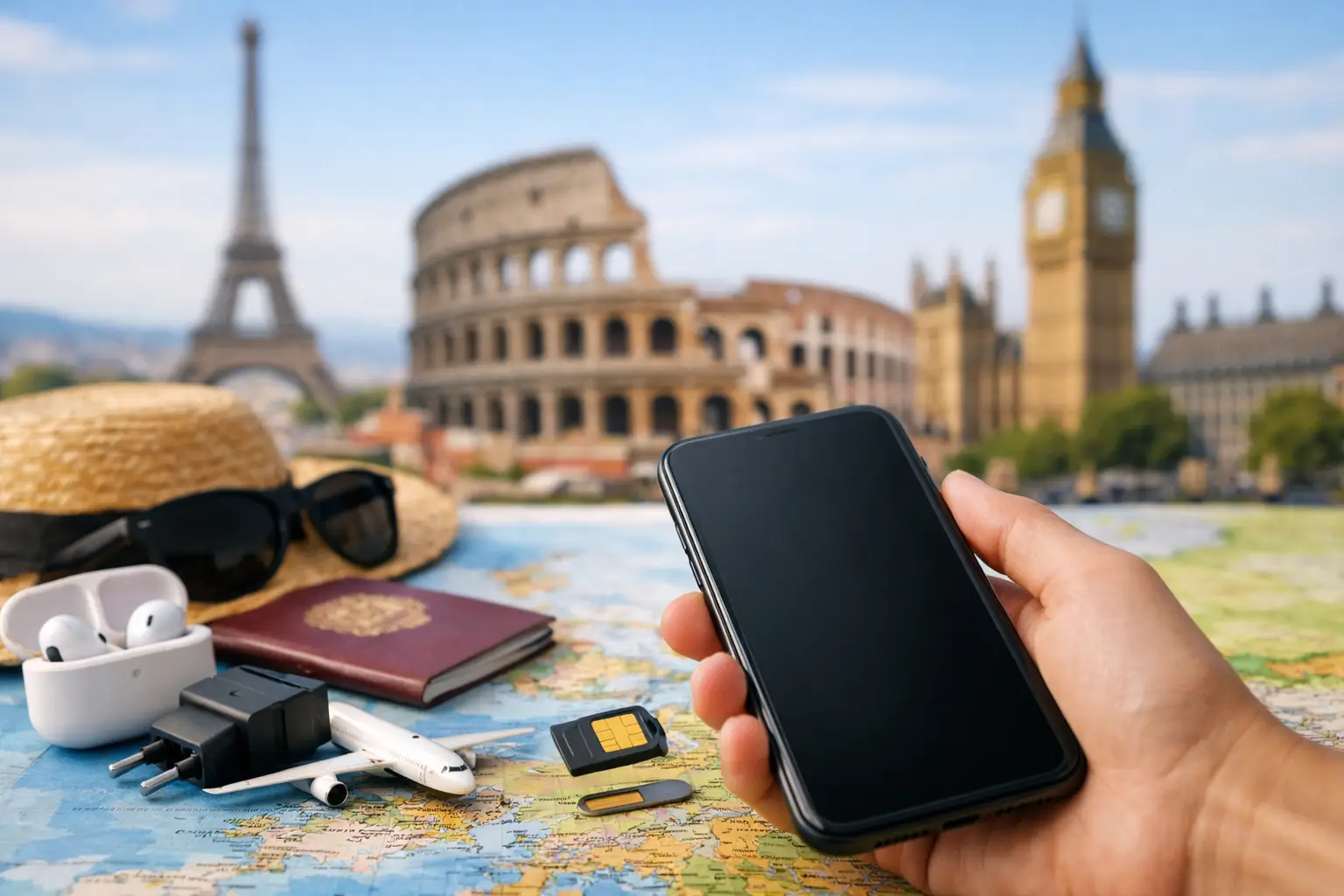
Landing in Europe with no mobile data can turn a simple airport transfer into a frustrating first hour of your holiday. The best eSIMs for Europe travel solve that problem before you leave home, giving you data for maps, tickets, messages and booking confirmations without relying on expensive roaming or searching for a shop on arrival.
For most UK travellers, an eSIM is now the easiest option for a city break, rail-based multi-country trip or family holiday. It is not automatically the cheapest choice in every case, though. The right plan depends on where you are going, how much data you actually use and whether you need a phone number for calls or simply reliable internet access.
What makes an eSIM good for European travel?
An eSIM is a digital SIM installed through your phone settings, usually by scanning a QR code or using a provider app. It lets you add a travel data plan without removing your usual physical SIM. On a dual-SIM compatible phone, you can keep your UK number active for essential calls and texts while using the eSIM for mobile data.
The best plans are not necessarily those advertising the largest data allowance. Check the coverage countries carefully first. A plan labelled “Europe” may cover 30 or more destinations, but the exact list varies by provider. This matters on an itinerary that crosses borders by train or includes a stopover outside your main destination.
Also look at the validity period. A 10GB plan lasting 30 days may be poor value for a four-night break if a smaller seven-day plan meets your needs. Conversely, paying slightly more for 30 days can be sensible for a longer holiday, especially if you want flexibility around flight delays or an extended stay.
Most travel eSIMs are data-only. That is perfectly adequate for many people: WhatsApp, FaceTime Audio, Signal and similar services work over data. But it means you usually will not receive a local mobile number or make ordinary calls through the eSIM. If that is essential, choose a plan that specifically includes calls and SMS, or retain access to your normal number.
Best eSIMs for Europe travel by trip type
There is no single best provider for every traveller. These are the most useful choices to compare, based on the type of trip rather than headline marketing claims.
Airalo for short breaks and straightforward setup
Airalo is a practical starting point for travellers who want a familiar app, a broad choice of country and regional plans, and simple top-ups. Its Europe-wide options suit city breaks in destinations such as Rome, Amsterdam, Lisbon or Vienna, particularly when you do not want to buy a separate plan for each country.
It is often best for light-to-medium data users. Check the network named on the plan and whether tethering is permitted if you intend to connect a laptop or tablet. Prices and allowances can change, so compare the current cost per gigabyte rather than assuming the smallest plan is best value.
Holafly for heavy data users who value certainty
Holafly is commonly considered by travellers who expect to use data intensively for navigation, video, social media and work messages. Its unlimited-data-style plans can reduce the worry of running out mid-trip, making them useful for longer journeys or families sharing one phone’s connection.
The trade-off is that these plans can cost more than a fixed-data alternative, and hotspot use may be limited or capped. Read the fair-use terms before buying. “Unlimited” does not always mean unrestricted high-speed data in every situation, and a fixed 10GB or 20GB plan may be better value if you mostly use maps and messaging.
Nomad or Saily for comparing data value
Nomad and Saily are worth checking when your main aim is a competitively priced regional data package. Both offer plans designed for different data levels and trip lengths, which makes them useful for travellers who know roughly how much they need.
A 3GB to 5GB allowance is usually enough for a long weekend if you use hotel Wi-Fi for photo backups and streaming. For a week of frequent mapping, restaurant research, transport apps and sharing photos, 10GB is a more comfortable baseline. If two plans appear similar, compare their validity dates, country list and hotspot rules before deciding.
Orange Holiday Europe for calls, texts and wider travel needs
Orange Holiday Europe plans can suit travellers who want more than data, as some packages include a French mobile number alongside calls, texts and a stated data allowance. That can be useful for people who prefer a conventional mobile service or need to call accommodation, transport operators or local contacts.
It is usually a more structured package than the app-led data-only options. Check that the included minutes work in the countries on your route and that the plan duration matches your trip. It may be more than you need for a simple weekend away, but can offer reassurance on a longer multi-country holiday.
A local operator eSIM for one-country stays
If you are spending two weeks or more in one country, a local mobile operator can offer stronger value, higher data allowances or clearer access to a particular network. This can be especially worthwhile if you are staying outside major cities, working remotely or using a lot of data.
The disadvantage is convenience. Registration requirements, app instructions and customer support may be less straightforward for visitors, while many local plans are not designed for onward travel across Europe. For a single-destination holiday, however, it is worth comparing against travel eSIM prices.
How much data do you need?
Data use is easy to underestimate when travelling. Google Maps, ticketing apps and messages use relatively little. Uploading dozens of videos, using your phone as a hotspot or watching television in the evening uses far more.
For most travellers, 1GB per day is a sensible working estimate when relying on mobile data regularly. That does not mean you need to buy seven separate gigabytes for a week. Hotel Wi-Fi, downloaded maps and offline entertainment can reduce usage sharply.
Before leaving, download your key map areas, rail tickets, boarding passes and accommodation details. Set photo backups, app updates and streaming services to Wi-Fi only. These small steps make a lower-data plan more realistic, cut battery drain and avoid wasting data on tasks that do not need it.
Check these details before you buy
First, confirm that your handset is eSIM-compatible and unlocked. Most recent iPhones, Google Pixel models and many Samsung devices support eSIM, but compatibility varies by model and region. An eSIM cannot be installed on a locked phone that only accepts one network.
Next, install the eSIM while you still have dependable Wi-Fi at home. Do not switch it on for data until the provider’s instructions say to activate it, as some plans begin their validity period the moment they connect to a network. Keep the QR code or activation details saved securely in case you need to reinstall it.
Once abroad, set the travel eSIM as the mobile-data line and turn off data roaming on your UK SIM. You can usually leave your normal SIM active for calls and verification texts, but check your UK network’s roaming settings and charges first. Incoming calls can still create costs depending on your tariff.
Finally, switch on data roaming for the travel eSIM if the provider instructs you to. This sounds counterintuitive, but many travel eSIMs use partner networks and require the setting to connect. Data roaming should remain off for the UK SIM, not necessarily for the eSIM.
Common mistakes that cost travellers money
The biggest mistake is buying a regional eSIM without checking every country on the itinerary. Coverage can differ at the edges of Europe and between providers, so never rely solely on the plan name.
Another is leaving your primary SIM selected for data after landing. Your phone may quietly use your home allowance for background updates before you notice. Check the mobile-data setting, disable mobile-data switching between SIMs if your phone offers it, and monitor usage during the first day.
Avoid buying far more data than you will use simply because it looks convenient. For a short break, a modest plan plus sensible Wi-Fi use is often the lower-cost and lower-waste choice. You avoid paying for unused data and reduce unnecessary battery use from constant background syncing.
A travel eSIM should remove friction, not add another task to your holiday. Choose the plan that covers your actual route, install it before departure, and save your essential travel information offline. Then your phone can do what it should: help you get where you need to be without turning connectivity into another thing to manage.