How to Use Lake Buses in the Lake District
Affiliate disclosure: This article contains affiliate links. If you click through and make a purchase, Stafford Affiliates Travel may earn a commission at no extra cost to you.
If you are planning a Lake District trip without relying on the car for every journey, knowing how to use lake buses can save you time, parking stress and more than a few wrong turns on narrow roads. They are one of the simplest ways to move between popular towns, walking routes and lake piers, especially in busier months when car parks fill early.
For many visitors, the main mistake is assuming lake buses are a specialist transport system that works differently from ordinary local buses. In practice, they are mostly regular bus services that connect key visitor areas around the national park, often with routes designed to help walkers, day-trippers and families get between lakes, villages and attractions. Once you understand where they run, when they run and how to pay, the system is much easier than it first looks.
What lake buses actually are
In the Lake District, people often use the term lake buses to describe the bus network serving places such as Windermere, Ambleside, Keswick, Grasmere, Coniston and surrounding valleys. Some routes are frequent and run much like standard public transport. Others are more seasonal and geared towards visitors during the main holiday period.
That difference matters. If you are staying in a larger base like Bowness, Windermere or Keswick, you will usually have more choice and more frequent departures. If you are trying to reach a smaller village or a more rural starting point for a walk, you may find the service is limited, only runs on certain days, or has fewer return journeys than expected.
This is why bus travel in the Lake District works best when you treat it as part of your trip plan, not an afterthought. A quick timetable check the night before can save a lot of hassle.
How to use lake buses for simple day-to-day travel
The easiest approach is to think in three steps: choose your base, identify your route, then check the last return bus before you set off.
If you are staying for a short break, a well-connected base makes everything easier. Windermere and Bowness are useful for first-time visitors because they connect well with trains, local buses and lake cruises. Ambleside is another strong option if you want easier access to walking routes and central Lake District villages. Keswick is especially practical for the northern Lakes.
Once your base is set, work out the specific route number or destination name for your journey. Do not assume the bus stop will list every place you have in mind. Some buses show a final destination that is different from the stop where you plan to get off, so checking the route in advance is more reliable than relying on the front display alone.
Then check the return service. This is the part people skip. Outbound buses are often easy enough to find in the morning, but the final bus back may be earlier than you expect, particularly outside peak season.
Tickets, passes and paying on board
In most cases, you can buy a single or return ticket, and many services also offer day tickets that work better if you are making more than one journey. For visitors doing a car-free day, a day ticket is often the most practical choice because it gives you flexibility if plans change.
Contactless payment is widely available, which makes things simpler for most travellers. Still, it is sensible to carry a backup payment method and to check before boarding if you are unsure whether a ticket type covers your full route.
If you are travelling as a family or using buses over several days, a longer pass may be better value. It depends on your itinerary. If you are only making one return trip, a standard return fare may be cheaper. If you are linking bus travel with walks, boat trips and village stops, a day or multi-day option usually makes more sense.
Routes that are most useful for visitors
The most practical visitor routes usually connect railway arrival points, lake towns and major walking areas. That makes them useful even if you are not doing a fully car-free trip. You might arrive by train and use buses for the rest of your stay, or park once and leave the car where it is.
Services around Windermere, Bowness, Ambleside and Grasmere are among the most straightforward for first-time visitors. These routes are popular because they link places where people actually stay, eat and start walks. Routes around Keswick are also useful for access to surrounding fells and lake areas.
Some buses are especially helpful for linear walks. Instead of doing an out-and-back route, you can walk from one village to another and return by bus. That can make a day out feel much less repetitive and reduces the pressure to find parking at busy trailheads.
There is a trade-off, though. The more ambitious the plan, the more important timings become. If your walk overruns, the missed bus can affect the whole day.
When lake buses are easiest to use
They are usually easiest in spring and summer, when visitor services are more frequent and there are more people using them. That brings better coverage, but also fuller buses and busier stops. On a sunny bank holiday weekend, you may need to allow extra time and be prepared to wait for the next service.
Autumn can be a good balance. You often still get decent service on key routes, but with less crowding than the summer peak. Winter is more mixed. The scenery is excellent, but transport requires more planning because some routes reduce frequency or stop running seasonally.
Weather also changes the equation. Heavy rain or poor visibility can push more people onto buses instead of walking, which means popular services may be busier than expected.
Common mistakes and how to avoid them
The biggest mistake is treating the Lake District like a city network where another bus will always be along shortly. In many areas, that is not the case. Missing one service may mean a long wait.
The second mistake is failing to separate summer assumptions from off-season reality. A route that is well served in August may be far less convenient in November.
The third is trying to pack in too much. It is tempting to combine a boat, two villages, a lakeside walk and an afternoon stop elsewhere. Sometimes that works. Sometimes you spend more time watching the clock than enjoying the day. A simpler plan is often the better one.
A practical rule is to build around one main destination and one secondary stop. That leaves room for delays, weather changes or a longer lunch without turning the journey into a timetable puzzle.
Combining lake buses with boats and trains
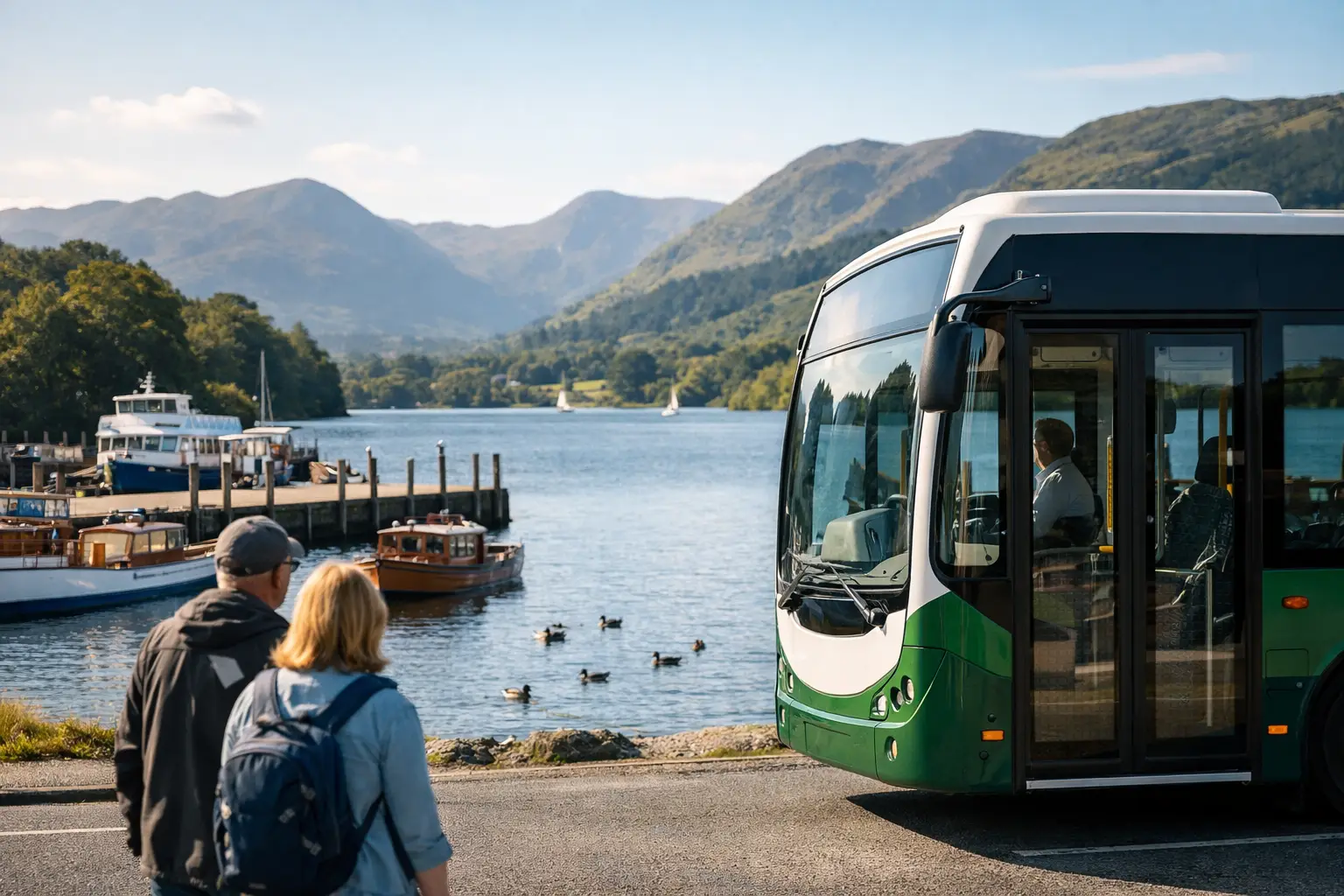
One of the best uses of lake buses is as part of a mixed transport day. In the central Lakes especially, buses can connect neatly with train arrivals and lake cruises. This is useful if you want a lower-waste way to travel and would rather avoid repeated short car journeys.
For example, you might arrive by train, take a bus to your accommodation, then use a bus and boat combination for a day out. Or you might take a boat one way and return by bus when the weather changes or you want a quicker route back.
This flexibility is where public transport in the Lake District becomes more attractive than many visitors expect. You are not limited to one mode. The best plan is often the one that mixes them sensibly.
Practical tips for using lake buses smoothly
A few small habits make a noticeable difference. Check the timetable on the day you travel, not just when you first plan the trip. Arrive at the stop a little early, especially in rural areas where stops can be less obvious than expected. If you have luggage, buggies or muddy walking gear, allow extra time to board and settle.
It also helps to save key stop names rather than relying only on attraction names. Bus information often uses village or stop names, and that can be clearer than searching for a nearby viewpoint or walking route.
If you are travelling with children or anyone who gets travel tired, prioritise direct routes over the cheapest possible option. One extra change may not seem much on paper, but in practice it can make the day feel longer and less manageable.
Is using lake buses worth it?
For many visitors, yes. They reduce the strain of parking, cut down on narrow-road driving and make one-way walks much easier to plan. They also suit travellers who want a more responsible way to see the national park without adding traffic to already busy areas.
That said, they are not ideal for every trip. If you are staying in a remote cottage, travelling with lots of gear, or trying to reach several out-of-the-way spots in one day, a car may still be more practical. The best choice depends on where you are based and how fixed your plans are.
If you approach the network with realistic expectations, lake buses are not complicated. They are simply a useful tool for getting around one of the UK’s busiest national parks with a bit more freedom and a lot less parking frustration. Plan one route well, keep an eye on the return time, and the rest usually falls into place.