Lake District 3-Day Train Itinerary: Easy First-Time Route
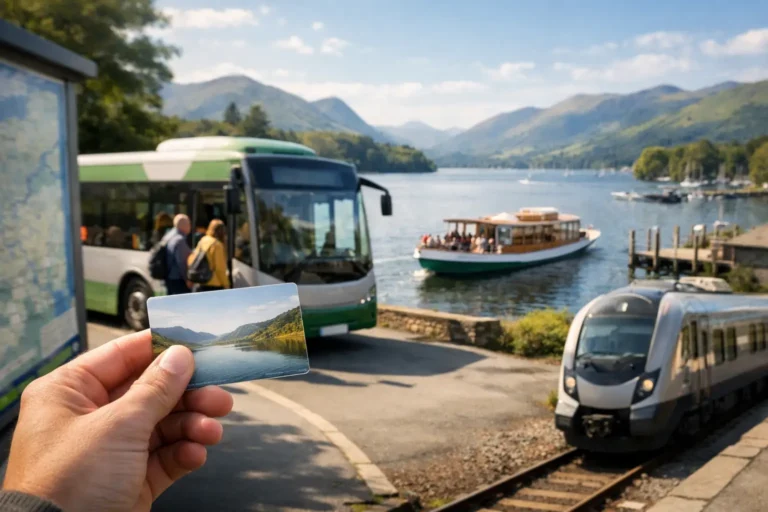
Miss the turning on a Lake District road in summer and you can lose an hour. Take the train instead and your trip usually starts with less stress, fewer parking worries, and a much simpler first day. This Lake District train itinerary is built for travellers who want a short break that is easy to organise, realistic without a car, and still gives you time for lakes, walks, and good places to eat.
It is designed around a three-day trip using the area’s best-known rail gateways – Oxenholme for Windermere, Penrith for Keswick by bus, and Carlisle if you are building a wider Cumbria route. For most first-time visitors, though, Windermere is the easiest base. It has the clearest onward connections, a good spread of accommodation, and enough nearby options to fill a weekend without turning the trip into a transport puzzle.
Why this Lake District train itinerary works
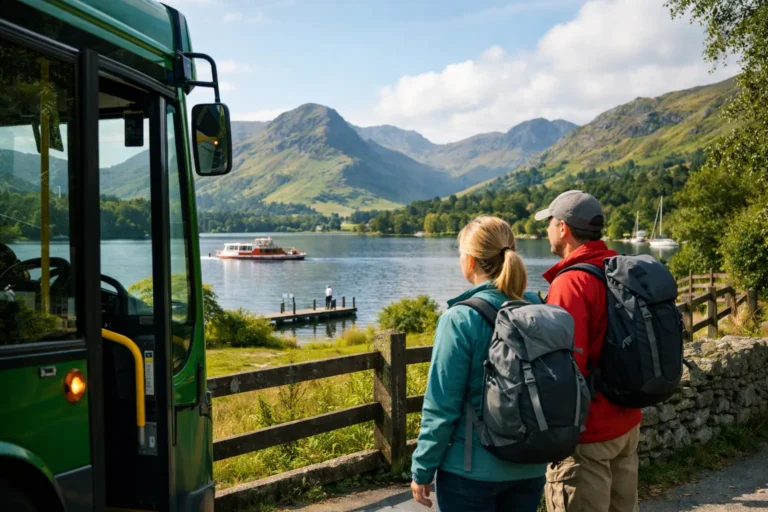
A rail-based Lake District break works best when you keep your base simple. Many visitors try to squeeze in too many valleys, lakes, and villages, then spend half the trip changing buses or checking timetables. If you stay around Windermere or Bowness, you can combine train travel with local buses, lake cruises, and short taxi hops only when they genuinely save time.
That matters if you are travelling as a couple, with children, or on a short Friday-to-Sunday break. It also tends to be a lower-waste option than driving separately, especially if you are coming from London, Manchester, Birmingham, or Glasgow. Public transport in the Lakes is not perfect, but on the main visitor routes it is often more practical than people expect.
Before you book: choose the right rail base
Windermere is the obvious choice for a first visit. You travel via Oxenholme Lake District, then connect onto the branch line to Windermere. From there, Bowness is a short bus or taxi ride away. If your priority is lake access, cafés, and easy day trips, this is usually the best fit.
Penrith works better if you mainly want Keswick and the northern Lakes. The train connections are straightforward from the West Coast Main Line, and the bus onward to Keswick is well used. The trade-off is that you lose the direct rail arrival into the heart of a tourist base, so luggage day can feel slightly less simple.
Carlisle suits a longer Cumbria trip rather than a short scenic break. It is a useful rail hub, but not the easiest place to base yourself if your main aim is classic Lake District sightseeing.
For this itinerary, assume you are staying in Windermere or Bowness for two or three nights.
Day 1: Arrive by train and settle into Windermere
Aim for a morning or early afternoon arrival. If you are coming from London or the South, changing at Oxenholme is standard and usually straightforward. From Manchester, journey times are often very manageable for a long weekend. Booking ahead can save money, but flexibility matters if rail strikes, engineering works, or delayed inbound services are a concern.
Once you arrive in Windermere, drop your bags and resist the urge to do too much. The smartest first afternoon is a short orientation rather than a full sightseeing push. Head down towards Bowness-on-Windermere, either by local bus, on foot if you pack light and do not mind hills, or by a quick taxi.
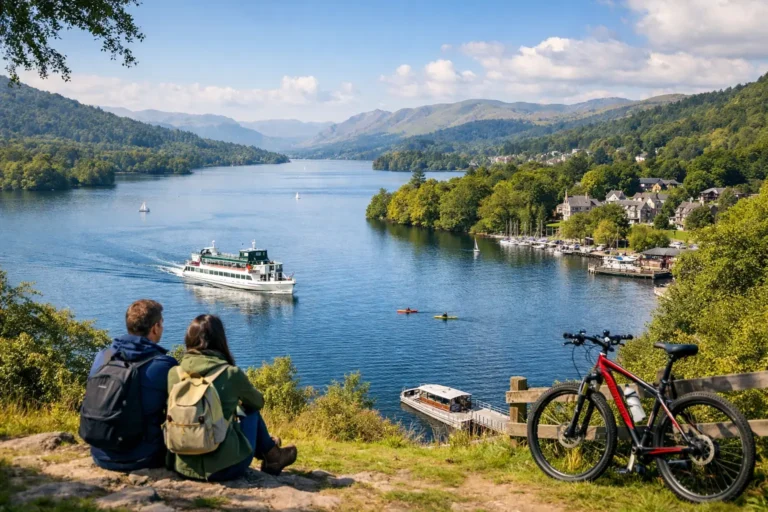
Bowness gives you that immediate Lake District feel people usually want on day one – water views, boat activity, independent shops, and plenty of places for an easy meal. If the weather is clear, take a short lake cruise rather than a long round trip. It breaks up the travel day without committing you to a tight timetable.
Spend the evening close to your accommodation. Train-based breaks are easier when you build in margin on the first day. If your train runs late, you will not feel that the itinerary has already slipped.
Practical tip for day one
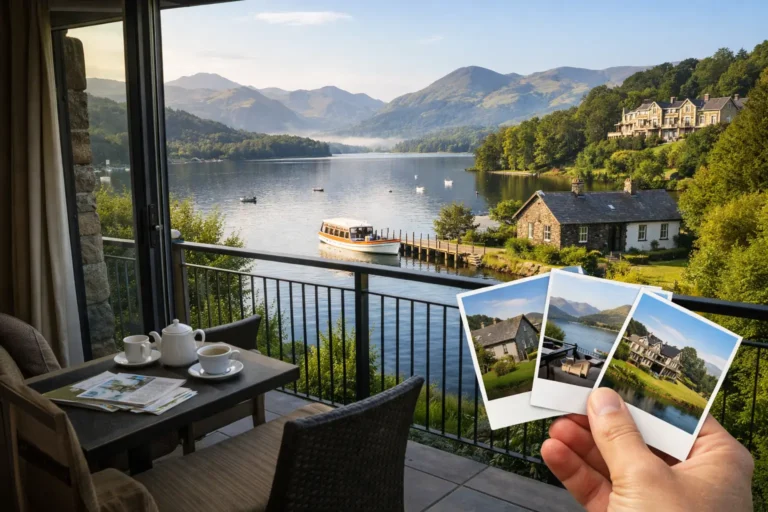
Stay near either Windermere station or central Bowness, depending on your priorities. Near the station helps with arrival and departure. Bowness is better for atmosphere and lake access. The gap between them is not huge, but with luggage, rain, or tired children, it feels bigger than it looks on a map.
Day 2: Lakeshore day with Ambleside or Brockhole
Your second day is the one to keep flexible. Weather changes quickly in the Lakes, and a good itinerary should still work if the fells are covered in cloud. Start with the Windermere lake corridor, where transport is simplest.
Take a bus or boat north towards Ambleside, or stop at Brockhole if you want something easier and more family-friendly. Brockhole works well for relaxed lake views, grounds, and activities without the effort of a full walking day. It is a sensible option if you want scenery with minimal logistics.
Ambleside gives you more of a village base, with shops, places for lunch, and access to short walks. From there, you can keep things gentle with a wander to Stock Ghyll Force, or simply spend a few hours browsing and eating well before heading back south. If you are trying to avoid over-planning, this is often the best middle day of a short break.
There is a temptation to fit in Grasmere as well. You can, but it depends on your pace. Doing Brockhole, Ambleside, and Grasmere in one day by public transport is possible, yet it can start to feel rushed, especially outside peak season when services are less frequent. For many travellers, one solid stop and one lighter add-on is enough.
If you want more walking
Swap Brockhole for Ambleside and add a low-level walk suited to your fitness and the forecast. A train itinerary does not rule out walking, but it does reward realism. Choose routes you can finish comfortably without worrying about missing the last useful bus back.
Day 3: A final half-day before the train home
On your departure day, keep plans close to your base. That sounds obvious, but it is the easiest mistake to make on a short Lake District break. A final morning in Bowness, Windermere town, or Orrest Head is usually a better choice than trying to squeeze in another village.
Orrest Head is particularly useful if you want one classic view without a full hiking day. The walk from Windermere is manageable for many visitors, and the payoff is excellent for the time involved. If conditions are wet or visibility is poor, stay lower down and use the morning for coffee, shopping, or a slow breakfast instead.
Leave enough time to collect bags, get back to the station, and deal with branch line connections. The Windermere branch is convenient, but if one service is disrupted, your margin disappears quickly. Giving yourself a buffer is usually worth more than one extra stop.
What to book in advance for a smoother trip
A good Lake District train itinerary depends less on complicated planning and more on booking the right basics early. Rail tickets are the first thing to check, especially for Friday departures and Sunday returns. Accommodation in Windermere and Bowness should also be booked early if you are travelling during school holidays, bank holidays, or the main summer period.
Beyond that, most local movement can stay flexible. Buses and short cruises are often easiest to decide around the weather. That flexibility is one of the advantages of basing yourself in the southern Lakes rather than trying to pre-book every leg of a multi-stop route.
If you are travelling with children, carrying bulky luggage, or arriving late, it may be worth budgeting for one or two short taxi journeys rather than forcing every transfer onto public transport. Lower-waste travel does not have to mean making the trip harder than it needs to be.
Common mistakes with a Lake District train itinerary
The biggest mistake is overestimating how much ground you can cover. Distances in the Lake District look short, but roads are slow and public transport timings are not always forgiving. Two well-chosen places in a day usually feel better than four rushed ones.
The second mistake is choosing the wrong base. If your train arrives in Windermere but your accommodation is in a quieter village with limited evening transport, every journey becomes more complicated. For a short first trip, convenience usually beats seclusion.
The third is ignoring seasonality. A January rail break and an August one are very different. In winter, shorter daylight hours and reduced services mean you need a tighter plan. In summer, crowds can make popular buses and boats busier than expected, though you still avoid much of the car-park frustration.
Is a train-only trip enough?
For a three-day first visit, yes, usually. You will not reach every corner of the national park, and remote valleys are easier by car. But for Windermere, Bowness, Ambleside, and a well-paced short break, rail plus local transport is enough for most travellers.
That is also why Stafford Affiliates Travel tends to favour realistic, cluster-based planning over trying to tick off the whole region in one go. Short breaks work better when the transport supports the itinerary rather than fighting it.
If you want the Lake District without the stress of narrow roads, parking charges, and constant route decisions, train travel is often the more sensible option. Keep your base tight, leave room for the weather, and let the trip feel easy from the moment you step off the platform.