Nerja Walking Routes Guide for Easy Day Walks
Introduction
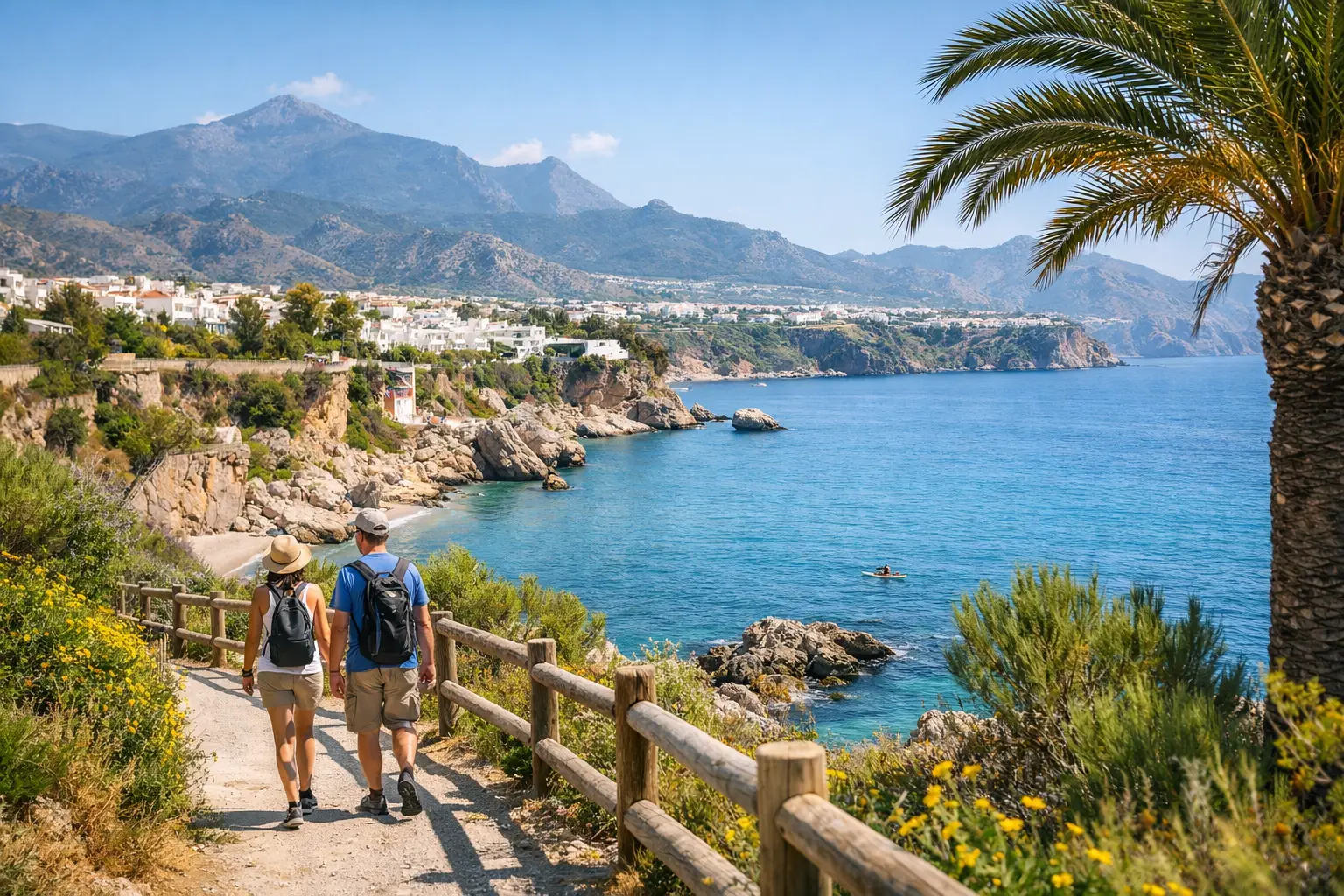
Nerja is compact enough to explore on foot, but its terrain changes quickly. One hour can take you from level seafront paving to steep white-street lanes, exposed coastal tracks or mountain paths with little shade. This Nerja walking routes guide helps you choose a route that suits your time, fitness and holiday plans, rather than committing to a walk that is uncomfortable in the heat or difficult to get back from.
For most visitors, the best approach is to combine one easy walk near town with one longer route on a cooler morning. Wear proper walking shoes for anything beyond the promenade, carry more water than you think you need and check local access notices before leaving. Conditions on riverbeds, rural paths and coastal trails can change after heavy rain or maintenance work.
Choosing the right Nerja walking route
A good Nerja walk is less about ticking off the longest distance and more about matching the route to the day. The old town and beaches work well after breakfast or towards sunset. Inland routes should start early, particularly from late spring to early autumn, when midday heat can make even a modest climb hard work.
If you are travelling with children, limited on time or wearing sandals, stay with the town, Balcón de Europa and beach sections. Confident walkers with trainers or boots can consider the Río Chíllar area or the hills above town. Mountain routes require a more cautious plan: there may be no reliable shade, shops, water points or mobile signal once you are beyond the built-up area.
Route 1: Balcón de Europa, old town and Calahonda
Allow: 45 to 90 minutes Difficulty: Easy, with steps and cobbles Best for: First-time visitors, relaxed evenings and short breaks
Start at the Balcón de Europa, the central viewpoint between Nerja’s beaches, then wander through the streets behind it towards Plaza Cavana and the Church of El Salvador. The route is short, but do not rush it. The appeal is in the changing views: bright white façades, small squares, the sea below the viewpoint and the steep descent towards Calahonda Beach.
This is the most practical walk to fit around a restaurant booking, a beach morning or an arrival day. The main trade-off is crowding. In high season, the Balcón can be busy from late morning through sunset, so go early if you want photographs and a quieter pace.
Calahonda involves steps, and the old town has uneven paving in places. A pushchair is possible on selected streets but not ideal for a full loop down to the beach. Return uphill slowly, especially in warm weather, and use this walk as orientation rather than a demanding hike.
Route 2: Burriana Beach to Carabeo and the town centre
Allow: 1.5 to 2 hours with stops Difficulty: Easy to moderate Best for: Beach-based stays and a scenic walk without leaving town
Burriana Beach is Nerja’s main activity beach and makes a useful starting point for a coastal stroll. Walk along the promenade, then head west via the streets and stepped connections towards Carabeo, Calahonda and the Balcón de Europa. There are regular places to stop for a drink, use facilities or shorten the route if the day becomes too hot.
The route is not a continuous flat promenade, which catches some visitors out. Expect a combination of beach paving, short climbs and stairways. That makes it more interesting than a straight seafront walk, but less suitable for anyone needing step-free access.
Walk from Burriana towards the centre in the late afternoon if you want the sun behind you less often and plan to stay in town for dinner. Going the other way is better for an early swim, when you can finish at Burriana before it gets busy.
Route 3: Nerja Caves to Maro village
Allow: 2 to 3 hours return, depending on your start point Difficulty: Moderate, mainly because of road sections and gradients Best for: Visitors combining a cave visit with a village walk
The area around Nerja Caves sits above the coast, and the walk towards Maro gives a different perspective on the resort. You will pass quieter surroundings, see farmland and eventually reach a small village with views towards the cliffs and sea. It is a sensible half-day option if you do not want a full mountain hike.
Plan this one carefully because the most direct options can involve roads without the wide pavements many UK visitors expect. Avoid treating it as a carefree roadside stroll. Use the safest available pedestrian sections, stay visible and do not walk it in fading light. If your accommodation is in central Nerja, consider using a bus or taxi for one direction and walking the quieter section rather than adding unnecessary roadside distance.
Maro is a good place for a simple pause, but do not rely on every business being open outside peak periods. Carry water and a snack, particularly if you are continuing towards coastal viewpoints.
Longer Nerja walking routes for prepared walkers
Route 4: Río Chíllar river walk
Allow: Half a day Difficulty: Moderate, but variable Best for: Active travellers on a hot day, when access is confirmed
The Río Chíllar is Nerja’s best-known active walk. Parts of the route follow the riverbed, with water underfoot and narrow sections between rock walls. In suitable conditions, it can feel refreshingly different from exposed coastal paths. It is not, however, a casual flip-flop outing.
Expect wet feet, slippery stones and uneven ground. Closed-toe water shoes or walking sandals with a secure sole are more useful than ordinary trainers, while a dry bag for mobile phones and valuables is sensible. Take a light layer too, as shaded gorge sections can feel cooler than town.
Access arrangements and environmental controls can change, and restrictions may apply after poor weather or during periods of high demand. Check the latest official local guidance before travelling to the trailhead. If there is any risk of flooding, rain upstream or a closure notice, choose another route. A river gorge is not the place to improvise.
Leave no litter, including fruit peel and tissues, and avoid single-use drinks where possible. A refillable bottle and packed lunch reduce waste and mean you are not dependent on facilities that may not be available along the walk.
Route 5: Fuente del Esparto and El Cielo
Allow: 4 to 6 hours for a substantial outing Difficulty: Strenuous Best for: Experienced, well-equipped walkers in cooler conditions
Above Nerja, the Sierra Almijara offers proper hill walking. Routes from the Fuente del Esparto area towards El Cielo are rewarding for their wide views across the coast and mountains, but they demand preparation. This is not an extension of the old-town walk. Elevation, loose ground, exposure and navigation all matter.
Start early, ideally outside the hottest months, and download or carry reliable mapping before you set off. Tell someone where you are going, keep a charged mobile phone, and turn back if wind, heat or fatigue makes progress slower than expected. Reaching a summit is optional; returning safely is the fixed part of the plan.
A mountain route is best for travellers who already enjoy long countryside walks. If your group includes reluctant walkers or younger children, choose a shorter section near Fuente del Esparto rather than making the summit the objective. You will still get the landscape without turning a holiday day into an endurance test.
What to pack and when to walk
Nerja’s climate makes timing as important as footwear. Between late spring and early autumn, begin longer walks close to sunrise, take the gentlest town route after 6pm, and keep the hottest middle of the day for lunch, the beach or a museum visit. In winter, daylight is shorter and a light waterproof can be useful, especially in the hills.
For any walk beyond the centre, pack these essentials:
- Refillable water bottles, with extra water for hill or river routes.
- Sun cream, hat and sunglasses, even on apparently mild days.
- Secure shoes with grip, plus water shoes for the river route.
- A charged mobile phone, offline map and portable battery.
- A small snack, basic blister plasters and a lightweight layer.
Use local buses or a taxi for trailheads where this prevents unnecessary road walking. It is often better value than hiring a car solely for a one-way route, and it reduces parking pressure in busy areas. If you do hire a car, avoid leaving valuables visible at remote starting points.
A simple two-day walking plan
For a short Nerja stay, keep the first day local. Walk the Balcón de Europa, old town and Calahonda in the morning or evening, then add the Burriana-to-centre route if you want more distance. You will learn the layout, identify beaches you may want to return to and avoid starting your holiday with an overambitious hike.
Use day two for one bigger choice: Río Chíllar when conditions and access allow, or an inland and mountain route if your group has the experience and equipment. Do not try to combine a strenuous walk with a full beach day or a late night out. The heat makes recovery slower than many visitors expect.
The most useful walking plan is one that leaves room to change course. Set out early, keep a shorter return option in mind and save one easy seafront walk for the evening when the light softens and Nerja feels at its most manageable.
Frequently Asked Questions
Additional Resources

The Essential Cruise & Travel Shop

Disclaimer
Stafford Affiliates Travel provides this guide for informational purposes and is not a travel agency. The information contained in this guide is for general guidance only. While we do our best to ensure the information is up-to-date and correct, we make no representations or warranties of any kind about its completeness or accuracy.
Cruise line policies, itineraries, and loyalty programs are subject to change without notice. We strongly recommend that you verify all details directly with your cruise line or a certified travel agent before making any bookings or financial commitments.
We cannot be held liable for any financial loss due to the reader’s failure to follow the above advice.
Affiliate Disclosure
Many of the links are affiliate links, Stafford Affiliates Travel may receive a commission from qualifying clicks, orders or bookings at no additional cost to you. This income helps support our efforts to provide and improve our site and turn it into a one stop resource for travellers with a bias towards cruising.