Peak District by Train: A Practical Trip Plan
Introduction
A car is useful in parts of the Peak District, but it is not essential for a well-planned weekend. Travelling the Peak District by train works particularly well if you choose a base close to a station, keep your walking route realistic, and check the return service before setting off. It can also remove the cost and stress of parking in popular villages and at busy trail heads.
The key is to treat the railway as the backbone of your trip rather than expecting it to reach every dale. Several excellent walks start at, or a short bus ride from, stations on the edges and through the heart of the national park. With a little preparation, train travel is a lower-waste option that still gives you a proper Peak District break.
Choose the right Peak District train route
There is no single rail line serving every part of the park. Your best route depends on where you are travelling from and whether you want big views, village time, a gentle family walk, or a longer hill day.
The Hope Valley line for classic walking country
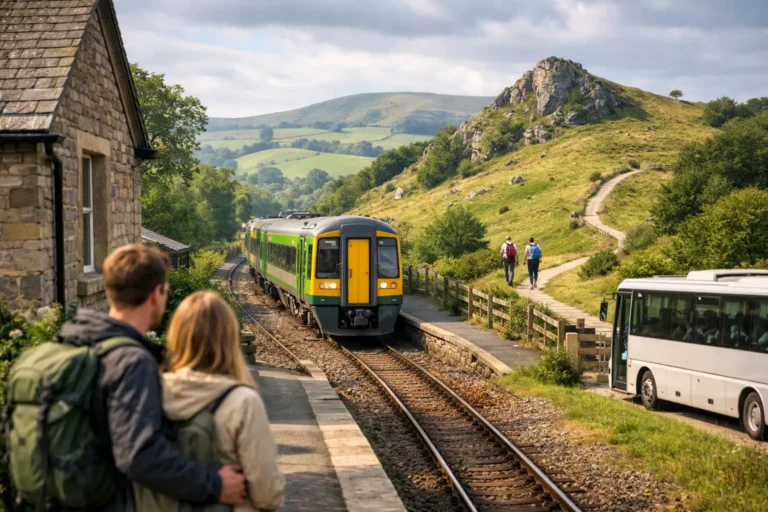
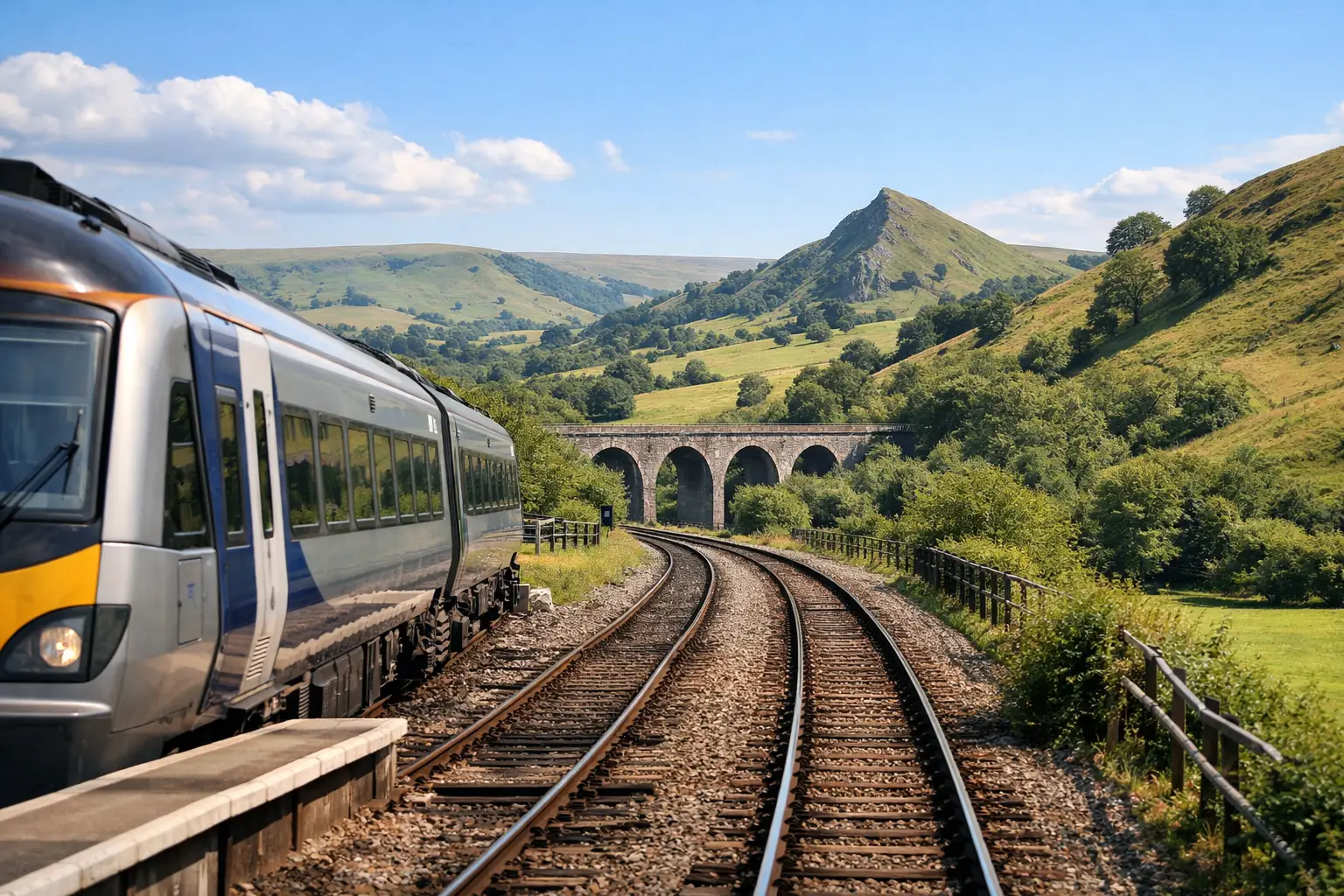
For many visitors, the Hope Valley line is the most practical choice. It connects Sheffield and Manchester with stations including Edale, Hope, Bamford, Hathersage and Grindleford. These stops give access to some of the best-known landscapes without needing a car.
Edale is the obvious choice for walkers heading towards Kinder Scout, Mam Tor or the start of the Pennine Way. It is rewarding but can be demanding, especially in poor weather. For a less strenuous day, Hope is useful for the village and onward bus connections, while Hathersage has cafés, shops and a more convenient village-centre feel.
Bamford and Grindleford suit walkers who are comfortable using footpaths and planning their own routes. They are quieter bases for reaching reservoirs, woodland and open moorland, but facilities are more limited. Do not assume every station has toilets, a shop or staff on duty.
Buxton for an easy town-and-walk break
Buxton is a strong option if you want a short break with accommodation, restaurants and services within walking distance of the station. Trains from Manchester make it especially convenient for a one- or two-night stay.
From the town, you can walk through the Pavilion Gardens, follow routes towards Grin Low, or use local buses to reach other areas. Buxton is less suitable if your priority is starting a major ridge walk directly from the platform, but it is one of the simplest bases for families, first-time visitors and anyone travelling with lighter walking plans.
Matlock for the southern Peak District
Matlock is a practical rail base for the southern side of the national park and for a break that mixes walking with towns, heritage attractions and riverside routes. Services run from Derby, and the station is close to the town centre.
This area can work well for travellers who prefer gentler terrain or do not want to rely on remote footpaths. However, check where your chosen accommodation is located. Some properties described as being near Matlock are several miles from the station and may require a taxi or local bus.
Plan your journey around the last train, not the first
The most common mistake when visiting the Peak District by train is building a day around the outward journey and leaving the return vague. Rural and semi-rural services can be less frequent than city travellers expect, particularly on Sundays, evenings and during engineering works.
Before booking accommodation or committing to a route, check three things: the final train home, the time needed to walk back to the station, and whether your intended station is served by every train. Some services may not stop at smaller stations, so read the timetable rather than relying on a route map alone.
Give yourself a buffer of at least 30 minutes at the end of a walk. This is not wasted time. Mud, a wrong turn, queues at a café, wet-weather layers and a slow descent can all add time. Missing a rural train can mean a long wait or an expensive taxi.
If you are travelling at a weekend, look for planned engineering work before you buy non-refundable accommodation. Rail replacement buses can be awkward with hiking boots, buggies and luggage, and they may take considerably longer than the train.
Where to stay when you are arriving by rail
For a car-free trip, staying within walking distance of the station matters more than finding the cheapest room. A modestly priced hotel or guesthouse in a walkable location can be better value than a cheaper rural property that requires two taxi journeys each day.
Edale is ideal for a walking-focused stay, but accommodation is limited and can book up early in warmer months and school holidays. Hathersage offers more everyday facilities and works well for a mix of short walks and relaxed village time. Buxton has the widest choice of places to stay near public transport, while Matlock is useful for the south of the park.
When comparing options, check the actual walking distance from the station, not just the town name. Also ask whether breakfast is available, whether there is somewhere to dry wet clothing, and whether you can refill a water bottle. These small details make a noticeable difference on a train-based break, where you cannot simply leave spare items in a car.
Build a realistic car-free itinerary
A good rail itinerary allows for arrival and departure times rather than pretending you have two full days on the ground. If you arrive late morning, choose a short route, settle into your accommodation and use the afternoon to buy supplies and check the next day’s weather.
For a two-night break based in Edale or Hathersage, make one day your longer walk and one day a shorter, flexible outing. This gives you an alternative if high winds, low cloud or heavy rain make exposed ground unsuitable. In Buxton, combine a town walk on arrival with one bus-supported countryside day rather than trying to cover the whole park.
Families should be particularly cautious about mileage. A five-mile route with gates, mud, gradients and snack stops can feel far longer than the same distance on a paved path. Choose a route with a clear turnaround point and keep enough time for the train back.
Tickets, railcards and practical booking choices
For journeys booked well ahead, Advance tickets can reduce the cost of longer rail travel, but they tie you to a specific train. They are sensible when your outward journey is straightforward and you have allowed plenty of time to reach the station.
For the return, flexibility may be worth more than the lowest fare if you are walking. Off-Peak and Anytime options cost more, but can protect you from a delayed finish. The right choice depends on your route, the frequency of trains and how much a missed service would disrupt your plans.
A Railcard can make a meaningful difference for eligible travellers, especially on a return journey or a couple’s short break. Check its minimum-fare rules for morning travel before relying on the advertised discount. If several people are travelling together, compare individual fares with any available group discounts rather than assuming one option will always be cheapest.
Keep tickets, booking references and a screenshot of the return timetable available on your phone, but do not rely on battery alone. A small power bank is useful, and carrying a printed note of the last train time is sensible in areas with patchy signal.
What to pack for a train-based Peak District trip
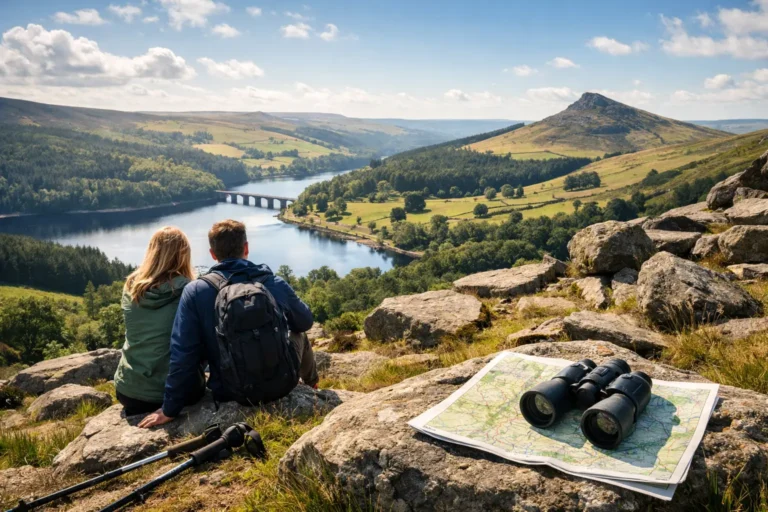
Packing light is helpful, but the weather still needs respect. A waterproof jacket, warm layer, proper footwear, water, food and a paper map or downloaded offline map should be standard for a countryside walk. Conditions can change quickly on higher ground, even when the station platform was warm and dry.
Use a refillable bottle and fill it before leaving your accommodation. Bring a reusable food container or wrap for bakery items and packed lunches, especially if you are visiting a busy area where bins may be full. Taking your litter home if necessary is a simple way to reduce pressure on small villages and footpaths.
Avoid carrying glass bottles or disposable picnic extras onto the moors. The lighter your daypack, the easier it is to manage steps, stiles and train platforms. If you are bringing walking poles, make sure they can be secured safely when boarding.
Use buses carefully, not casually
Buses can extend the reach of a rail trip, but they need the same planning as trains. Timetables may vary by season, day of the week and school holidays. Some services are designed around local needs rather than visitor routes, so a missed bus can have a bigger impact than expected.
Where a bus is central to your day, take the earlier service if possible and have a backup plan such as a shorter walk from your rail station. Check whether contactless payment is accepted, but carry a little cash as a fallback. If you need a taxi for the final mile, pre-booking can be safer than hoping one will be available in a small village.
The best Peak District rail trips are not the ones that attempt to see everything. Choose one area, leave room for weather and train changes, and book a base that makes the journey home as easy as the walk out. That approach gives you more time outdoors and fewer decisions to solve when you are tired.
Frequently Asked Questions
Additional Resources

Disclaimer
Stafford Affiliates Travel provides this guide for informational purposes and is not a travel agency. The information contained in this guide is for general guidance only. While we do our best to ensure the information is up-to-date and correct, we make no representations or warranties of any kind about its completeness or accuracy.
Cruise line policies, itineraries, and loyalty programs are subject to change without notice. We strongly recommend that you verify all details directly with your cruise line or a certified travel agent before making any bookings or financial commitments.
We cannot be held liable for any financial loss due to the reader’s failure to follow the above advice.
Affiliate Disclosure
Many of the links are affiliate links, Stafford Affiliates Travel may receive a commission from qualifying clicks, orders or bookings at no additional cost to you. This income helps support our efforts to provide and improve our site and turn it into a one stop resource for travellers with a bias towards cruising.