Lake District Ferries: 7 Best Routes for Easy Travel
Affiliate disclosure: This article contains affiliate links. If you click through and make a purchase, Stafford Affiliates Travel may earn a commission at no extra cost to you.
Some ferry crossings save you a long walk round a lake. Others turn an ordinary day out into a much simpler, car-free itinerary. If you are comparing the best Lake District ferry routes, the right choice usually comes down to three things: where you are staying, how much walking you want to do, and whether you need a scenic ride or a practical shortcut.
This guide focuses on ferry routes that genuinely help with trip planning, not just the prettiest photos. That means looking at which crossings make sense for walkers, families, and visitors trying to avoid traffic and parking stress. It also means being honest about trade-offs, because the most scenic option is not always the most efficient.
How to choose the best Lake District ferry routes
A good ferry route should remove friction from your day. In practical terms, that means helping you avoid a road detour, linking to a sensible walking route, or giving you access to a lakeside village without needing to move the car again.
Start with your base. If you are staying near Bowness, Ambleside or Glenridding, some routes are far more convenient than others. Then look at how fixed your plans are. A short shuttle-style crossing suits a flexible half-day trip, while a longer cruise works better if the boat journey is part of the attraction.
It also helps to think about weather and season. Ferry services can be a highlight in good conditions, but exposed sailings feel very different in wind and rain, especially with younger children. If your day depends on a specific crossing, check running times before you set off and build in some margin.
1. Bowness to the far shore on Windermere
If you want the most useful all-round ferry route, this is usually the one. The crossing from Bowness over to the western shore of Windermere is short, practical and easy to fit into almost any itinerary. It works particularly well for visitors who want to combine a boat trip with a drive or walk around the quieter side of the lake.
The biggest advantage is time. Going by road can mean a lengthy loop, while the ferry turns it into a quick transfer. That makes it one of the best Lake District ferry routes for reducing driving without overcomplicating the day.
There is a trade-off, though. Because it is so useful, it can be busy in peak periods. If you dislike queuing or want a more leisurely sightseeing experience, a longer passenger cruise may suit you better. But for straightforward transport value, this route is hard to beat.
2. Lakeside to Bowness or Ambleside on Windermere
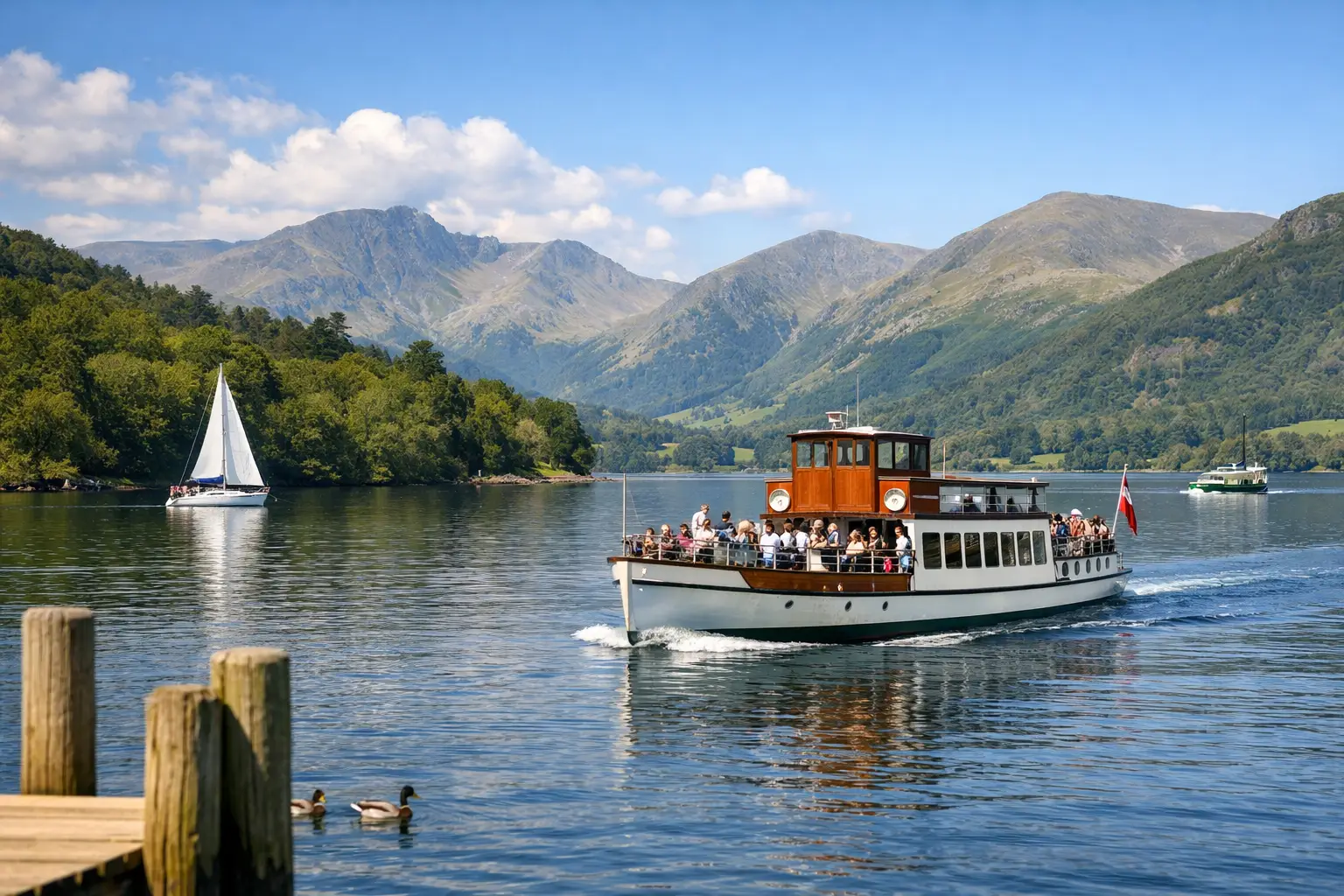
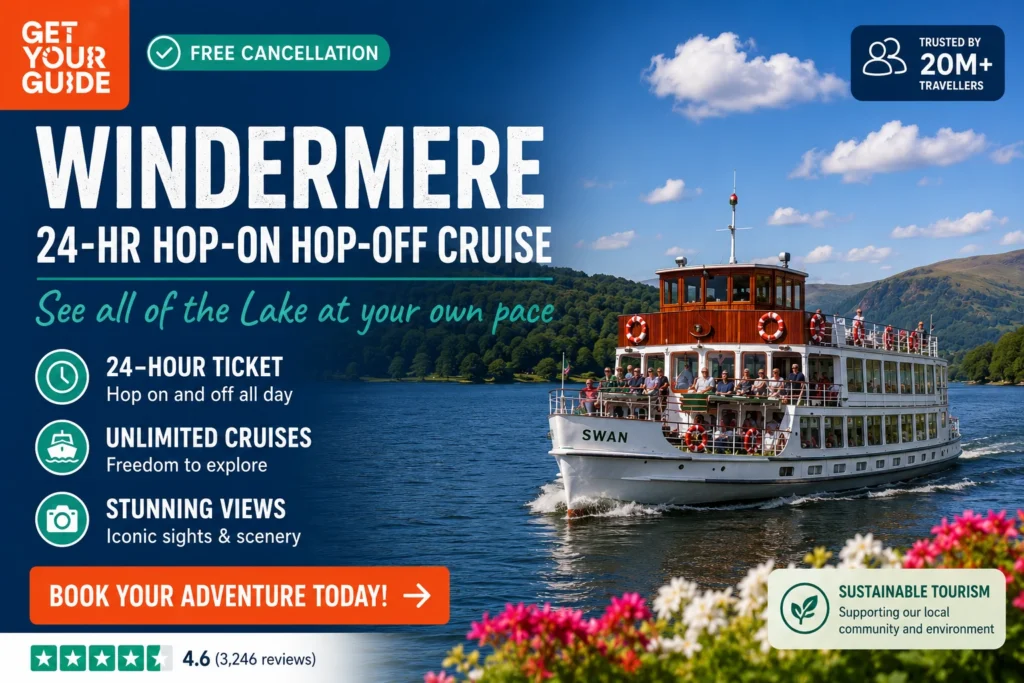
For visitors who want a classic day on the water, the Windermere lake cruises between Lakeside, Bowness and Ambleside are among the strongest choices. These sailings are less about shaving minutes off a road journey and more about linking key visitor hubs in a way that feels easy and scenic.
This route is especially useful if you are arriving by public transport to one point and do not want to backtrack by bus. It also works well for families who prefer a gentler day with short walks, a meal stop and plenty of views without a demanding hike.
The main thing to watch is timing. A multi-stop cruise can take longer than many first-time visitors expect, especially if you hop off and on. That is not a problem if the boat trip is the day’s centrepiece, but it matters if you are trying to squeeze in several attractions.
Who this route suits best
It suits first-time visitors, mixed-age groups and anyone planning a lower-stress sightseeing day. If your priority is maximum scenery with minimum navigation, this is a dependable option.
3. Glenridding to Howtown on Ullswater
This is one of the smartest ferry choices for walkers. The Ullswater route linking Glenridding and Howtown gives you access to one of the area’s most practical one-way outings, where you walk in one direction and return by boat, or do the reverse.
That setup removes a common planning problem: having to retrace your steps. For many travellers, especially those who like manageable walks rather than full-day hikes, that makes this route one of the best picks available.
It also has broad appeal. Strong walkers can build a longer route around it, while casual visitors can keep things simple with a shorter lakeside section and a return sailing. The only caution is that this route is most rewarding if you actually want to spend time outdoors on foot. If you are after a quick scenic ride without walking, Windermere options tend to offer better convenience.
4. Pooley Bridge to Glenridding on Ullswater
This longer Ullswater sailing is a good option if you want the boat journey itself to feel substantial. It links two useful points at either end of the lake and gives you a wider sense of the landscape than a short shuttle crossing.
From a planning point of view, it works well for travellers staying near one end of the lake who want to spend the day at the other without tackling the full drive round. It is also handy if you prefer one settled itinerary rather than lots of changes.
The drawback is commitment. Because the route is longer, you need to be a bit more disciplined with timing. Missing a sailing can reshape the day more than it would on a shorter, more frequent crossing. If you are travelling with children who need flexibility, check whether a shorter route would be easier.
5. Keswick launch services on Derwentwater
Although this is not a point-to-point ferry in the same practical sense as some other routes, the launch network on Derwentwater deserves a place on the list because it solves a different planning need. It lets you hop around several landing stages from Keswick, giving you access to walks and viewpoints without committing to a full circuit on foot.
That makes it useful for visitors who want variety. You can walk one section of shoreline, take the boat to another stop, then return when it suits. It is also a sensible choice for groups with different energy levels, because one person can do more walking while another keeps the day lighter.
The trade-off is that it can feel less like a true ferry route and more like a flexible sightseeing service. If your aim is a simple crossing from A to B, this may not be the strongest fit. If your aim is a low-hassle day with options, it is excellent.
6. Coniston lake cruises for scenic access
Coniston’s boat services are best viewed as a scenic transport option rather than a pure commuter-style ferry. They can be very useful if you want to see more of the water and reach parts of the shoreline without driving the whole perimeter.
This route tends to appeal to visitors who already know they want a slower-paced day. It rewards people who are happy to let the trip breathe a bit, perhaps with a stop for a walk or lunch rather than trying to pack in several locations.
If you are pressed for time, Coniston may not be your first choice. It is better for a deliberately unhurried plan than a tight itinerary. That said, if avoiding road miles is part of your lower-waste approach to getting around, it fits well.
7. Ambleside to Bowness on Windermere
For a straightforward visitor-friendly route, Ambleside to Bowness is one of the easiest options to recommend. It links two popular bases and allows you to shape a day that does not depend entirely on the car.
This is particularly useful if you want to start in one place, spend time shopping or eating in another, and keep the journey itself enjoyable. For many couples and families, that is enough reason to prioritise it.
Its limitation is similar to other popular Windermere routes: demand. At busy times, the convenience is no secret. If you prefer a quieter atmosphere, an earlier sailing is often the better call.
Planning tips for ferry days
The best ferry route on paper can still lead to a frustrating day if the practical details are wrong. Aim to arrive with enough time for parking, ticketing and boarding, especially in school holidays and on warm weekends. If you are relying on buses before or after the sailing, leave more connection time than you think you need.
Pack for a changeable day rather than the forecast headline. A light waterproof, extra layer and refillable water bottle usually make more difference than any specialist gear. If you are trying to travel more responsibly, ferries pair well with public transport and one-way walks because they reduce repeated car journeys and the hunt for multiple parking spaces.
Which route is best for families?
Windermere’s main cruise routes usually offer the easiest family day out because facilities and nearby services are straightforward. Ullswater works well too if your family enjoys walking and can handle a bit more planning.
Which route is best for walkers?
Glenridding to Howtown is the standout. It gives you a practical way to build a one-way walk without awkward transport backtracking.
Which route is best if you want the simplest trip?
Bowness across Windermere is often the easiest. It is short, useful and clear to build into a day without much effort.
If you only book one ferry during your trip, choose the route that solves a transport problem as well as giving you a view. That is usually the crossing you will remember as money well spent.