Best Carry On Backpack for Smarter Travel
Introduction
Airline staff rarely care how stylish your bag looks. They care whether it fits the rules, lifts easily into the overhead locker and does not hold up boarding. That is why finding the best carry on backpack is less about branding and more about choosing a bag that works hard on real trips.
For most UK travellers, the right carry-on backpack needs to handle a short city break, a week of mixed transport or a family trip where hands-free packing matters. It should be easy to carry through stations, airports and uneven streets, but also structured enough that your clothes, chargers and toiletries do not end up in a heap by day two. If you are buying one bag to use often, the details matter.
What makes the best carry on backpack?
A good carry-on backpack sits between a suitcase and a daypack. It opens wide enough to pack properly, carries comfortably for longer than ten minutes and fits within the hand luggage limits you are most likely to use.
That last point is where many people get caught out. Some bags are sold as cabin-friendly, but that claim means very little without dimensions. Airlines vary, and budget carriers can be strict. A backpack that works well for one route may be too deep or too tall for another. If you regularly fly with airlines that have smaller allowances, it makes sense to buy for the tightest limit you expect to use, not the most generous.
Capacity usually lands somewhere between 30 and 40 litres for the sweet spot. Below that, packing gets restrictive unless you travel very light. Above that, the bag can become awkward, heavy and more likely to fail cabin checks when fully packed. For a typical three to five night break, 35 litres is often enough if the layout is sensible.
Size first, then comfort
People often start with pockets and features, but size and comfort should come before anything else. If a bag is uncomfortable when loaded, you will feel it at every platform change and hotel check-in.
Look for padded shoulder straps, a supportive back panel and a shape that sits close to your body rather than dragging backwards. A sternum strap helps more than many buyers expect, especially if you walk longer distances between transport hubs and accommodation. Hip belts can be useful on larger travel packs, but on carry-on bags they are not always essential. They also add bulk, which may be unnecessary for short breaks.
Back length matters too. A bag that is too long for your frame can feel clumsy, no matter how good the specification looks online. If possible, check how adjustable the harness is. This matters particularly for shorter travellers and teenagers using the same bag on family trips.
The best carry on backpack layout for short trips
The most useful design is usually a clamshell opening. It lets you pack the bag like a suitcase instead of loading everything from the top and digging through layers later. For organised travel, that alone can make a big difference.
A separate laptop sleeve is handy if you work while travelling or want electronics accessible at security. If you do not carry a laptop, that compartment can still be useful for documents or a lightweight jacket, but it should not take up too much internal space.
External pockets are helpful when they are limited and well placed. One quick-access pocket for passport, phone or boarding pass makes sense. Too many small compartments can encourage overpacking and make the bag heavier before you have even added clothes.
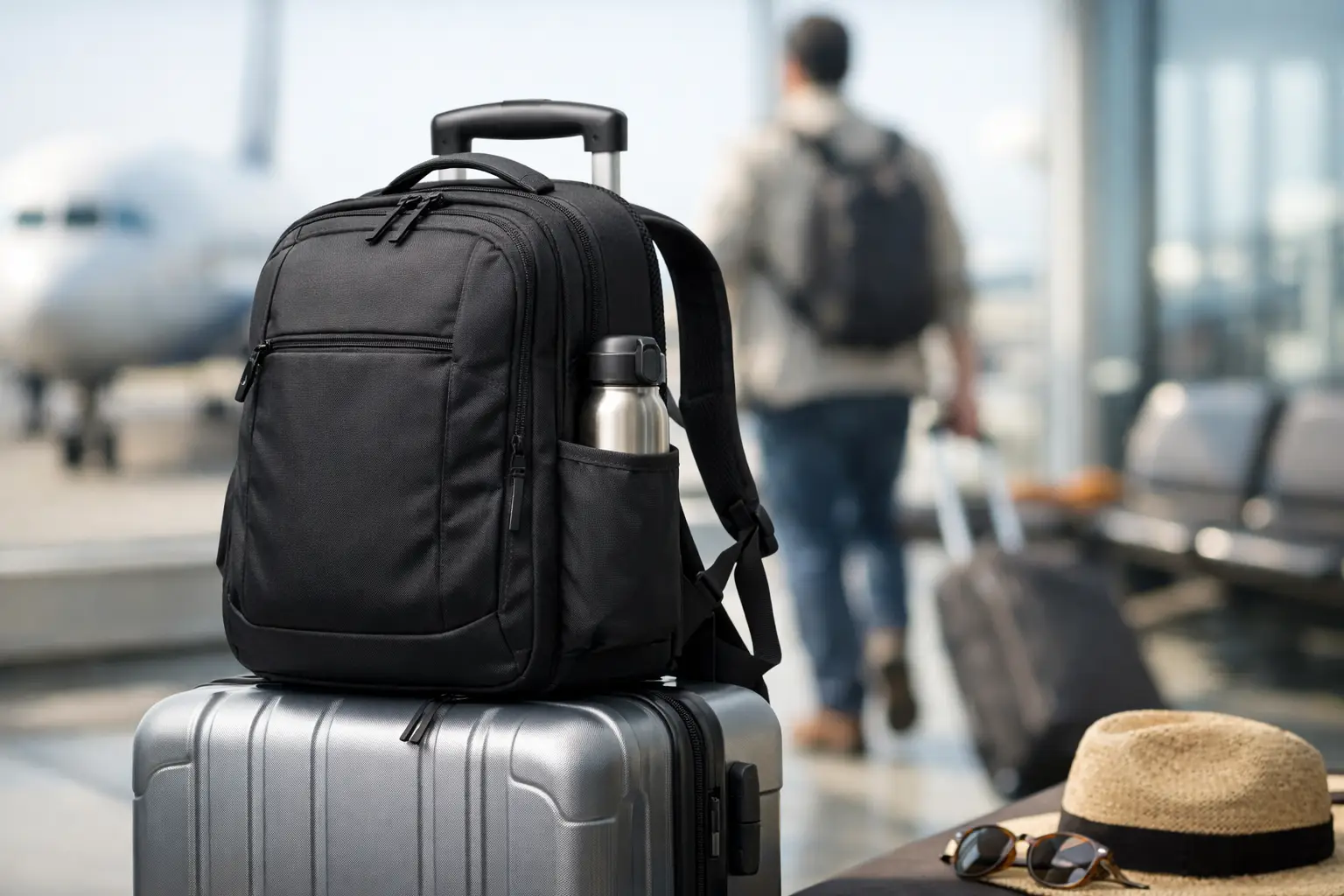
Water bottle pockets sound basic, but not all travel backpacks handle them well. Some are too shallow or too tight once the main compartment is full. If you carry a refillable bottle – a sensible lower-waste choice for airports, stations and city days out – check that the pocket remains usable when the bag is packed.
Hard shell structure or soft flexibility?
It depends on how you travel. A more structured backpack keeps its shape, protects contents better and often feels tidier to pack. It suits airport-to-hotel trips, city breaks and travellers who like everything to stay in place.
A softer bag can be easier to squeeze into luggage sizers or overhead spaces, especially on full flights. It may also weigh less. The trade-off is that it can sag when not packed carefully, which makes carrying less comfortable.
If your trips involve trains, buses, flat stairs and a fair amount of walking, a semi-structured bag is usually the most balanced choice. It gives enough support without feeling rigid.
Features worth paying for
Some upgrades are genuinely useful. Lockable zips add peace of mind in busy terminals and shared storage areas. Water-resistant fabric helps in light rain and on wet pavements, although it is not the same as fully waterproof protection. Durable grab handles on the top and side are also worth having because backpacks are often lifted like suitcases in airports.
Compression straps can help keep the load stable, but only if they do not block access every time you open the bag. A luggage pass-through sleeve is handy if you sometimes pair the backpack with a cabin suitcase, though for many travellers the whole point of choosing a carry-on backpack is to avoid wheeled luggage altogether.
What is less essential? USB charging ports built into the bag, overly elaborate anti-theft claims and detachable extras you are unlikely to use. These can add cost without improving the actual travel experience.
Choosing the right bag for your type of trip
The best carry-on backpack for a weekend in a European capital is not always the same as the best option for a multi-stop holiday. For a simple two or three night break, prioritise easy access, low weight and a clean rectangular shape that packs efficiently.
For longer trips with mixed transport, comfort matters more. You may carry the bag for longer stretches, so harness quality and load balance become more important than sleek looks. Families may also want a bag that opens clearly and keeps children’s items separate, rather than one large open compartment.
If you often travel in cooler months, allow extra room for bulkier layers. If you mostly book summer breaks, you can often manage with a slightly smaller bag and avoid carrying empty space. This is where being honest about your own packing habits matters. Buying the largest cabin bag allowed often leads to filling it just because you can.
Packing matters as much as the backpack
Even the best bag performs badly if packed badly. Heavy items should sit close to your back, not at the front of the bag where they pull away from your centre of gravity. Shoes are best packed low and flat. Smaller items need a consistent home, whether that is a pouch, packing cube or one dedicated compartment.
Packing cubes are genuinely useful if they stop you rummaging through the whole bag every morning. They also help separate clean and worn clothes, which is practical on short city trips. That said, over-compartmentalising can make a simple trip more fiddly than it needs to be.
To keep things lighter and lower-waste, decant toiletries into refillable travel bottles and skip full-size products unless there is a clear reason to bring them. A lighter bag is easier on stairs, easier on pavements and less likely to exceed airline limits.
Common mistakes when buying a carry-on backpack
The biggest mistake is buying on looks alone. Travel bags are handled, dragged, compressed and stuffed into bins. A smart exterior means very little if the zips are weak or the straps are poorly shaped.
Another common error is ignoring empty weight. Some travel backpacks are heavy before you pack a thing. That is less of an issue on generous legacy-airline allowances, but more frustrating on strict hand luggage rules where every kilogram counts.
It is also easy to overestimate how much organisation you need. More compartments do not automatically mean a better bag. Often, a simpler layout with one main section, one tech area and one quick-access pocket is easier to use.
Finally, do not assume one backpack can cover every type of holiday perfectly. If you mostly take short urban breaks, buy for that job. A bag designed for hostel hopping and extended travel may be overbuilt for a three-night trip with train transfers and one hotel.
A practical checklist before you buy
Before choosing a backpack, check the dimensions against the airlines you use most. Then look at weight, opening style, strap comfort and whether the shape makes sensible use of space. If product photos never show the bag fully packed and worn on a person, be cautious.
It also helps to test your likely packing list in rough terms. Think one pair of shoes, clothes for the trip length, charger, refillable bottle, toiletries and any layers you would realistically carry. If the bag only works when packed with military precision, it may not be the right fit for ordinary travel.
For most readers, the best carry on backpack is not the most technical or the most expensive. It is the one that fits airline rules, keeps weight manageable and makes moving through a trip easier rather than harder. Buy with your actual journeys in mind, and your next airport, rail station or old-town staircase will feel much simpler.