10 Reusable Travel Essentials That Save Money & Space
Introduction
You do not need to overhaul your entire suitcase to travel with less waste. A good reusable travel essentials list simply helps you avoid the throwaway items that quietly build up on every trip – water bottles bought at the airport, flimsy cutlery for train snacks, mini toiletries you use once, and carrier bags that split halfway through the day. For most UK travellers, the aim is not perfection. It is packing a few dependable items that make holidays easier, tidier and cheaper over time.
That matters most on the kinds of trips people actually take: a weekend in Paris, a family break on the Costa del Sol, or a few days walking in the Lake District. On short trips especially, small reusable items do more than reduce waste. They cut down on faff, help you stay organised, and make it less likely you will need to buy overpriced basics after you arrive.
What to include in a reusable travel essentials list
The best reusable travel essentials list is not the longest one. It is the one you will actually use on most trips. Start with items that solve repeated problems: staying hydrated, carrying snacks, managing toiletries, storing laundry and day-to-day shopping.
A refillable water bottle is usually the first item worth packing. It is useful in airports after security, on trains, during city sightseeing and for long transfer days. If space is tight, a lightweight bottle makes more sense than a bulky insulated one. For hot destinations or full-day outings, insulation can be worth the extra room. The trade-off is simple: lighter bottles pack better, insulated bottles perform better.
A reusable coffee cup is more optional, but it earns its place if you regularly buy takeaway drinks when travelling. If you are heading off on an early flight from the UK or moving through stations and service stops, it can save both money and waste. If you rarely buy hot drinks out, leave it behind.
Reusable food storage also helps more than people expect. A small sandwich wrap, snack pouch or compact container is useful for plane snacks, picnic supplies, bakery stops and leftovers from self-catering stays. This is particularly handy for families, where food often needs to be carried for longer than planned. It also reduces the need for cling film, disposable bags and emergency purchases.
A foldable shopping bag deserves a permanent place in your case or day bag. It is one of the simplest low-waste swaps and one of the most practical. You can use it for groceries, laundry, beach gear, pharmacy stops or anything you pick up during the day. Choose one that folds into a small pouch and dries quickly if needed.
The Ultimate Filtered Upgrade: Water-to-Go
While a standard refillable bottle is excellent for the UK, international travel often presents a challenge: tap water safety. To truly travel with less waste, you need a bottle that allows you to skip the plastic multi-packs in the local supermarket entirely.
We recommend Water-to-Go for their unique 3-in-1 filter technology. Unlike standard charcoal filters that only improve taste, these filters remove up to 99.9999% of microbiological contaminants—including bacteria, viruses, and cysts.
Whether you are exploring the streets of Paris or heading further afield, their range covers every trip type:
The 1 Litre Eco Active: Their largest capacity, made from sustainable sugarcane—perfect for family days in the heat.
The 75cl Classic & Active: The dependable mid-size all-rounders for hiking and transit.
The 50cl & 55cl Compacts: Lightweight options that slip easily into a small day bag for city sightseeing.
By packing a Water-to-Go bottle, you aren’t just carrying water; you’re carrying a portable treatment plant that makes almost any non-saltwater source safe to drink.
Reusable toiletry essentials that actually earn space
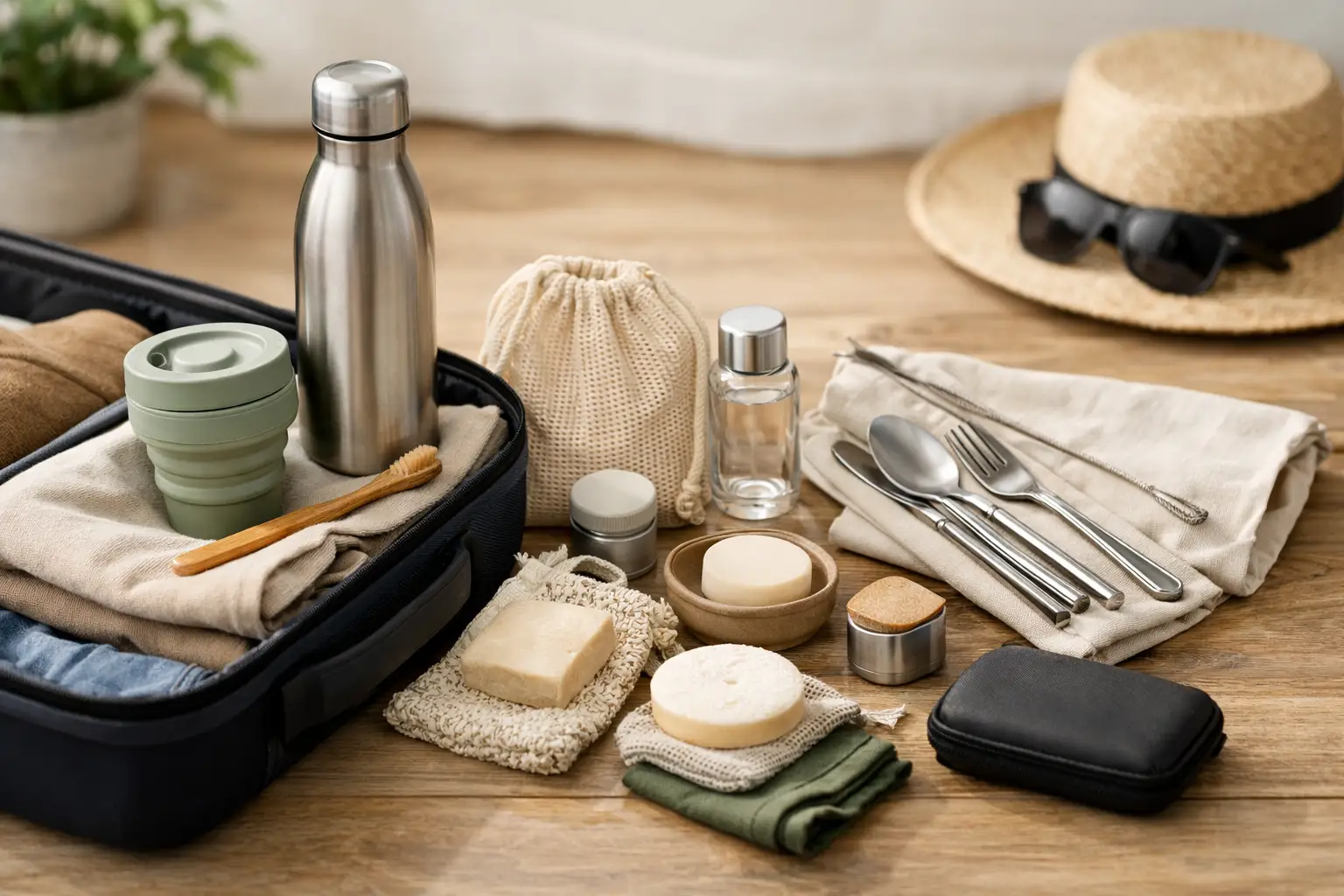
Toiletries are where good intentions often collapse. People buy travel minis for convenience, then end up with half-used plastic bottles at home and too little product on the trip. A better approach is to keep a small reusable set ready to go.
Refillable silicone or hard-shell bottles work well for shampoo, conditioner, shower gel and lotion. Leak-proof matters more than appearance here. If a bottle is fiddly to clean or unreliable in transit, it will not stay in your routine. For shorter city breaks, smaller containers are usually enough. For longer family trips, slightly larger bottles reduce the need to ration everything by day three.
A reusable clear toiletry bag is also worth having, especially for hand luggage. It keeps liquids in one place and speeds up security preparation. If you mostly travel with checked luggage, it still helps with organisation in hotel bathrooms and holiday rentals.
Solid toiletries can reduce bulk even further. Shampoo bars, conditioner bars and soap bars remove the liquid problem entirely, though they are not ideal for everyone. Some travellers love them because they last well and pack neatly. Others find them messy when wet or awkward in shared bathrooms. If you go this route, bring a draining soap case so the product does not turn to mush.
A reusable make-up remover pad or washable flannel is another easy upgrade. It takes up almost no room and avoids the need for single-use wipes or cotton pads. The same goes for a compact razor cover, a reusable toothbrush case and a small travel pot for moisturiser or cleanser.
Smart reusable items for transit days
Transit is where people tend to buy disposable extras because they are tired, rushed or dealing with delays. Packing a few reusable basics in your personal item can make the whole journey smoother.
A lightweight cutlery set can be useful if you pick up salads, pasta pots or supermarket meals on the go. It is more relevant for rail travel, road trips and self-catering holidays than for a simple flight-only weekend. If you will only use it once, skip it. If you regularly eat in transit, it is a sensible add-on.
A reusable napkin or small cloth is another item that sounds niche until you have it. It helps with messy snacks, wipedown moments, picnic lunches and children’s spills. It can also double as a placemat on trains or park benches.
For connectivity and charging, reusability is more about durability than replacing single-use products. A well-organised cable pouch, a long-lasting power bank and a proper plug organiser reduce breakages and prevent the all-too-common airport purchase of an overpriced lead you did not plan for. These are not low-waste in the same way as a bottle or bag, but they support the same principle: buy once, use often, avoid waste later.
Laundry, packing and day-use items worth keeping
A reusable travel essentials list should also cover the items that help your clothes and day bag work harder. These are often the things that stop a trip becoming cluttered halfway through.
Washable packing cubes are useful if you like structure, especially on multi-stop trips. They keep clean and worn clothing separate, make repacking quicker and help families divide items clearly. They are not essential for everyone. If you travel very light, they can feel like extra layers inside the case. But for longer stays or shared suitcases, they are often worth it.
A reusable laundry bag is more helpful than using a bin liner from the hotel room. It keeps dirty clothes contained and can hold damp swimwear or muddy walking gear on the journey home. Choose one that can be washed with the clothes inside if needed.
For daily outings, a durable day bag is one of the best long-term travel buys you can make. It should hold your water bottle, layers, snacks and valuables without becoming uncomfortable after an hour. For city breaks, anti-theft features may matter more. For countryside trips, weather resistance and comfort tend to matter more. It depends on the trip, but the principle is the same: pick one dependable bag rather than relying on disposable totes or buying another cheap backpack in resort.
How to build a reusable travel essentials list that suits your trip
Not every reusable item belongs on every holiday. A couple on a two-night Paris break needs a different setup from a family flying to Málaga for ten days. The easiest way to build your list is to think in trip types.
For a short city break, focus on compact basics: refillable water bottle, foldable shopping bag, reusable toiletry containers, clear wash bag and a small snack pouch. You want items that save space and reduce day-to-day buying without making packing more complicated.
For a beach holiday or family trip, add food containers, laundry storage and a more robust day bag. These trips usually involve more snacks, wet items, sunscreen and unplanned shopping, so the practical value of reusable gear goes up quickly.
For UK walking breaks, weather and comfort matter more than airport convenience. A sturdy bottle, reusable food container, washable cloth and proper laundry or wet-gear bag will probably earn their place more than a coffee cup or liquid bottle set.
The key is to avoid treating lower-waste packing as an all-or-nothing exercise. If you pack ten reusable items and use only two, that is not efficient. If you pack five and rely on them every day, that is a good system.
Common mistakes with reusable travel packing
The biggest mistake is overpacking “worthy-looking” gear that doesn’t match your travel style. Large metal bottles, heavy glass containers, and over-complicated toiletry kits can add weight fast. The second mistake is failing to test your gear: if a bottle leaks or a soap box fails in your bathroom at home, it will be a disaster in a suitcase.
Another frequent oversight is destination context. In many parts of the world, “refillable” only works if there is a safe supply nearby. Many travellers pack a standard reusable bottle but end up buying plastic multipacks of water anyway because they don’t trust the local tap. This is where a filtered bottle like the Water-to-Go 1 Litre Eco Active becomes a game-changer; it allows you to maintain your lower-waste habits even in regions where the water quality is questionable.
If you want a simple rule: choose reusable items that solve a problem on at least three different kinds of trips. That is the sweet spot between practical packing and good intentions.
Frequently Asked Questions
Additional Resources

The Essential Cruise & Travel Shop
Disclaimer
Stafford Affiliates Travel provides this guide for informational purposes and is not acting as a travel agency or relevant professional adviser. The information contained in this guide is for general guidance only. While we do our best to ensure the information is up-to-date and correct, we make no representations or warranties of any kind about its completeness or accuracy. Airline hand luggage regulations, airport liquid restrictions, local water safety conditions, and manufacturer product specifications are subject to change without notice. We strongly recommend that you verify all important details directly with the appropriate airline, transport operator, product manufacturer or relevant authoritative body before making any bookings, decisions or financial commitments. We cannot be held liable for any financial loss due to a failure to follow the above advice.
Affiliate Disclosure
Many of the links are affiliate links, Stafford Affiliates Travel may receive a commission from qualifying clicks, orders or bookings at no additional cost to you. This income helps support our efforts to provide and improve our site and turn it into a one stop resource for travellers with a bias towards cruising.