How to Book Rail Seats Without Paying Too Much
Introduction
A cheap rail fare can become less of a bargain if your group is split across a busy carriage, your luggage is nowhere near you, or you discover too late that a reservation was required. Knowing how to book rail seats properly means checking what your ticket includes before payment, rather than trying to fix the journey after you have boarded.
For most UK trips, seat reservations are free when available. Across Europe, the rules vary much more: some services include a reservation, some sell it separately, and some make it compulsory. The practical approach is to treat the ticket and the seat as two related but different things.
Start with the journey, not the seat map
Before choosing seats, confirm the basics: your travel date, direction of travel, departure station, arrival station and whether you are happy to change trains. A direct service is often worth paying a little more for when travelling with children, larger cases or a tight hotel check-in time.
Then consider how fixed your plans are. Advance tickets can be excellent value but are normally tied to a specific train. Flexible tickets cost more, yet may suit a day out in the Peak District where weather, walks and local connections can alter your timetable. Do not assume that a flexible ticket guarantees a seat. You may still need to reserve one separately.
When comparing fares, look for wording such as “seat reservation included”, “reservation optional” or “reservation required”. If the booking screen is unclear, pause before paying. A few minutes of checking is better than arriving at the platform with an unsuitable ticket.
How to book rail seats step by step
The simplest method is to book your ticket and seat reservation in the same transaction. Enter every passenger accurately, including child ages where requested, then select the service you genuinely intend to catch. Booking systems usually offer a seat preference before the payment page or show a carriage plan after you choose the fare.
Use this order to avoid common mistakes:
- Choose the train first, allowing realistic time to reach the station and make any connection.
- Check whether a seat is included, optional or compulsory for that service.
- Add all travellers to the same booking where possible, so the system can place the group together.
- Select your preference or exact seats, then check the confirmation before you pay.
If the operator offers only preferences rather than a map, choose the options that matter most. For example, select “table” for a family sharing food and games, or “airline-style” for a solo traveller on a short journey. Avoid selecting several conflicting preferences and expecting every one to be met.
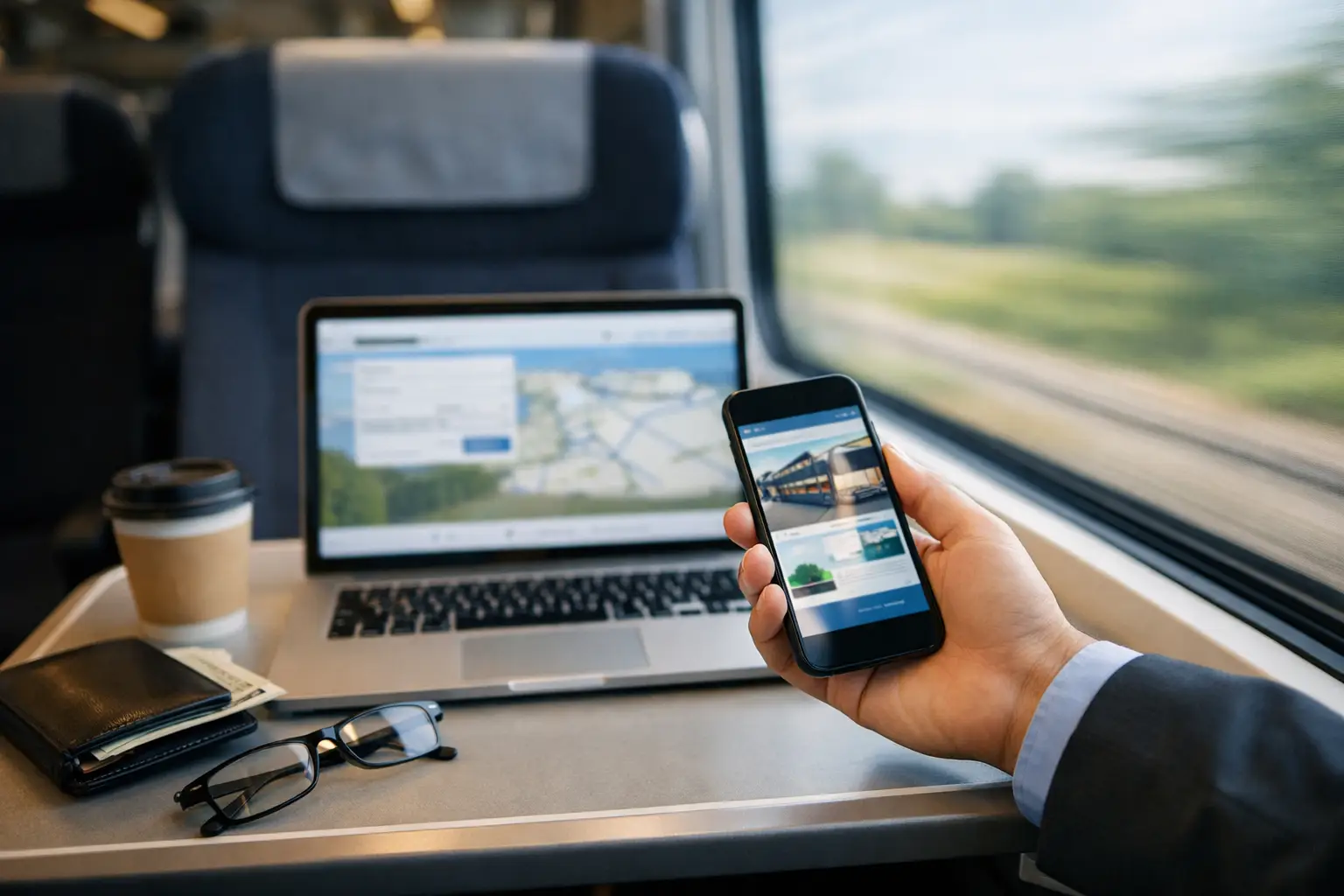
After booking, save the confirmation in the rail app and as an offline screenshot or PDF. Reception can be patchy on platforms and on rural routes. Check the carriage number, seat number, departure time and any note about boarding at a particular part of the train.
Choosing seats that work for your trip
The best seat depends on the journey. A table is useful for a longer daytime trip, particularly if you are travelling as a family or need room for a small activity. However, table seats can feel crowded when four strangers are sharing them, and they are not always close to luggage racks.
Airline-style seats usually provide more personal space and can be easier for a couple or individual traveller. If you need a quiet journey to work, read or rest, look for a designated quiet coach where available. Respect its purpose: phone calls, music played aloud and noisy games make it less useful for everyone.
Window seats appeal for scenic routes, but an aisle seat can be more practical if you need frequent access to a child, the toilet or stored bags. For travellers prone to motion sickness, facing the direction of travel may be more comfortable. On some booking maps, arrows indicate direction; on others, the carriage layout does not confirm it, so do not treat it as guaranteed.
If reduced mobility, a wheelchair space, assistance, a hearing impairment or step-free access is relevant, book early and contact the train operator’s passenger assistance service. Accessible spaces and companion seating can be limited. Booking direct assistance is more reliable than hoping station staff can rearrange matters on the day.
UK reservations: usually free, never automatic
On many UK long-distance services, a free reservation can be added to an eligible ticket. This is helpful on Friday afternoons, school holidays, bank holiday weekends and major event days, when trains can be busy even outside the largest cities.
A reservation is generally linked to a particular service. Miss that train, and the seat is usually no longer yours, even if your ticket remains valid for a later one. If disruption causes the delay, speak to staff or use the operator’s app for guidance. Do not sit in a reserved seat without checking the display or reservation label first.
Some regional and commuter-style services do not offer reservations at all. In that case, the right strategy is to travel outside the busiest times, arrive with time to board sensibly and keep bags compact. A small case that fits in the luggage area is easier to manage than multiple loose bags blocking seats or aisles.
When travelling in a group
Book the full party at once. Separate bookings may receive seats in different carriages, even when made minutes apart. If seats are not together, try changing the train time before accepting the allocation. A service 30 minutes earlier or later may have far more options.
For families, avoid splitting adults and children across an aisle unless there is no alternative. Check whether a reservation is for a specific seat or simply a preferred area. If you are travelling with a pram, fold it where required and board near the labelled accessible or luggage areas if the train layout allows.
European rail: check reservation rules before committing
European rail journeys often involve more than one operator, and reservation policies can change at borders. High-speed, overnight and international services are the most likely to require a paid reservation. Local and regional trains often do not require one, but they may be busy at peak times.
This matters particularly if you are using a rail pass. A pass covers travel according to its rules; it does not automatically include a place on every train. A required reservation can sell out while pass travel remains technically valid, leaving you to choose another service or buy a different ticket.
For a multi-city holiday, decide which legs need certainty. It can make sense to reserve a long morning journey to protect a hotel check-in or onward connection, while leaving a short local journey flexible. Build in time for platform changes, passport checks where applicable and the possibility that one delayed train affects the next.
Night trains deserve extra care. Book the accommodation type you are comfortable with, not simply the cheapest option. A seated ticket, couchette and private sleeper offer very different levels of privacy, sleep and luggage security. Read what is included before paying, especially for bedding, breakfast and gender-specific compartments.
If you cannot get the seats you want
Do not panic if the map shows few options. First, search for a nearby departure rather than abandoning the route. Then check whether first class is only slightly more expensive, particularly for a short journey or when standard class is nearly full. It is not always worth the extra cost, but it can be sensible for a group that needs to sit together.
If no reservations are available, your ticket may still be valid on a non-reservable train. Arrive earlier, board promptly and be prepared to sit apart. Keep essentials in a day bag so you are not repeatedly opening an overhead case or walking through a moving carriage.
Avoid paying for duplicate reservations through different sellers. Before buying anything extra, check the original confirmation and the operator name. Third-party platforms can be convenient for comparing routes, but the final ticket conditions remain the authority.
A lower-waste way to travel by rail
Rail is already a practical lower-emission choice for many journeys, but a little preparation reduces waste on board too. Carry a refillable bottle, a reusable cup if you expect to buy hot drinks, and snacks in a reusable container. Refill before boarding where possible, as station water points are often easier to find than ones on the train.
Download tickets, maps and accommodation details before leaving. Digital documents reduce paper, but they also help when you have limited signal. Keep one charged power bank for longer journeys, and use station bins for any rubbish rather than leaving it in the seat pocket.
The most useful habit is simple: reserve early when your plans are fixed, and stay flexible when they are not. With the ticket conditions checked and the right seat chosen, you can step onto the train focused on the holiday ahead rather than the logistics of finding somewhere to sit.
Frequently Asked Questions
Additional Resources

The Essential Cruise & Travel Shop

Disclaimer
Stafford Affiliates Travel provides this guide for informational purposes and is not a travel agency. The information contained in this guide is for general guidance only. While we do our best to ensure the information is up-to-date and correct, we make no representations or warranties of any kind about its completeness or accuracy.
Cruise line policies, itineraries, and loyalty programs are subject to change without notice. We strongly recommend that you verify all details directly with your cruise line or a certified travel agent before making any bookings or financial commitments.
We cannot be held liable for any financial loss due to the reader’s failure to follow the above advice.
Affiliate Disclosure
Many of the links are affiliate links, Stafford Affiliates Travel may receive a commission from qualifying clicks, orders or bookings at no additional cost to you. This income helps support our efforts to provide and improve our site and turn it into a one stop resource for travellers with a bias towards cruising.