
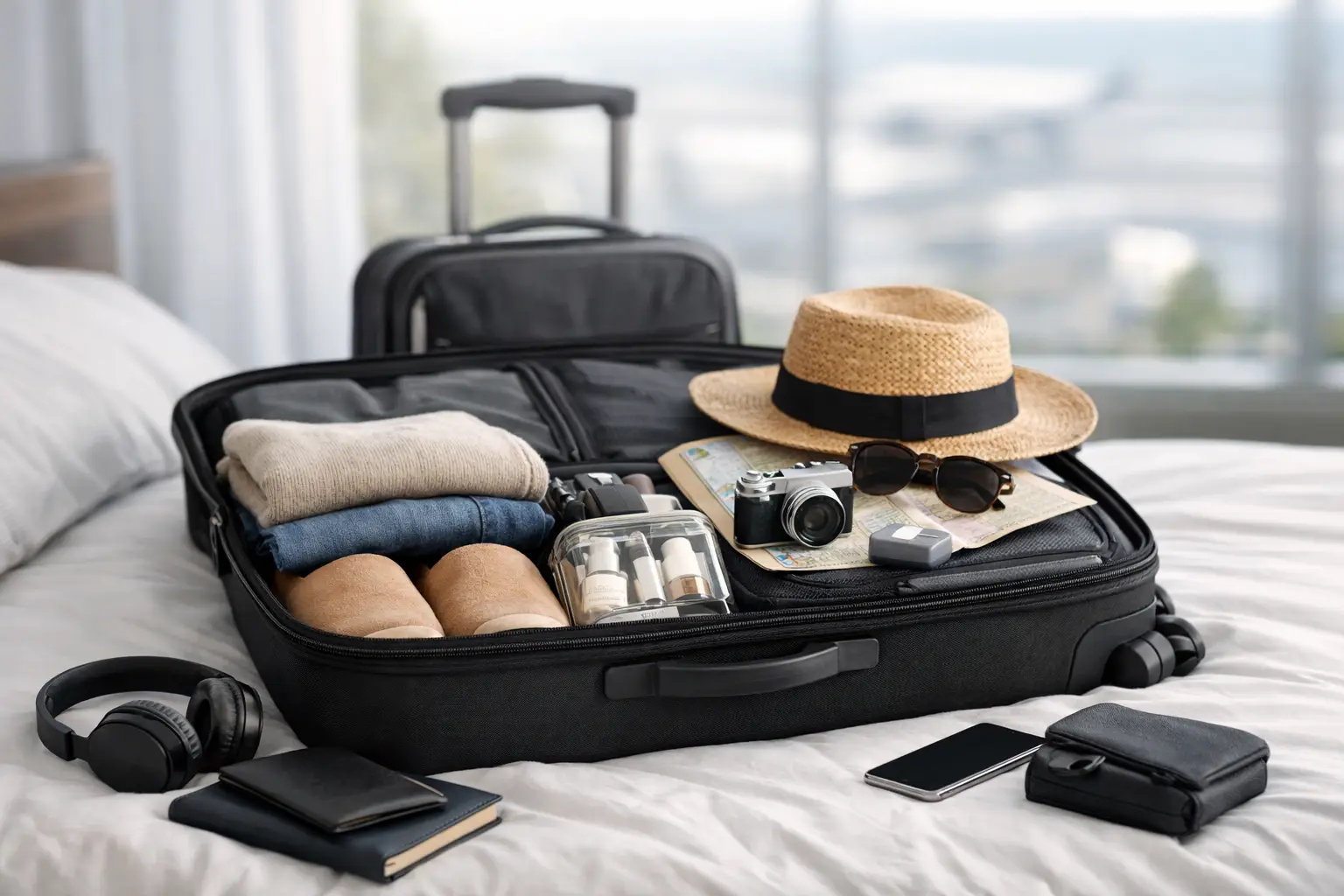
How to Pack Hand Luggage Only
Affiliate disclosure: This article contains affiliate links. If you click through and make a purchase, Stafford Affiliates Travel may earn a commission at no extra cost to you.
You only need one expensive baggage surprise at the airport to start rethinking your packing. If you want to know how to pack hand luggage only, the aim is not to cram more into a small case. It is to pack with enough structure that you take what you will actually use, stay within airline rules, and avoid dragging unnecessary weight through stations, airports and hotel staircases.
For most short breaks, hand luggage only is realistic. It works especially well for city breaks, summer holidays, and two- to five-night trips where laundry is not essential. It can be less practical for winter trips, multi-stop travel, or holidays that need specialist gear, so the right approach depends on your destination, airline allowance, and how often you are willing to re-wear outfits.
Why hand luggage only works so well
The obvious benefit is cost. Many low-cost fares look cheap until cabin bag rules, seat selection and hold luggage are added. Travelling with one small case or backpack also saves time at both ends of the trip. You skip the bag drop queue, avoid waiting at the carousel, and reduce the chance of your luggage going missing.
There is also a practical advantage once you arrive. A lighter bag is easier on trains, airport transfers, buses and uneven pavements. If you are taking public transport from the airport or moving between accommodation, that matters more than people expect. Packing less can also support lower-waste travel habits because it encourages refillable toiletries, fewer throwaway purchases, and more deliberate choices.
How to pack hand luggage only without forgetting essentials
The best method starts before the suitcase is open. First, check the exact cabin bag rules for your airline. Not all hand luggage allowances are generous, and the difference between a free under-seat bag and a paid cabin case can completely change what fits. Weight limits matter too. Some airlines barely check; others do.
Then plan your trip by activity, not by day. That usually means one travel outfit, one or two daytime outfits, one evening option if needed, underwear and socks for each day, and sleepwear. If you pack by day, you tend to duplicate items. If you pack by use, you see more clearly what can do more than one job.
A simple colour scheme helps more than most packing gadgets. If your tops, bottoms and shoes all work together, you need fewer pieces. Neutral basics are useful here, but that does not mean everything has to be black or beige. It just needs to mix easily. One jumper that works with every outfit is better than three that each need different shoes.
Start with the bulkiest items on your body
What you wear on the journey can save a surprising amount of space. If you are taking a coat, boots, or a heavier knit, wear them rather than pack them. This is especially useful for UK departures where the weather at home may be cooler than the weather on arrival.
The trade-off is comfort. There is no point boarding a flight in your heaviest layers if you will spend the journey overheating and juggling clothing in the terminal. Choose your travel outfit carefully: practical shoes, one light layer, and one outer layer that can be removed easily usually works better than wearing half your bag.
Build a compact clothing plan
For a typical three-night break, most travellers can manage with two tops, one spare bottom, underwear, sleepwear, and one smarter item if the trip calls for it. Dresses can be useful because they create a full outfit with one item. Lightweight fabrics also help because they roll smaller and dry faster if you wash anything in the sink.
Shoes are where space disappears quickly. In most cases, one pair worn in transit and one lighter spare pair is enough. If you are packing a third pair, there should be a clear reason for it. Beach sandals for a warm destination may earn their place. A pair of shoes that is only there just in case usually does not.
Rolling clothes can help with softer items, but folding is often better for structured pieces. Packing cubes are useful if they help you separate categories and compress slightly, but they are not magic. The real space-saving comes from reducing quantity, not buying more organisers.
Toiletries are where cabin-only plans often fail
Liquids rules are the part many travellers still get wrong. If your airport requires liquids in containers of 100ml or less within the standard clear bag allowance, large toiletries will not make it through security, even if the bottle is only half full. Solid alternatives make this much easier. Soap bars, solid shampoo, stick deodorant and powder cleansers remove a lot of the stress.
For everything else, decant only what you need. A long weekend rarely requires full-size products. Refillable travel bottles are usually the best option, especially if you already know your skin or hair does not respond well to hotel toiletries. Keep your liquids bag accessible rather than buried at the bottom of the case.
Medication should be packed with more care. Keep prescription items in their original packaging where possible, and do not put anything essential somewhere difficult to reach. If you wear contact lenses, remember lens solution counts as a liquid.
The small items that earn their space
The easiest way to overpack is to focus only on clothes and ignore everything else that creeps in around them. Chargers, plugs, sunglasses, travel documents, medication, headphones and a reusable water bottle all take room. None is bulky alone, but together they can fill the corners you thought were spare.
This is where being selective matters. Do you need a laptop, or will your phone do? Do you need a paperback, or would one e-reader save space? Are you packing a large towel for a trip where the accommodation already provides one? Small decisions like these are often what make hand luggage only possible.
A foldable tote bag can be worth including for groceries, laundry, or day trips. It adds very little bulk and gives you flexibility once you arrive.
A realistic packing list for short European trips
If you are wondering how to pack hand luggage only for a typical European break, think in categories rather than exact numbers. You need a travel outfit, a small rotation of interchangeable clothes, minimal toiletries, essential documents, medication, chargers, and one or two weather-specific extras. For Benalmádena in summer, that may mean lighter fabrics, swimwear and sun protection. For the Lake District, it may mean a waterproof layer and better footwear instead.
That is why copying someone else’s exact list is not always helpful. Climate, trip length, activities and airline allowance all affect what is sensible. The better question is not what other people pack, but what your trip genuinely requires.
Avoid the common mistakes
The biggest mistake is packing for every possible scenario. Most trips do not need backup outfits for events that are unlikely to happen. If something unexpected comes up, you can often buy a small item locally far more cheaply than paying baggage fees on every trip.
Another common problem is ignoring laundry and re-wearing. On a short holiday, repeating jeans, jackets and shoes is normal. Nobody notices, and it dramatically reduces what you need to carry.
Finally, do a full test pack the day before you travel, not an hour before leaving. Lift the bag, close it properly, and check whether you can still fit airport purchases or a layer you remove in transit. A cabin bag that only zips shut when you kneel on it is too full.
When hand luggage only is not the best option
Sometimes the smarter choice is simply to book hold luggage. If you are travelling with children, carrying medical supplies, packing for a wedding, or going away for longer than a week in mixed weather, hand luggage only can become more hassle than help. The goal is not to win a packing challenge. It is to travel with less friction.
If you do choose hold luggage, the same principles still apply. Plan outfits properly, reduce duplicate items, and avoid filling extra space just because it is there.
A simple rule to remember
If an item does not serve a clear purpose, work with at least two outfits, or solve a real problem on the trip, leave it out. That one rule cuts most overpacking immediately.
Hand luggage only gets easier after the first attempt because you quickly see what you never touched. Keep a note on your phone after each trip of what you wore, what stayed unused, and what you wished you had packed. That is usually more useful than any generic checklist. Pack for the trip you are actually taking, and your bag will feel lighter before you even leave home.