
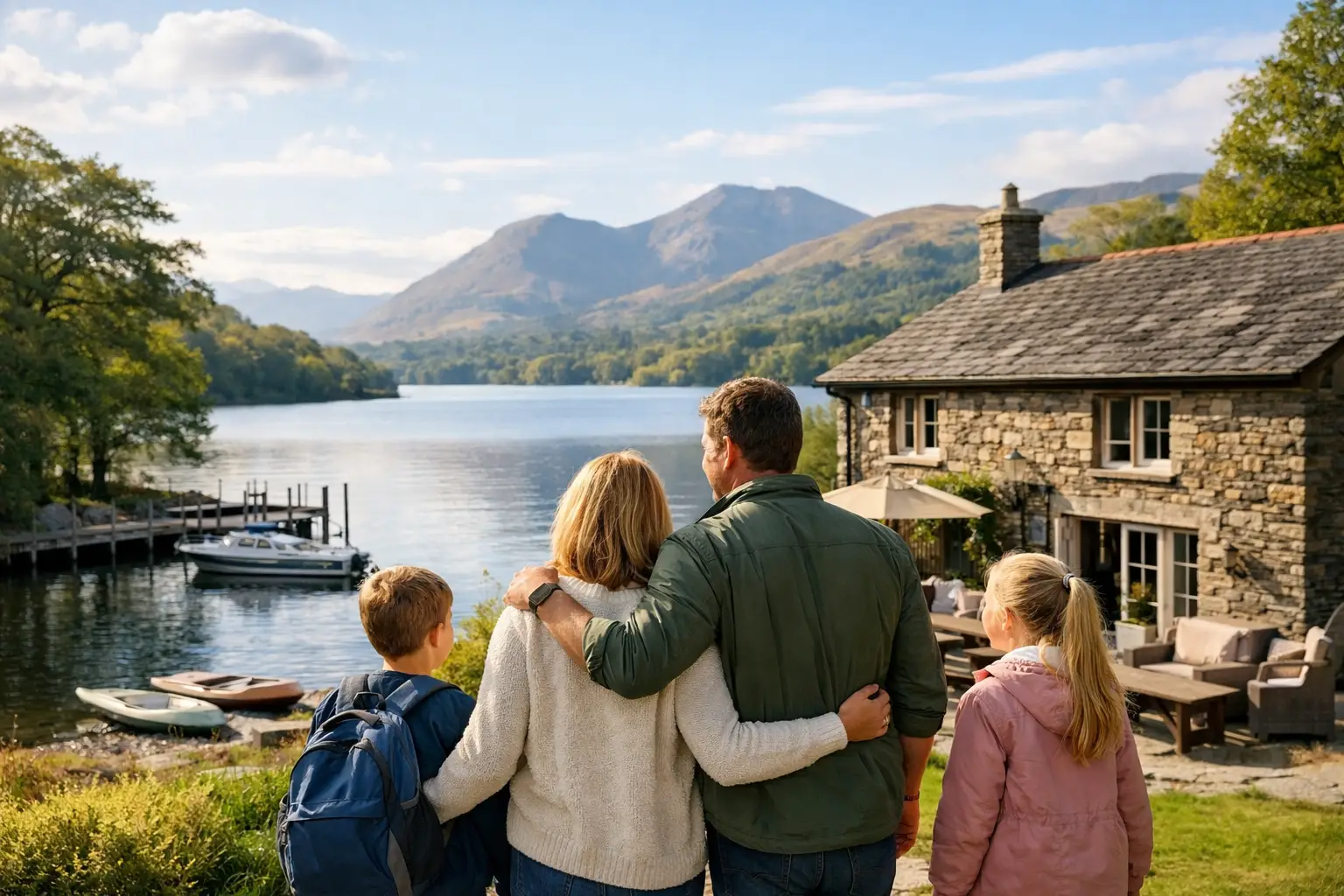
Lake District Family Accommodation Guide
Affiliate disclosure: This article contains affiliate links. If you click through and make a purchase, Stafford Affiliates Travel may earn a commission at no extra cost to you.
School holiday prices can shift fast in the Lake District, and the wrong base can turn a simple family break into a week of extra driving, soggy boots in the car, and overtired children. This Lake District family accommodation guide is designed to help you choose the right area and property type before you book, so the trip works in practice, not just on a listing page.
How to use this Lake District family accommodation guide
The best family stay in the Lakes depends less on star rating and more on logistics. A lovely cottage can still be a poor fit if it is twenty minutes from the nearest shop, has no drying space for wet coats, or sits on a steep road that feels awkward with a buggy.
Start with three questions. First, how much driving do you actually want to do each day? Second, are you planning around walks, lake activities, attractions, or a mix of all three? Third, do you need self-catering flexibility, or would a hotel with breakfast and family rooms make the week easier? Once those answers are clear, accommodation choices become much simpler.
Choose the right area before the right property
Many booking mistakes happen because families choose a pretty village first and think about transport and daily plans later. In the Lake District, location shapes everything from meal costs to nap schedules.
Windermere and Bowness for convenience
If you want the easiest all-round base, this is usually the safest option. You have broad accommodation choice, regular public transport, boat access, shops, casual places to eat, and enough activity nearby to avoid driving every day. For families with younger children, that convenience can be worth paying a little more for.
The trade-off is crowding, especially in summer and school holidays. Parking can be awkward, and the busiest parts feel less peaceful than smaller villages. Still, for a first family trip, this area is often the least stressful.
Keswick for walks, parks and a practical town base
Keswick works well for families who want easy access to outdoor time without giving up useful town facilities. There are parks, lakeside walks, cafes, supermarkets and a strong range of guest houses, hotels and self-catering stays. It also suits families with older children who can handle fuller walking days.
Compared with some southern Lake District bases, Keswick can feel more activity-focused than postcard-pretty. That is not a drawback for most families. It simply means the area tends to suit people who want to get out and do things rather than stay close to a resort-style centre.
Ambleside for a balanced middle ground
Ambleside often suits families who want a central base with good access to multiple parts of the National Park. It is handy for short walks, lake trips and day outings, and it has enough services to make self-catering straightforward. If your itinerary is mixed, Ambleside is often a sensible compromise.
The main thing to check here is the exact property location. Some accommodation sits up steep hills or on narrow lanes, which can be less convenient if you are carrying a toddler, pushing a buggy or unloading a car in the rain.
Ullswater and quieter areas for slower trips
If your priority is space, quieter surroundings and a less commercial feel, Ullswater and nearby villages can work very well. These areas often suit families returning to the Lakes who are happy with a slower pace and a bit more planning.
The trade-off is that convenience drops. Dining options may be limited, weather backup plans take more effort, and you may rely more heavily on the car. That is fine if you know it in advance and book accordingly.
Which type of family accommodation usually works best?
There is no single best option, because family age, trip length and budget all change the answer.
Self-catering cottages and holiday lodges
For most families staying more than two nights, self-catering is the easiest format. You get control over breakfast times, snacks, packed lunches, laundry and bedtimes. That matters in the Lakes, where weather can change plans quickly and eating out for every meal adds up.
Look closely at kitchen size, dining space and parking. A cottage may sleep five on paper but still feel cramped if the living room is small and there is nowhere to dry waterproofs. Outdoor space is helpful, but in the Lake District an indoor drying area is often more useful.
Hotels with family rooms
Hotels are a strong choice for shorter breaks, especially if you do not want to cook or clean. They can also work well for one-child families, grandparents joining the trip, or anyone wanting a simpler base with breakfast included.
Check the room layout carefully. Some family rooms are genuinely spacious, while others are standard doubles with a sofa bed added in. That difference matters over several nights. Also check evening food options, as not every hotel restaurant is practical for children after a long day out.
Holiday parks and caravan stays
These can offer good value and useful facilities such as play areas, on-site shops and easy parking. For families with younger children, that built-in convenience can reduce friction. They also tend to make budgeting easier.
The downside is variation in quality and atmosphere. Some parks are quiet and well-kept, while others feel busier and less private than expected. Always check whether the park is geared towards calm family breaks or a more entertainment-led style.
What to prioritise when comparing properties
Photos rarely tell you what matters most on a family trip. Focus on practical details first.
A washing machine is worth more than a decorative roll-top bath. Off-road parking is worth more than a distant lake view if you are carrying bags, boots and children. Ground-floor access can matter more than period charm. The best family accommodation usually wins on usefulness rather than style.
In this part of the country, heating also matters. Even outside winter, damp clothes and cool evenings can make a place feel uncomfortable if it is slow to warm up. If you are booking shoulder season travel, check reviews for comments on warmth, hot water and drying facilities.
Wi-Fi is another detail worth checking honestly. If you plan to stream films in the evening, manage remote work, or keep older children occupied during wet weather, unreliable internet can become a real issue. In rural areas, do not assume it will be strong.
Booking tips that save stress and money
Book early for school holidays, especially if you need specific room arrangements or parking. The best-value family properties are often the first to go because they offer the practical features everyone wants.
If your dates are flexible, compare Sunday-to-Thursday and midweek stays rather than defaulting to a Friday start. In the Lake District, that can sometimes reduce costs and avoid the heaviest traffic. It may also make attractions and lakeside areas feel noticeably easier with children.
Be wary of booking the cheapest option in an isolated spot unless you are certain that is what you want. A lower nightly rate can be cancelled out by extra fuel, paid parking, and the simple hassle of driving everywhere. For many families, paying a bit more for a central base is better value overall.
Family-friendly features worth paying extra for
Some extras are genuinely useful, while others look good in listings but add little. A cot and high chair are helpful, but they are fairly standard. The features more likely to improve the trip are secure parking, flexible sleeping arrangements, easy access to shops, and enough communal space to avoid everyone sitting on top of each other by 6 pm.
If you are travelling with babies or toddlers, check whether the property has stairs, open water nearby, wood burners without guards, or unfenced outdoor areas. None of these automatically rule a place out, but they may change how relaxing the stay feels.
For older children, proximity to things they can actually do matters more. Being near boat trips, gentle walks, cycling routes or a town park may make more difference than having a games room you barely use.
A simple way to narrow down your options
If you are stuck between several places, shortlist only accommodation that meets these tests. It should be in an area that matches your planned pace, have practical sleeping space rather than just maximum occupancy, include straightforward parking or transport access, and offer weather-proof features such as heating and drying options.
Then read the reviews with one question in mind: would this property still work if it rained for a day or two? In the Lake District, that is often the most useful filter of all.
A good family base does not need to be luxurious. It needs to make mornings easy, evenings calm, and day trips simple enough that the holiday still feels like a break. Book with that standard in mind, and you are far more likely to choose somewhere that earns its keep from the moment you arrive.