Lake District Without a Car: What Actually Works
Affiliate disclosure: This article contains affiliate links. If you click through and make a purchase, Stafford Affiliates Travel may earn a commission at no extra cost to you. We only feature travel products and services that we believe may be useful to our readers.
Trying to plan the Lake District without a car usually comes down to one question: where can you stay without wasting half your break waiting for transport? The answer is simpler than it looks. If you choose the right base, keep your itinerary realistic and use the local bus and boat network properly, a car-free Lake District trip can be easier, cheaper and lower-waste than driving.
Can you do the Lake District without a car?
Yes, but only if you plan around transport rather than around a wishlist map.
This is the part many guides gloss over. The Lake District is not difficult without a car in the same way a city break might be difficult. It is difficult because distances that look short on a map can take much longer by bus, some routes are seasonal, and rural accommodation can be miles from the nearest station or bus stop. If you ignore that, the trip becomes frustrating very quickly.
If you work with the transport network instead, it works well. Trains get you into the national park edges and nearby gateways. Buses connect major villages and popular walking areas. In some parts, boats save time and make the journey itself part of the day out. For many travellers, especially couples, solo travellers and families sticking to the central-south lakes, that is more than enough.
Best places to stay in the Lake District without a car
Your base matters more than almost anything else. A beautiful cottage in the middle of nowhere may look perfect online, but if it is a 25-minute uphill walk from the nearest bus stop, it is not practical for a short break.
Windermere and Bowness
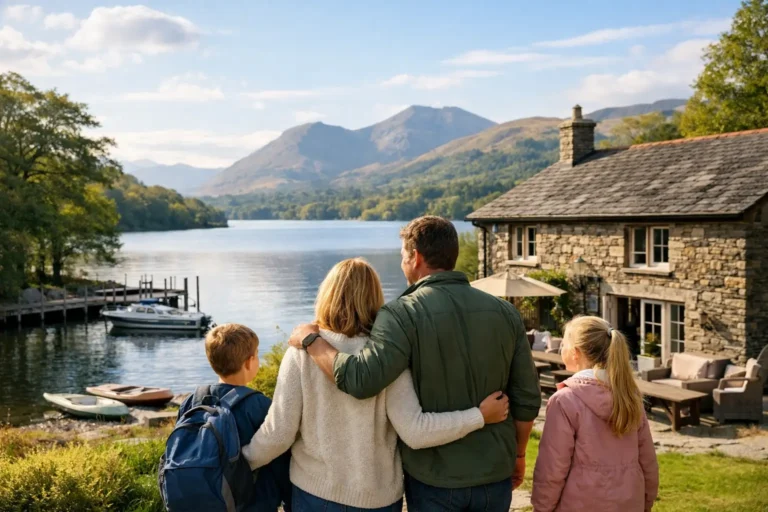
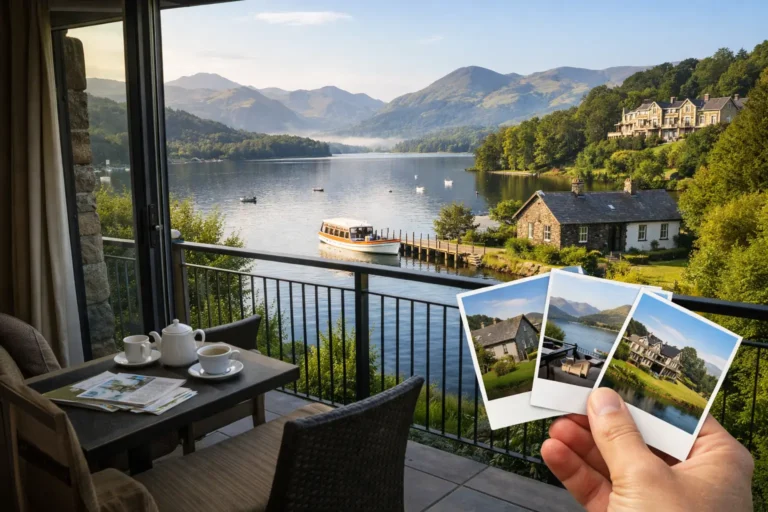
For most first-time visitors, this is the safest choice. Windermere rail station gives you the easiest arrival by train, and the bus links are among the best in the area. Bowness is close by for lake access, boat services, shops and places to eat.
The trade-off is popularity. It can feel busy, especially in peak season, and accommodation prices often reflect that. Still, if convenience is the priority, it is hard to beat.
Keswick
Keswick is one of the best bases for walkers and for travellers who want a proper town rather than a purely tourist strip. Bus links are strong, the centre is compact, and you can reach plenty of well-known routes without needing extra transfers.
The obvious limitation is rail access. You will not arrive directly by train, so the final stage depends on a bus or taxi from a mainline station. That is manageable, but it does add one more moving part.
Ambleside
Ambleside sits in a useful position for buses, walking and access to Windermere boats. It works well for travellers who want a central location with plenty of routes nearby.
The main consideration is arrival. There is no train station in Ambleside itself, so you need a bus connection after your rail journey. For many people that is still worth it, because once you are there, getting around is straightforward.
Grasmere
Grasmere suits a quieter break. It is small, scenic and well placed for bus travel between Ambleside and Keswick. If your plans focus on short walks, village time and a slower pace, it can be an excellent fit.
What it does not suit is a packed itinerary with lots of far-flung day trips. The smaller the place, the more carefully you need to think about evening transport and limited service frequency.
How to get to the Lake District by public transport
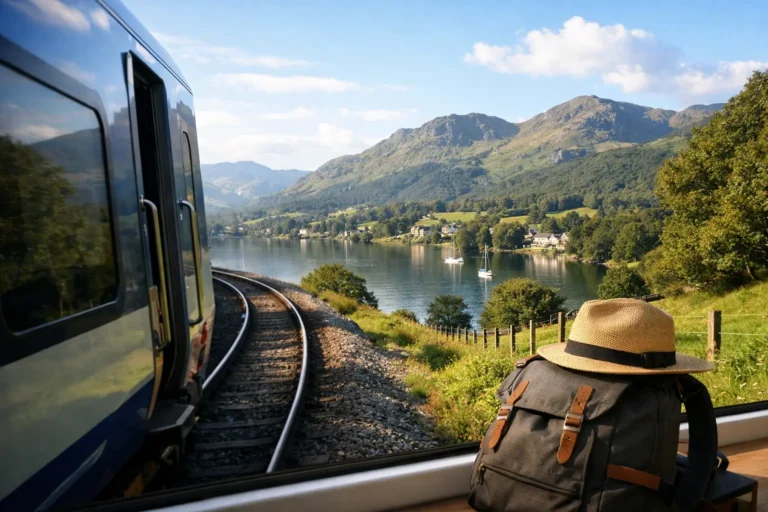
For most GB travellers, the easiest route is train first, then local bus.
Windermere is the most obvious rail arrival point if you want the south lakes. Penrith works well for getting towards Keswick and Ullswater. Oxenholme is another useful interchange on the main line, especially if you are connecting onwards.
The practical rule is this: do not just book the cheapest train to the nearest-looking station. Book the train that leaves you with the simplest final transfer. Saving a few pounds on rail fares can be a false economy if it means an awkward station change, a long wait or the need for a taxi.
If you are arriving late in the day, check the final bus connection before booking accommodation. This is one of the most common planning mistakes. A guesthouse may say “easy access”, but that can mean very little if the last bus has already gone.
Getting around the Lake District without a car
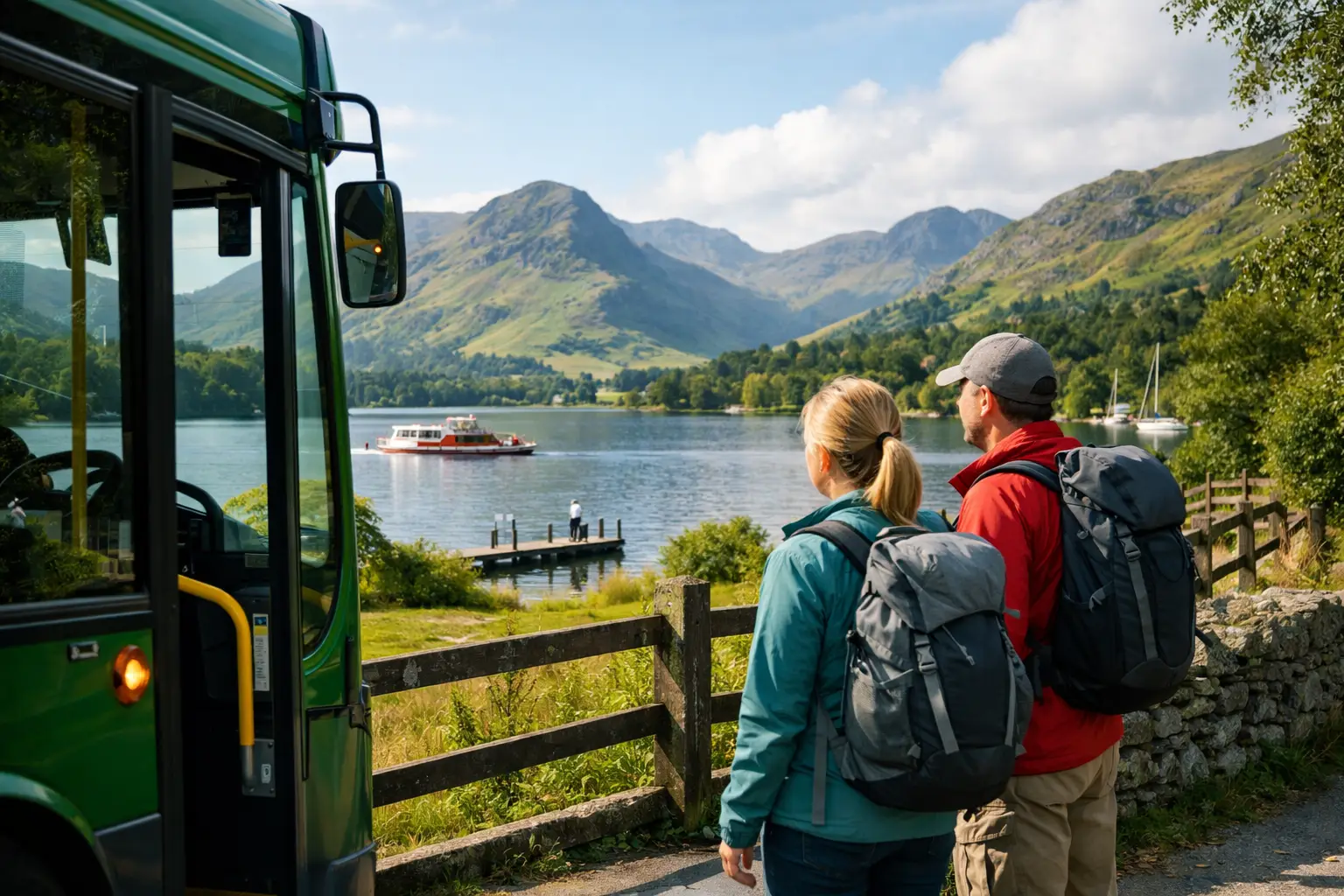
Once you are in the area, buses do most of the heavy lifting. In the more visited parts of the national park, they are useful rather than merely possible. Key routes join towns and villages such as Windermere, Bowness, Ambleside, Grasmere and Keswick, making it realistic to move around without driving.
Boats are particularly helpful around Windermere, where they can cut out road travel and connect nicely with walking days. They are not a full transport replacement, but on the right route they save time and make the day simpler.
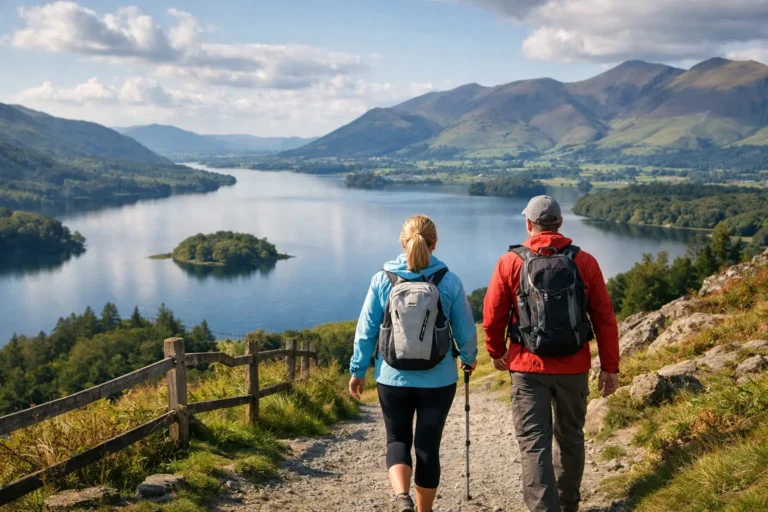
Walking also becomes part of the transport plan. That sounds obvious, but it affects your accommodation choice. A 10-minute flat walk from a bus stop is very different from a steep 20-minute climb with bags or tired children at the end of the day.
Taxis have a role, but it is best to see them as a backup rather than the main plan. In some areas they need booking ahead, and relying on them for every journey can make a supposedly budget-friendly public transport break unexpectedly expensive.
What kind of trip works best car-free?
The best car-free Lake District breaks are usually focused rather than expansive.
A two or three-night stay works well if you pick one base and stick mostly to that area. Windermere and Bowness are good for an easy introduction, while Keswick works well if walking is the main goal. You can fit in lake time, village browsing, a couple of walks and one or two scenic bus journeys without feeling rushed.
Longer stays also work, but only if you resist the temptation to “see everything”. Trying to cover Windermere, Keswick, Ullswater, Coniston and Wasdale in one public transport itinerary is possible on paper and tiring in reality. The smarter option is to group your plans geographically and accept that some parts of the park are much easier by car.
That is not a failure. It is just honest trip planning.
Common mistakes when visiting the Lake District without a car
The biggest mistake is booking accommodation before checking transport. Always check the nearest station or bus stop, the walking route from there, and the last return service of the day.
The second is underestimating journey times. A route that seems short can involve waiting, changing and reduced evening frequency. Build in slack, especially if you are travelling with children or carrying luggage.
The third is planning around remote beauty spots. Some of the quieter valleys and western areas are lovely, but they are much less practical without a car. If this is your first visit, prioritise places with dependable links rather than trying to force a dream itinerary around weak transport.
Another frequent issue is assuming every service runs the same all year. Some bus and boat timetables change by season, and bad weather can affect how smoothly a day runs. Check before you travel, then check again closer to departure.
A sensible 3-day approach
If you want a simple framework, base yourself in Windermere or Bowness for a first trip. Arrive by train, settle in, and keep the first day local. On day two, use bus and boat combinations for Ambleside and a lakeside walk. On day three, take a bus north towards Grasmere or Keswick depending on your energy and return time.
If walking matters more than lake cruises and shops, switch the base to Keswick and build the days around nearby routes with one straightforward bus journey each day. That tends to feel less rushed and gives you more time outdoors.
This is where a practical planning style pays off. Stafford Affiliates Travel generally takes the view that a shorter, well-linked itinerary is better than an overfilled one that depends on perfect connections.
Is the Lake District without a car worth it?
For many travellers, yes. You avoid parking costs, narrow roads, traffic stress and the awkwardness of driving somewhere famed for walking and views while spending much of the day searching for a space. It can also be a more responsible way to travel, particularly on busy weekends and during school holidays.
The trade-off is freedom. A car gives you access to quieter corners, easier food shopping and more flexibility if the weather turns. Public transport gives you structure, but structure can feel restrictive if your plans are very ambitious.
The best way to judge it is simple. If your ideal break means a well-chosen base, a handful of excellent walks, village time and easy scenic journeys, the Lake District without a car is not just workable – it is often the better option. If your goal is to cover remote valleys at your own pace, driving may still make more sense.
Pick the version of the Lake District that matches how you actually want to spend your days, not the one that looks best on a map.