
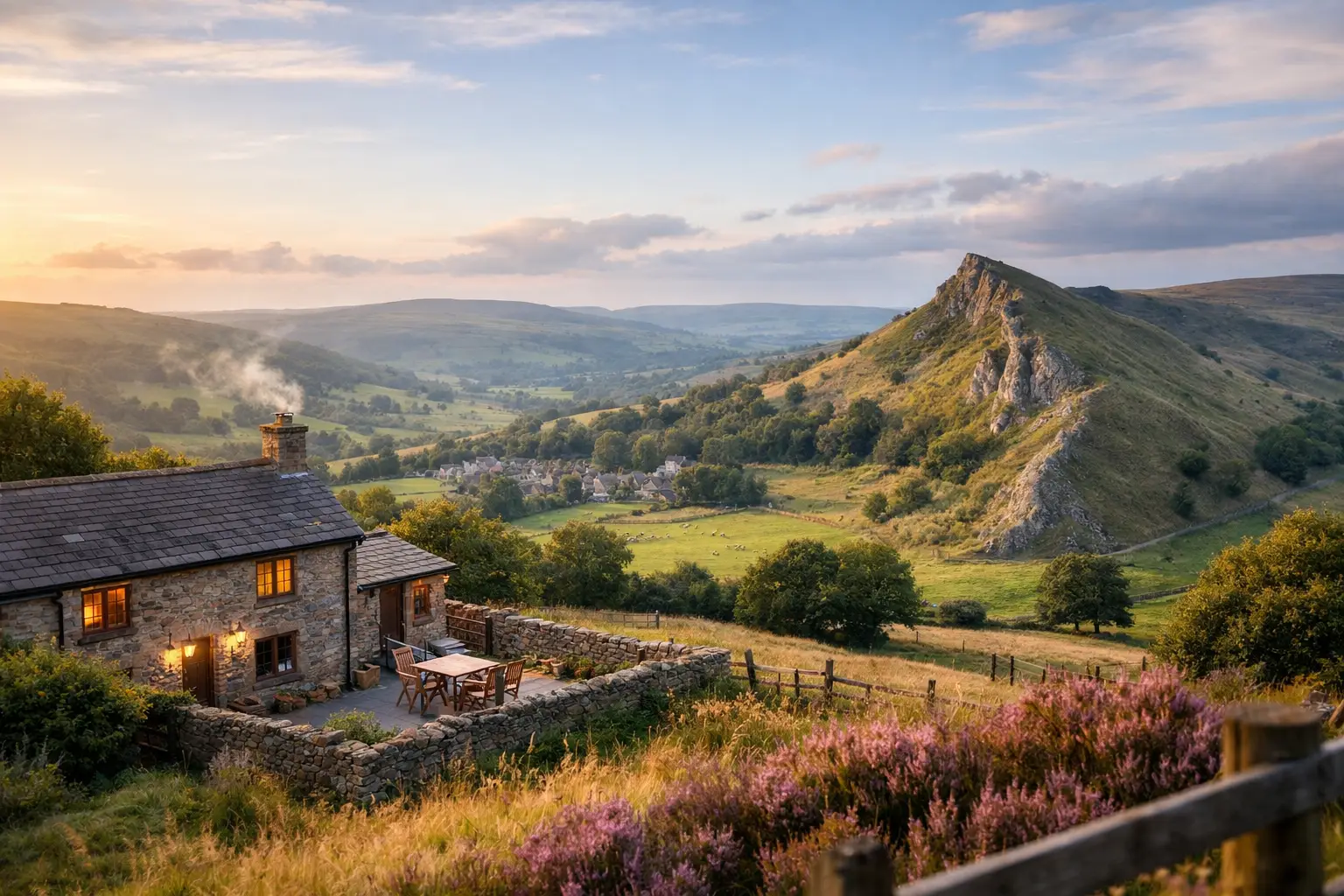
Peak District Accommodation Guide for Short Breaks
A good Peak District accommodation guide starts with one practical point: where you sleep will shape how much time you spend driving, parking and changing plans. A cottage with a dramatic view is not automatically the best choice if every walk, pub meal and shop involves a 30-minute journey on narrow roads. For a two- or three-night break, choose a base around the places you genuinely want to visit, then book a stay that suits your group, budget and travel style.
The Peak District covers a large area, with very different landscapes, transport options and village atmospheres. The right accommodation can make a short break feel relaxed; the wrong location can turn it into a series of avoidable car journeys.
Peak District accommodation guide: choose your area first
Bakewell and the central villages
Bakewell is a sensible base for first-time visitors, couples and families who want shops, cafés, evening dining and straightforward access to well-known sights. You can reach walking areas, country houses and smaller villages without committing to long drives each day. Accommodation includes inns, guest houses, self-catering cottages and small hotels, so there is usually a reasonable spread of price points.
The trade-off is popularity. Weekends and school holidays can bring busier roads, limited parking and higher rates. If you want a quieter stay, look at nearby villages such as Ashford-in-the-Water, Youlgreave or Rowsley. Check whether your property has allocated parking rather than assuming on-street spaces will be available.
Hope Valley, Hathersage and Castleton
For walkers, this is one of the strongest areas to book. Hope Valley gives access to dramatic gritstone edges, reservoirs, caves and routes around Edale, while Hathersage has useful amenities and a rail connection. Castleton is compact, scenic and particularly convenient for cave visits and walks beneath Mam Tor.
This area works well without a car if you are prepared to plan around train and bus times, but it is not a place to improvise late at night. Services are less frequent than in a city, and some accommodation sits uphill from stations or village centres. Before booking, check the actual walking route with luggage, especially if anyone in your party has limited mobility.
Castleton can feel very busy on sunny weekends. A stay in Hope, Bamford or Hathersage may offer more space and easier everyday logistics while keeping the same walking country close by.
Buxton and the northern Peak District
Buxton suits travellers who want a proper town base rather than a remote village. It has a wider choice of restaurants, supermarkets, indoor activities and public transport, making it a practical option for mixed-weather breaks or groups with different interests. Hotels and serviced accommodation are often easier to find here than in the smallest villages.
It is also a useful choice for lower-car travel. You can arrive by rail and use local buses, taxis and walking routes for parts of your stay. However, do not assume every landmark is close: the northern and southern parts of the national park are not interchangeable for day trips.
Matlock, Matlock Bath and the southern edge
The southern side can work particularly well for families, short breaks from the Midlands and travellers who prefer more entertainment and practical services nearby. Matlock offers shops and transport connections, while Matlock Bath has a livelier, more visitor-focused feel.
This is less central for classic Hope Valley walks, so it is best for an itinerary built around the southern dales, heritage attractions and gentler days out. It can also be a good compromise when one person wants countryside walks and another wants cafés, museums or an easier town-based day.
Match the accommodation type to the trip
Hotels and inns are the simplest option for a short break. Breakfast is often included, check-in is straightforward, and an on-site restaurant can save a drive after a long walk. Confirm whether dinner needs booking in advance, particularly on Friday and Saturday evenings. Rural pubs may stop serving food earlier than expected.
Self-catering cottages suit families, groups and anyone staying three nights or more. They can reduce meal costs and make early starts easier, but read the practical details carefully. A cottage described as sleeping six may have compact bedrooms, a sofa bed or limited dining space. Check the number of bathrooms, parking arrangements, stair access, heating, washing facilities and whether bed linen and towels are included.
Bed and breakfasts and guest houses often offer the best balance for couples and solo travellers. Local hosts can be helpful sources of current walking and parking advice, while breakfast reduces the need to find a shop before setting off. The limitation is less flexibility around arrival times and fewer facilities for preparing your own meals.
Camping, glamping pods and bunkhouses can keep costs down and put you closer to the landscape. They need more planning, though. Ask about heating, charging points, toilet and shower arrangements, cooking equipment and wet-weather shelter. A pod is not always a budget option once bedding, logs, parking and minimum-stay requirements are added.
What to check before you book
Photos show the appealing parts of a property. The booking details tell you whether it will work in real life. Before paying, check these points:
- Location and access: Look at the exact area, not just the nearest large town. Confirm road access, parking, steps and the distance to a pub, shop or bus stop.
- Cancellation terms: Rural breaks can be affected by illness, poor weather or transport disruption. Understand the deadline, deposit rules and whether changes are allowed.
- Arrival practicalities: Ask for check-in times, key collection instructions and what happens if you arrive late. Mobile signal can be unreliable in some valleys.
- Facilities that matter to your group: This may mean a travel cot, accessible shower, secure bike storage, drying space for walking gear or an enclosed garden for a dog.
- Extra charges: Cleaning fees, pet supplements, firewood, electric vehicle charging and early check-in can change the true cost of a stay.
If you are booking for a group, share the property details before confirming. One person may be happy with a steep staircase or a remote location; another may not be. Sorting that out at the planning stage is far easier than trying to solve it after arrival.
Book around transport, not just the postcode
A car gives flexibility in the Peak District, but it is not a licence to ignore logistics. Many popular car parks fill early on fair-weather weekends, and narrow village roads are not designed for large volumes of day visitors. If driving, choose accommodation with its own space, start walks early and use a refillable water bottle so you are not relying on single-use drinks bought en route.
For a rail-based break, Hathersage, Hope, Edale and Buxton deserve close attention. Staying within a manageable walk of a station can remove the need for a hire car and make a two-night trip easier to organise. Check the timetable for the specific day you travel, including any engineering work, then build one or two flexible local walks into the plan rather than trying to cover the whole park.
Bus access can be useful, but it depends heavily on the season, day of week and route. Treat it as a planned part of the itinerary, not a fallback. Save timetables to your phone before travelling and carry a power bank if you will be using digital tickets and maps outdoors.
Timing, value and responsible choices
Friday-to-Sunday stays command the highest demand, especially in spring, summer and around bank holidays. A Sunday-to-Thursday break can be better value and quieter on paths, in cafés and at attractions. Winter can offer excellent value and crisp walking days, but daylight is limited, conditions change quickly and some venues reduce opening hours.
For lower-waste travel, book a place where you can walk to at least one useful facility, such as a village shop, pub or trailhead. Bring refillable bottles, a small food container for packed lunches and reusable bags for bakery or grocery stops. Self-catering guests can also plan meals before arriving, which reduces overbuying and avoids throwing away food at the end of a short stay.
Choose local businesses where practical, but be realistic about your needs. The most responsible booking is usually one you can reach safely, use comfortably and enjoy without unnecessary driving. A slightly less photogenic property near a station or village centre may be the smarter option than an isolated stay that requires several car journeys a day.
A simple booking plan for a two-night break
Start by choosing one main area and two priorities: perhaps a long walk and a good evening meal, or a family attraction and an easy riverside route. Select accommodation within that area, then check the property’s parking or public transport position before looking at extras such as hot tubs or views.
Once booked, reserve any popular dinner table or timed attraction that matters to your trip. Plan one anchor activity for each full day and leave room for weather changes. The Peak District is at its best when your accommodation supports a slower, more flexible plan rather than forcing you to chase every highlight.
A well-chosen base gives you more than a bed for the night. It gives you time to walk, eat well, travel with less waste and return home feeling that the break was properly used.