
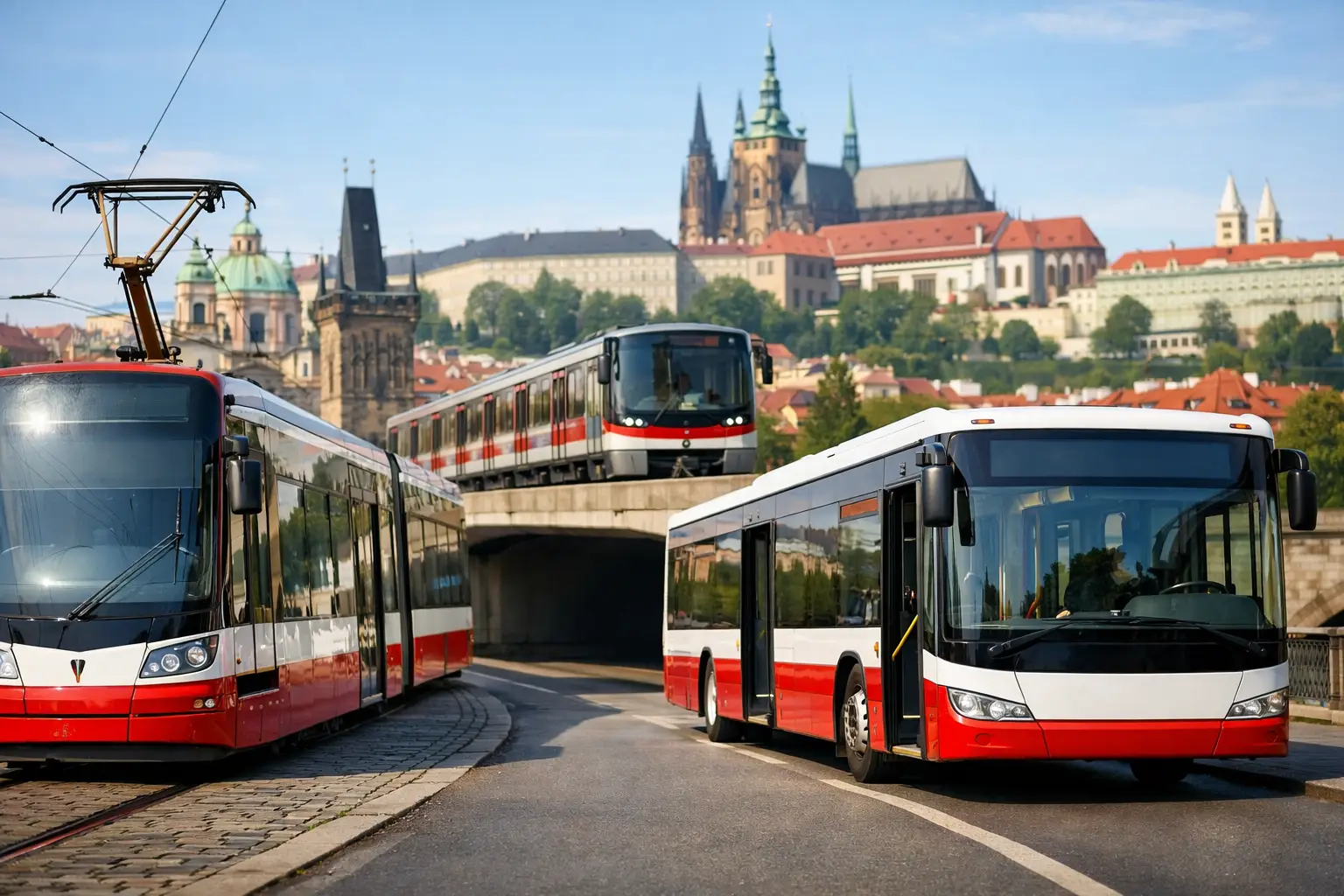
Prague Public Transport Explained Simply
Introduction
Land at Prague Airport, spot the lack of a metro station, and the city’s transport system can look harder than it is. In practice, Prague public transport explained simply comes down to three things: buy the right time-based ticket, validate it correctly, and know when a tram is better than the metro.
Prague is one of the easiest European capitals to get around without a taxi or hire car. The network is broad, frequent and generally reliable, which makes it a strong choice if you want a lower-waste city break with less hassle. The catch is that first-time visitors often overthink the ticket rules, especially when arriving from the airport or moving between tram, metro and bus on the same journey.
How Prague public transport works
Prague’s integrated public transport system covers metro, trams, buses, some local trains, and the airport bus connections used by most visitors. You do not usually buy a separate ticket for each mode. Instead, most standard tickets are valid for a set amount of time, and within that time you can transfer between services.
That detail matters. If you are used to cities where one ticket equals one journey, Prague can feel unusual at first. Here, a 30-minute or 90-minute ticket is often all you need, depending on how far you are going and whether you expect to change lines. For a weekend break, that simplicity is useful once you understand it.
The metro is fastest for longer cross-city trips. Trams are often the best option in the historic centre because they keep you above ground, stop frequently, and can save unnecessary walks down into stations. Buses are most useful for outer districts and airport access.
Tickets, fares and validation
The biggest mistake in Prague is not choosing the wrong route. It is travelling with an unvalidated ticket.
Paper tickets must normally be stamped in the yellow validation machines when you first start using them. After that, the time window begins. If you switch from tram to metro within the valid period, you do not stamp it again. If you buy your ticket on an app, the activation rules may differ slightly, so check before boarding rather than once you are already on the move.
For most visitors, the practical options are short-duration tickets for single trips, a 24-hour pass, or a 72-hour pass. Which is best depends on your pace. If you plan to walk much of the Old Town and use transport only a couple of times a day, single tickets may work out cheaper. If you are staying outside the centre, travelling with children, or packing in several districts, a day pass usually removes stress and often saves money.
A pass is not always the cheapest option, but it is often the easiest. That trade-off is worth considering if you would rather focus on your trip than calculate every journey.
Children, students and older travellers may be eligible for discounts, but do not assume. Check the current rules and carry any required proof. Inspectors do carry out checks, and fines for invalid travel are an avoidable expense.
Metro, trams or buses – which should you use?
If you want speed, use the metro. Prague’s metro lines are easy to understand, and stations in central areas are generally well connected. It is the sensible choice for getting between major hubs, covering longer distances, or avoiding traffic at busy times.
If you want convenience in central Prague, trams are often better. They are especially useful around areas where sightseeing and transport overlap. You can stay above ground, keep your bearings, and avoid repeated escalators or stairs. That makes trams a particularly good option for short breaks, family trips, or anyone carrying a day bag and trying to move efficiently between neighbourhoods.
Buses are less central to most tourist itineraries, but they matter more than many visitors expect because of the airport. They are also useful if your hotel is in a residential district where tram or metro coverage is weaker.
At night, the balance shifts slightly. Night trams are especially important once the metro stops running. If you expect late dinners, concerts or evening river cruises, it is worth checking your return route in advance rather than assuming the metro will still be operating.
Getting from Prague Airport to the city
This is where most confusion starts. Prague Airport is not directly served by the metro, so your journey into the city usually begins with a bus.
A common route is to take an airport bus to a metro station and continue from there. Which station makes most sense depends on where you are staying. If your accommodation is near a tram line, a bus-tram combination may actually be simpler than forcing a metro transfer.
The cheapest routes are usually standard public transport combinations rather than dedicated tourist shuttles. They take a little more attention but are good value and perfectly manageable for most travellers with cabin bags or one medium suitcase. If you are arriving very late, travelling with lots of luggage, or managing tired children after a delayed flight, paying more for a direct transfer may still be the better choice. Cheap and best are not always the same thing.
Before you leave the airport, buy or activate the correct ticket for the full journey, not just the first leg. Because Prague uses time-based integrated tickets, one valid ticket can often cover both the bus and your metro or tram connection.
Using Prague transport with luggage, children or limited mobility
Prague is manageable, but not every route feels equally easy on the ground.
With luggage, trams can be simpler than older metro stations, especially if lifts are limited or busy. Cobbled streets near historic areas also make short walks feel longer than they look on a map. A hotel that seems “only 10 minutes away” may be less convenient if that walk includes uneven pavements and an uphill section.
For families, day passes can reduce friction. You are not stopping to buy another ticket every time plans change, and Prague is the sort of city where plans do change once children get tired or the weather turns. Trams also tend to be easier than the metro for quick hops with a buggy, though this depends on the specific stop and vehicle.
If mobility is a concern, do not assume every station offers equal step-free access. Check your exact route before booking accommodation. Staying near a well-served tram stop can sometimes be more practical than staying near a metro station on paper.
Common mistakes visitors make
The first is failing to validate a paper ticket. Buying it is not enough.
The second is choosing accommodation based only on map distance to the Old Town. In Prague, a place slightly outside the centre but near a good tram or metro stop can be far more convenient, and often better value.
The third is relying too heavily on taxis for airport and evening journeys. Public transport is usually good enough that you do not need them often, especially for a short city break.
The fourth is underestimating trams. Many visitors head underground by default, then spend more time navigating stations than they would have spent simply taking a direct tram across the centre.
The fifth is not checking night services. If you stay out after the metro closes, you need a plan rather than a guess.
A simple approach for a short break
If you are in Prague for two or three days, keep your transport planning basic. Buy a pass if you expect multiple daily trips, use the metro for longer distances, and use trams for central sightseeing and evening returns where practical. For airport arrivals, decide your route before landing so you are not trying to work it out while tired in the terminal.
It also helps to save your hotel address in a format you can show easily, rather than relying on memory or a weak signal. That small bit of planning removes a lot of avoidable stress when changing from bus to tram or stepping out of a station in an unfamiliar district.
For travellers who want a city break that is efficient, cost-aware and lighter on resources, Prague gets a lot right. You can cover a huge amount of the city without private transfers, without complicated fare zones on most visitor routes, and without spending half your trip waiting around.
Once you stop treating it like a puzzle, it becomes what good urban transport should be – a practical tool that lets you spend less time figuring things out and more time actually enjoying Prague.
Frequently Asked Questions
Additional Resources

The Essential Cruise & Travel Shop

Disclaimer
Stafford Affiliates Travel provides this guide for information purposes only and does not act as a travel agency or professional travel adviser. The information provided constitutes general guidance only. Although every effort is made to keep information up to date and correct, we make no representations or warranties of any kind regarding its completeness or accuracy. Transport fares, time-based ticket rules, ticket validation procedures, night service routes, airport bus connections, and station accessibility options may change without notice. You must verify all important details directly with official Prague public transport operators or transit authorities, such as Dopravní podnik hlavního města Prahy (DPP), before making travel decisions, bookings, or financial commitments. We accept no liability for any financial loss, including transit fines or secondary transport costs, arising from a failure to follow this advice.
Affiliate Disclosure
Many of the links are affiliate links, Stafford Affiliates Travel may receive a commission from qualifying clicks, orders or bookings at no additional cost to you. This income helps support our efforts to provide and improve our site and turn it into a one stop resource for travellers with a bias towards cruising.