Saint-Germain-des-Prés Paris: What to Plan
Introduction
If your trip includes Saint-Germain-des-Prés Paris, plan for one thing first: this is an area where small decisions affect your day more than big-ticket sights do. Choose the wrong hotel street and you may pay more for noise. Leave meals entirely unplanned and you can waste time in queues. Get transport wrong and a short break starts to feel needlessly expensive. The good news is that this part of the city is very manageable when you approach it with a clear base, a realistic walking plan, and a few advance bookings.
For most travellers, Saint-Germain-des-Prés works best as either a base for a short city break or as a half-day to full-day neighbourhood focus within a wider itinerary. It suits visitors who want a central location, good public transport, elegant streets, historic churches, cafés, galleries, and easy walking access to major areas on the Left Bank. It does not always suit travellers chasing the very lowest room rates, or anyone who wants a quiet residential feel at all hours.
Why stay in Saint-Germain-des-Prés Paris
This area is popular for simple reasons. It is central, attractive, and easy to navigate on foot. You can step out for breakfast, walk to several well-known sights without relying on taxis, and return for a break in the afternoon before going out again in the evening. That rhythm matters on a short break, especially if you are travelling as a couple, with older relatives, or with children who do better with built-in rest time.
The area also gives you range. Some streets feel polished and high-end, while others are quieter and more practical. You will find smart hotels, compact boutique stays, flat-style accommodation, bakeries for quick breakfasts, and enough cafés to make flexible meal planning easy. If your priority is convenience over bargain hunting, Saint-Germain-des-Prés is usually a strong choice.
The main trade-off is cost. Rooms here are often priced above less central districts, and eating close to the busiest corners can push your daily spend up quickly. That does not mean you should avoid the area. It means you should book with purpose and decide in advance where convenience is worth paying for.
Choosing the right part of Saint-Germain-des-Prés
Not every street gives the same experience. Around the busiest café-lined stretches, you get atmosphere and easy access, but also more foot traffic and evening noise. If you are a light sleeper, check whether your room faces the street, whether there is a lift if you are staying in an older building, and whether air conditioning is included for warmer months. These details matter more here than glossy hotel photography.
If you want a calmer base, look for accommodation on side streets within walking distance of the main sights rather than directly on the busiest roads. You still keep the location advantage, but with a better chance of sleeping properly. Families and travellers on a longer stay may prefer somewhere with a kitchenette, not because you need to cook every meal, but because breakfast, fruit, and refillable water storage can keep daily costs under control.
A useful booking rule is to prioritise transport access second only to room quality. Being near a metro station or an easy bus connection helps if the weather turns, if you are carrying bags, or if your itinerary includes early starts.
What to book before you arrive
You do not need to overbook every hour, but leaving everything until the day itself is rarely the best approach in a busy central neighbourhood. Accommodation should be booked as early as your dates are fixed, especially for spring, early summer, and school holiday periods. Better-value rooms in strong locations go first.
Restaurants depend on your travel style. If there is one place you are genuinely keen to try, book it. For the rest, keep things flexible. A sensible middle ground is to reserve one dinner on your first evening and one for your busiest sightseeing day, then leave the remaining meals open.
Transport planning should also happen before you travel. Work out how you will arrive from the airport or station, whether public transport makes sense with your luggage, and whether a taxi is worth it for convenience. Too many travellers only compare options after landing, when tiredness leads to rushed spending.
If you use mobile maps heavily, sort your data in advance. An eSIM or roaming plan is one of the simplest ways to avoid navigation problems, especially in a dense city where checking directions on the move saves time.
How to structure your day here
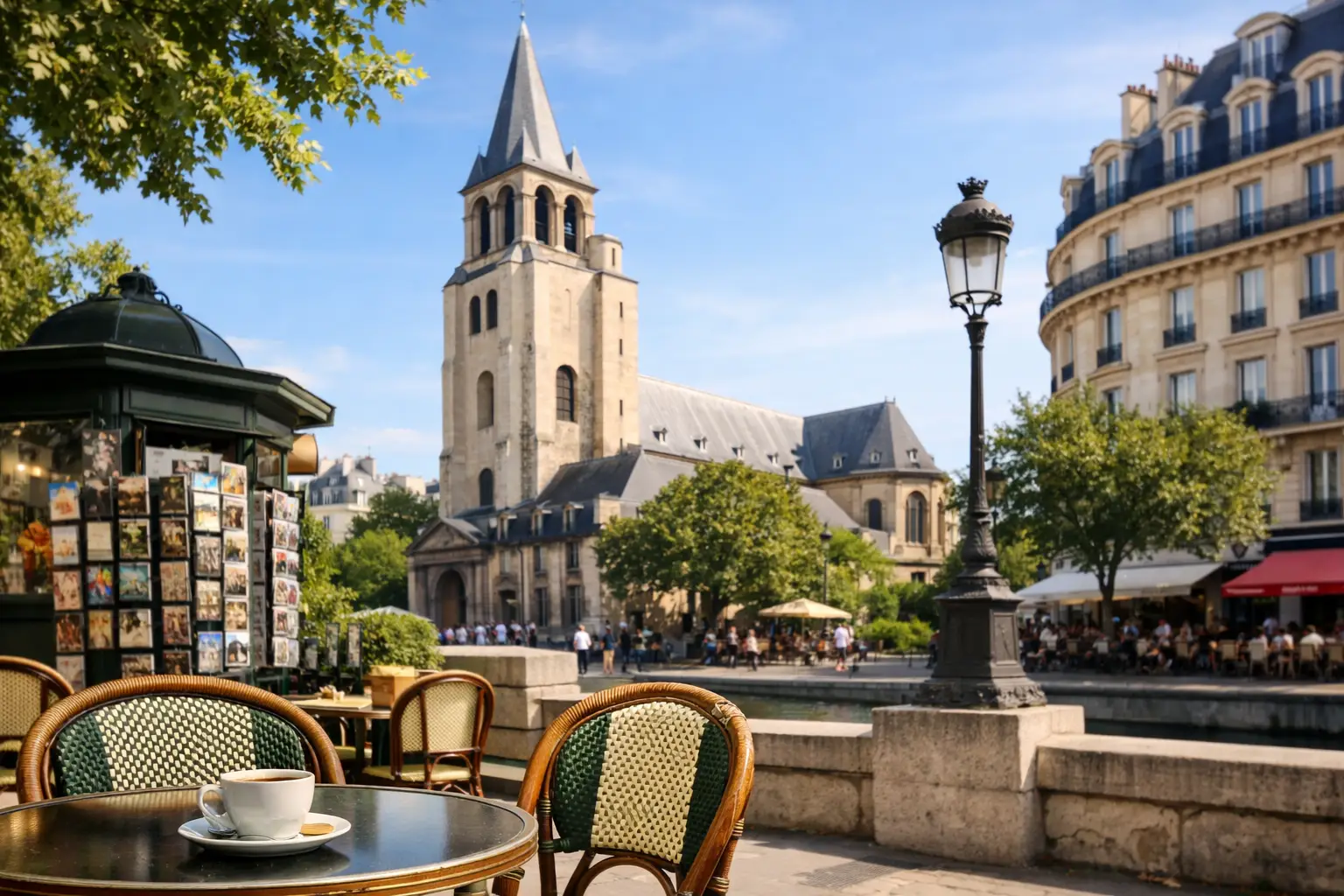
Saint-Germain-des-Prés rewards a slower, better-organised day rather than a packed checklist. Start early, particularly if you want quieter streets and an easier breakfast stop. Morning is the best time for a purposeful walk through the neighbourhood, including the church area, nearby gardens, and the smaller streets where the atmosphere is strongest before midday crowds build.
Late morning into early afternoon is usually the best slot for museums, shopping, or crossing into neighbouring areas on foot. This is also when central cafés become busiest, so it helps to know whether you want a proper sit-down lunch or a quicker bakery stop. There is no prize for spending half your break waiting for a table.
By mid-afternoon, many visitors benefit from a pause. If you are staying locally, this is where the area really earns its keep. You can return to your room, reset, refill your bottle, and go out again without a long transport journey. In the evening, the neighbourhood feels lively but still manageable for a relaxed dinner and walk.
Getting around without wasting time
Walking is the obvious way to experience the area, and for many journeys it is the quickest option. Streets are compact, landmarks are close together, and much of the appeal is in what you notice between destinations. Comfortable shoes are not optional here. Attractive paving still counts as hard walking surface.
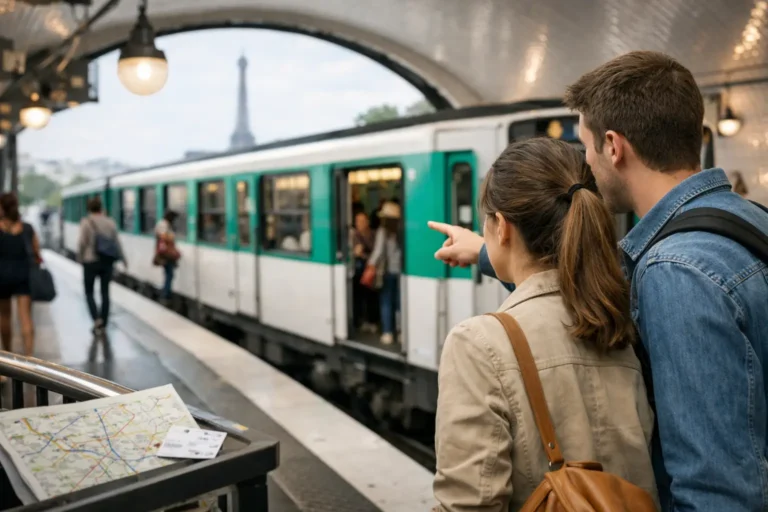
That said, do not force everything on foot. Metro and bus connections are useful when your day stretches further than expected or when the weather is poor. Buses can be especially helpful if you prefer seeing where you are rather than navigating underground stations. Travellers with prams, mobility concerns, or limited energy should check station access before setting out, as not every route is equally convenient.
For arrival and departure days, think practically. A short walk on the map can feel much longer with cases over uneven pavements. If you have an early train or flight, paying more for the simplest transfer may be the right decision.
Common planning mistakes in Saint-Germain-des-Prés Paris
The most common mistake is assuming central means easy in every way. Central often means busy, expensive, and competitive too. If you turn up expecting to improvise every meal and still get the best options at the best price, you may be disappointed.
Another mistake is booking on looks alone. A beautiful room with poor sound insulation, no lift, or a tiny bathroom can reduce the comfort of a short break. Read room descriptions closely and compare what is included, not just what is photographed.
Travellers also underestimate daily spend here. Coffee stops, pastries, museum entries, and transport add up quickly. Set a rough daily budget before you go so one lively afternoon does not distort the rest of your trip.
A final issue is trying to cover too much nearby in one day simply because distances appear short. This part of the city is best enjoyed with some space left in the schedule. Build around one major activity and a few smaller ones, not six fixed stops in opposite directions.
A lower-waste approach that still feels convenient
This area is well suited to lower-waste habits because so much can be done on foot. Choose a refillable water bottle, carry a small reusable bag for bakery or grocery stops, and avoid unnecessary single-use items where possible. These are small actions, but on a city break they reduce both waste and the amount you carry back to your room.
Accommodation choices matter too. A hotel with refill stations, sensible towel policies, and easy public transport access can support more responsible travel without adding effort. The point is not perfection. It is picking options that make practical sense and reduce avoidable waste.
Eating locally also helps. A simple breakfast from a bakery, a market purchase, or a smaller independently run lunch spot can sometimes be better value and feel more connected to the area than defaulting to the busiest tourist-facing terraces every time.
Who this area suits best
Saint-Germain-des-Prés is a good fit for first-time visitors who want a straightforward base, couples planning a short break, and travellers who prefer walking to constant transport changes. It also suits people who value atmosphere and convenience enough to pay a little more for them.
It may be less suitable for travellers on a very tight budget, large family groups needing lots of space, or anyone who wants nightlife without the price tag of a prime central location. In those cases, visiting for a day while staying elsewhere can be the smarter plan.
For most people, the key is simple: book the area if location is your priority, choose your exact street carefully, and leave enough room in the itinerary to enjoy it rather than rushing through it. That is usually what turns Saint-Germain-des-Prés from a nice name on a map into a part of the trip that genuinely works.