Latin Quarter Paris: What to See and Plan
Introduction
The Latin Quarter Paris is one of those areas that can make a short city break feel either brilliantly efficient or oddly chaotic. Stay here, and you are close to major sights, walkable streets and plenty of food options. Get the planning wrong, though, and you can end up paying too much for a tiny room, wasting time in queues or eating in places aimed purely at passing tourists.
For most travellers, the Latin Quarter works best as a practical base rather than a box-ticking attraction. It suits people who want to move around on foot, use public transport without fuss and fit a lot into two or three days. If you are deciding where to stay or whether this district deserves half a day or a full day of your itinerary, the answer depends on how you like to travel.
Why stay in the Latin Quarter Paris area
The biggest advantage is location. The area sits on the Left Bank and gives you straightforward access to riverfront walks, churches, museums, bookshops, student streets and old lanes that still feel distinct from the wider city. For a first visit, that matters. You spend less time working out transport and more time actually seeing places.
It also has a wider price range than many travellers expect. You will still find expensive boutique hotels and polished flats, but there are usually simpler mid-range stays too. The trade-off is room size. If you are used to generous hotel space, reset your expectations early. In this part of the city, central often means compact.
For families or travellers who dislike late-night noise, choosing the exact street matters more than choosing the district. Some parts are lively well into the evening, especially near busy restaurant rows and bars. A hotel two or three streets away can feel far calmer.
What the area is actually like
This is not a polished museum quarter where everything feels staged. It is busy, layered and slightly uneven in the best possible way. One street might be full of souvenir shops and fixed-price menus, while the next has a more local rhythm with independent cafés, bookshops and everyday food spots.
That mix is part of the appeal, but it also means expectations should be realistic. If you want silent elegance and broad boulevards outside your hotel door, this may not be your best fit. If you want character, walkability and easy access to key places, it is a strong choice.
The area is especially good for travellers who prefer exploring in short bursts. You can step out for an hour in the morning, return for a break, then head out again in the evening without needing to rebuild your whole day around transport.
Best things to do in the Latin Quarter Paris
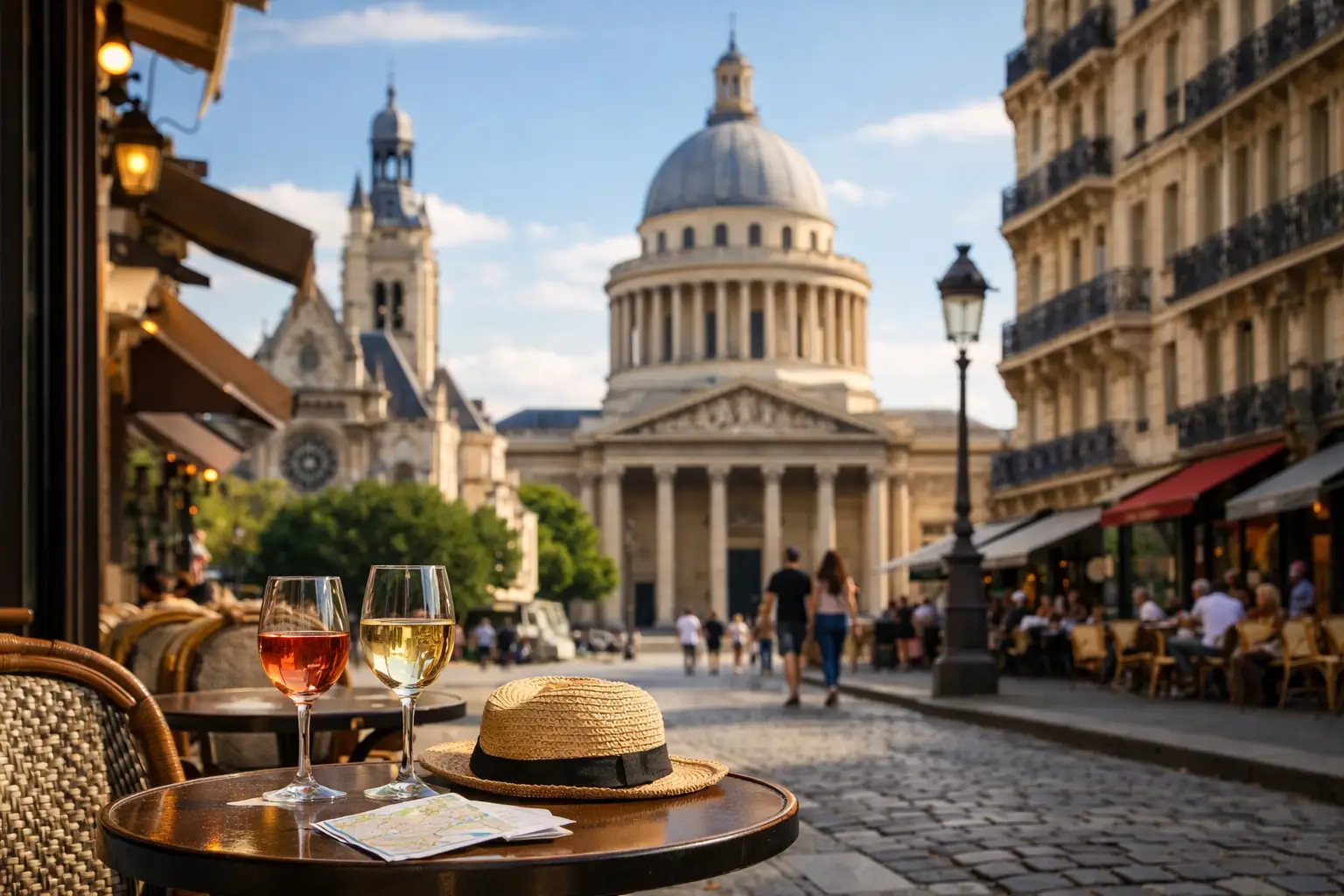
The district rewards wandering, but it helps to know which places deserve proper time. The Panthéon is one of the easiest major landmarks to anchor your day around. Even if you are not usually drawn to grand civic buildings, it gives useful structure to the area and works well as a starting point.
Nearby, the Jardin du Luxembourg offers a calmer pause from the denser streets. If your trip is packed, this is a good place to slow down without feeling like you are losing sightseeing time. It is especially useful on a short break when everyone in your group needs a breather.
The bookshop-lined streets and older lanes around Saint-Séverin and the Sorbonne area are worth seeing on foot rather than rushing through for photos. The appeal is in the atmosphere, not just a single sight. If you enjoy historic areas that still feel lived in, this is where the district earns its reputation.
There are also good reasons to include the Cluny area if you enjoy history. The medieval character feels different from other parts of the city centre, and it adds variety if your itinerary already includes larger monuments and mainstream museums.
If you only have half a day, focus on a simple loop: Panthéon, surrounding streets, Luxembourg Gardens and a slow walk back through the older lanes. That gives you a solid feel for the quarter without overcomplicating the route.
Where to eat without wasting money
Food is one of the easiest places to overspend here. Streets with tightly packed restaurants and multilingual menu boards are convenient, but quality varies sharply. That does not mean every central place is poor. It means you should pause before sitting down.
A few checks help. If staff are actively trying to pull people in from the pavement, treat that as a warning sign. If the menu is extremely long and covers every possible cuisine, quality may be stretched. And if prices seem suspiciously low for such a central area, portions and ingredients may reflect that.
A better approach is to eat one main meal slightly away from the busiest stretch and keep the central area for coffee, pastries or a simpler lunch. This often gives better value and a less rushed experience. Travellers trying to keep costs down can also do well by mixing one sit-down meal with bakery lunches and supermarket picnic supplies.
For lower-waste travel, carry a refillable water bottle and reusable cutlery if you usually pack it for city breaks. That is a small change, but it cuts down on single-use plastics when you are grabbing food on the move.
Where to stay and what to book early
If you want to stay in the Latin Quarter, book earlier than you might for a less central district. The main risk is not just higher prices. It is ending up with the leftovers: basement rooms, poor soundproofing or awkward family layouts.
For couples on a short break, the best balance is often a simple hotel with strong transport access and good recent maintenance rather than a highly styled property with fewer practical comforts. For families, check lift access, bed configuration and whether breakfast is included. In older buildings, these details matter.
Flat stays can be useful for longer weekends, especially if you want self-catering options or more space. The trade-off is less day-to-day support. If your arrival time is awkward or you prefer a staffed reception, a hotel can remove friction.
At minimum, book accommodation and any priority-entry attractions as early as possible for busy seasons and school holidays. Leaving both until late can shrink your options fast.
Getting around from the Latin Quarter Paris
This is one of the easiest parts of the city for mixed transport. Walking works well for short sightseeing hops, and the wider public transport network makes it simple to reach areas further out. For most visitors, there is little reason to rely on taxis except for airport transfers, very late returns or luggage-heavy arrivals.
Comfortable shoes matter more here than many travellers expect. Streets can be uneven, and a day that looks light on the map can turn into a long stretch of walking. If you are travelling with children or older relatives, build in rest stops instead of assuming the district is effortless simply because it looks central.
If you are arriving by train and staying nearby, check the exact station-to-hotel route before travel day. A short distance on the map can include steps, crowds or awkward paving. Five extra minutes of route planning can make arrival much smoother.
Common mistakes first-time visitors make
The most common mistake is treating the whole district as equally charming. It is not. Some streets are atmospheric and worth lingering in; others are mainly functional or geared towards quick turnover dining. That is normal in a central neighbourhood, but it is worth knowing.
Another mistake is overpacking the day. Because the area looks dense with landmarks, travellers often assume they can do everything nearby plus several major sights elsewhere. In reality, the quarter works best when you leave a bit of breathing room for cafés, gardens and unplanned stops.
The third mistake is choosing accommodation based only on price. A slightly cheaper room can cost you more in poor sleep, inconvenient access or lack of air conditioning in warmer months. Read room details carefully and prioritise location within the district, not just the headline rate.
Is the Latin Quarter right for your trip?
If you want a convenient base with atmosphere, history and strong walkability, yes. It is particularly good for first-time visitors, couples on a weekend break and independent travellers who prefer to keep transport simple. It also suits travellers who like combining classic sights with practical downtime in cafés, gardens and smaller streets.
It may be less suitable if you want resort-style quiet, large modern rooms or a heavily nightlife-focused stay. In that case, another district may fit better.
For most short breaks, though, the Latin Quarter is a smart choice because it makes the city easier to use. And on a trip where time is limited, that kind of practical advantage often matters more than chasing the trendiest postcode.
Frequently Asked Questions
Disclaimer
Stafford Affiliates Travel provides this guide for informational purposes and is not a travel agency. The information contained in this guide is for general guidance only. While we do our best to ensure the information is up-to-date and correct, we make no representations or warranties of any kind about its completeness or accuracy.
Cruise line policies, itineraries, and loyalty programs are subject to change without notice. We strongly recommend that you verify all details directly with your cruise line or a certified travel agent before making any bookings or financial commitments.
We cannot be held liable for any financial loss due to the reader’s failure to follow the above advice.
Affiliate Disclosure
Many of the links are affiliate links, Stafford Affiliates Travel may receive a commission from qualifying clicks, orders or bookings at no additional cost to you. This income helps support our efforts to provide and improve our site and turn it into a one stop resource for travellers with a bias towards cruising.