Seville Three Day Itinerary for a City Break
Introduction
Seville rewards a plan that groups sights by neighbourhood. The historic centre is compact, but midday heat, timed-entry attractions and tempting tapas bars can quickly slow you down. This Seville three day itinerary gives first-time visitors a realistic route through the main highlights, with enough room to eat well and avoid spending the break crossing the city unnecessarily.
Aim to arrive with your accommodation, airport transfer and two key attractions organised. The Alcázar and cathedral are popular year-round, while summer needs an earlier start and a slower afternoon pace.
Before you start: where to stay and how to get around
For a short break, stay in Santa Cruz, the Centro, Arenal or near Alameda de Hércules. Santa Cruz puts you close to the headline sights but can be busy and carries a price premium. Centro is practical for shopping, restaurants and walking, while Arenal is a good choice if you want a calmer base near the river. Alameda has more of an evening neighbourhood feel and often better-value places to eat.
From Seville Airport, the airport bus is the most cost-effective option for central accommodation, although a pre-booked transfer makes sense for late arrivals, children or luggage-heavy trips. Once in the centre, walk wherever possible. The main days below are designed that way. Use trams, buses or taxis only when they genuinely save time, rather than taking short rides between areas that are easier on foot.
Carry a refillable water bottle, especially from spring through autumn. Many bars will provide tap water when asked, and refilling reduces the number of single-use plastic bottles bought during a hot day of sightseeing.
Day one: the Alcázar, cathedral and Santa Cruz
Start early at the Royal Alcázar of Seville. Book a timed entry in advance, ideally near opening time, and allow at least two hours. The palace is not a quick photo stop: its tiled rooms, courtyards and extensive gardens deserve unhurried time. Booking ahead also avoids losing part of your morning in a ticket queue, which is one of the most common short-break mistakes here.
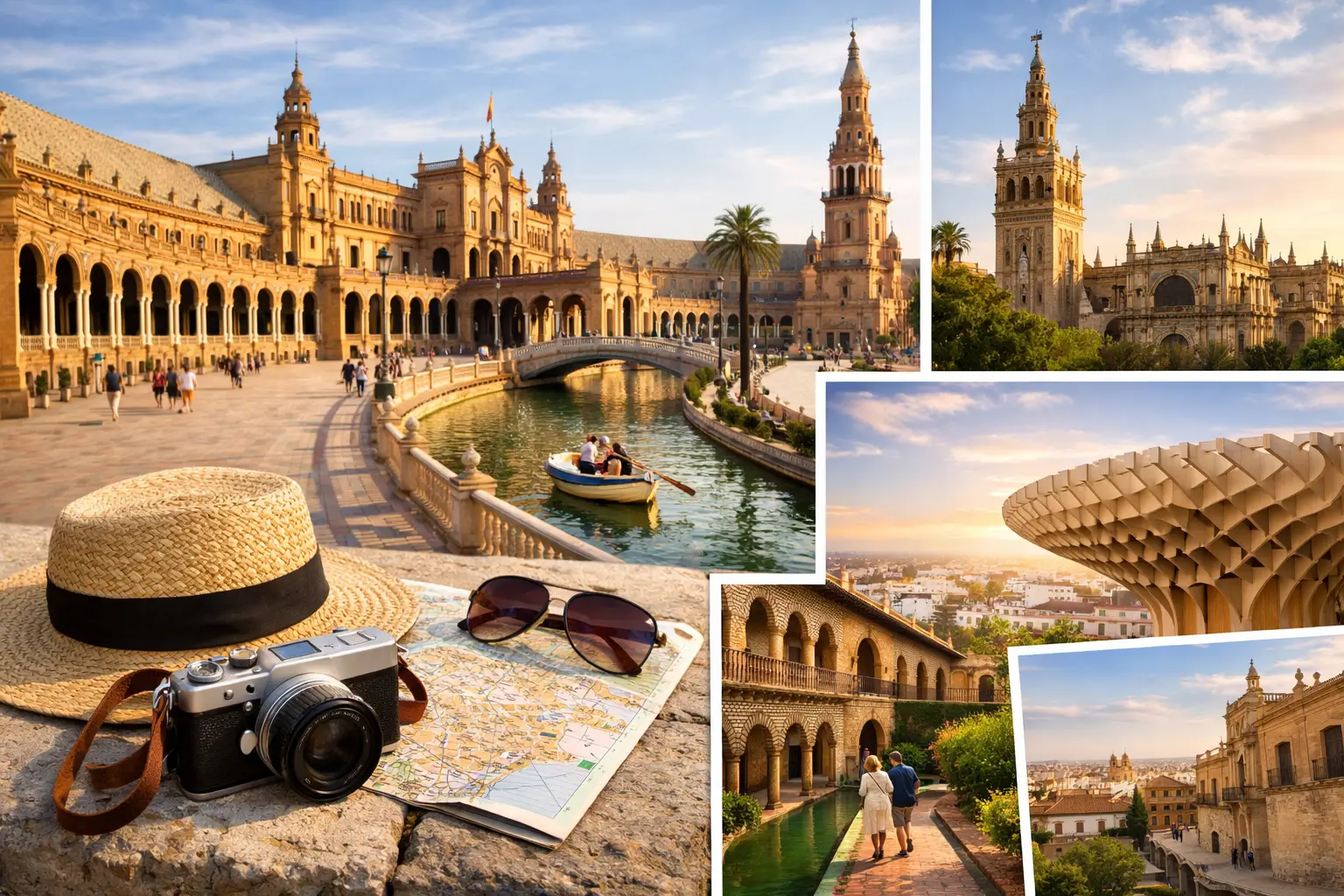
When you leave, walk a few minutes to Seville Cathedral. If you plan to climb La Giralda, go in the morning before the temperature rises. The ascent uses ramps rather than conventional stairs, but it still takes effort and the views are best on a clear day. Allow around 90 minutes for the cathedral and tower, longer if you like to take your time in historic buildings.
Have lunch in Santa Cruz, but do not choose the first terrace beside the busiest square without checking prices. A simple menu of seasonal dishes, shared plates and a drink is usually better value a street or two away. This is a good first day for classics such as espinacas con garbanzos, gazpacho in warmer months, or grilled vegetables alongside local dishes.
Spend the afternoon wandering Santa Cruz’s narrow lanes, passing through the Patio de Banderas and towards the old Jewish quarter. There is no need to turn this into a checklist. The appeal is in the small squares, shaded passageways and changing views of the cathedral tower.
For sunset, walk to Plaza de España in Maria Luisa Park. It is a longer but pleasant walk from Santa Cruz, and the park gives the day a different rhythm after crowded monuments. Go back through the centre for dinner, or eat near the park if you would prefer an earlier, quieter evening.
Day two: river views, markets and modern Seville
Begin in Arenal, where Seville’s riverside history is easier to read. Visit the Torre del Oro if its exhibitions appeal, then follow the Guadalquivir towards the Triana Bridge. The walk is flat, photogenic and especially manageable before late-morning heat.
Cross into Triana for its ceramic heritage, food shops and less formal atmosphere. The Triana Market is useful for a casual lunch or ingredients if your accommodation has kitchen facilities. It is also a sensible place to choose local snacks without committing to a long restaurant meal. Buy only what you will eat that day and carry reusable cutlery or a small container if you regularly pick up food on the go.
In the afternoon, walk back across the river and make your way north through the centre. You can pause around Plaza Nueva or the shopping streets, but leave time for Las Setas, officially known as Metropol Parasol. Its elevated walkway gives a very different view of Seville’s roofs and is particularly good later in the day, when the strongest sun has eased.
This evening is well suited to a flamenco performance. Choose a smaller venue with a clearly stated running time rather than relying on a last-minute street seller. Flamenco can be memorable, but it is not essential for everyone. If you are travelling with younger children, or simply prefer a relaxed dinner, an evening walk around Alameda de Hércules may be the better use of your time.
Day three: quieter squares and the right pace for you
Use the final day to see the side of Seville that fits your interests rather than trying to add another packed circuit. Start at Casa de Pilatos, a richly decorated palace that is often less overwhelming than the Alcázar and works well for travellers who enjoy architecture. It is close enough to combine with the surrounding streets of the Macarena area and central Seville.
From there, walk north towards the Palacio de las Dueñas or the churches and squares around Feria Street. This part of the city is more lived-in, with independent cafés, small shops and markets. It is a useful contrast to the heavily visited Santa Cruz quarter. Stop for coffee, browse carefully, and leave space for a proper final lunch rather than treating every hour as sightseeing time.
If you want one more major cultural visit, choose between the Museum of Fine Arts and the Archaeological Museum when open and convenient. The Fine Arts Museum is the simpler option from the centre and suits art-focused visitors. Families or travellers who would rather be outdoors may prefer a longer wander through Maria Luisa Park instead.
Finish at the river around dusk. A simple riverside walk gives you a final view of Triana and avoids the rushed feeling that comes from fitting a major attraction into the last few hours. Keep enough time to collect luggage and reach the airport, particularly if you are relying on the scheduled airport bus.
What to book before your Seville city break
You do not need to pre-book every meal or museum. For three days, prioritise the places where a missed slot would change your plan. Book the Alcázar first, then cathedral tickets if climbing La Giralda matters to you. Arrange accommodation close to your preferred area and consider your airport journey before arrival day, especially for an early flight home.
A flamenco show is worth booking in advance during weekends, holidays and busier months. Restaurants are more flexible: reserve one dinner if there is somewhere specific you want to try, then keep the rest open. That approach gives you a reliable framework without making the whole break feel over-scheduled.
Practical timing and budget notes
Seville is walkable, but it is not always comfortable to walk all day. Between June and September, shift outdoor sightseeing to mornings and evenings, and plan a longer lunch or hotel break during the hottest hours. In cooler months, the same route can be followed at a steadier pace, though rain showers may make the old streets slippery.
Tapas prices vary sharply by location. Look at the menu before sitting down, ask whether bread or cover charges apply, and check whether portions are tapas, half portions or full plates. Paying a little more for a well-located meal can be worthwhile, but it should be a conscious choice rather than an accidental tourist-area bill.
For a lower-waste trip, travel with a bottle, tote bag and a small reusable food container, use public transport from the airport where it suits your arrival time, and choose locally run restaurants rather than defaulting to familiar chains. These small decisions are practical as well as responsible.
The best final adjustment to this itinerary is usually to remove one thing, not add one. Leave room for a shaded square, an unplanned tapas stop and the pleasure of seeing Seville at walking pace.
Frequently Asked Questions
Additional Resources

The Essential Cruise & Travel Shop

Disclaimer
Stafford Affiliates Travel provides this guide for informational purposes and is not a travel agency or relevant professional adviser. The information contained in this guide is for general guidance only. While we do our best to ensure the information is up-to-date and correct, we make no representations or warranties of any kind about its completeness or accuracy. Attraction opening hours, timed-entry ticket policies, transport schedules, and venue rules are subject to change without notice. We strongly recommend that you verify all details directly with the appropriate official attraction operators, transport providers, or accommodation management before making any bookings, decisions, or financial commitments. We cannot be held liable for any financial loss due to the reader’s failure to follow the above advice.
Affiliate Disclosure
Many of the links are affiliate links, Stafford Affiliates Travel may receive a commission from qualifying clicks, orders or bookings at no additional cost to you. This income helps support our efforts to provide and improve our site and turn it into a one stop resource for travellers with a bias towards cruising.