Barcelona or Madrid Weekend: Which Suits You?
A Barcelona or Madrid weekend is not really a choice between two versions of the same city break. Barcelona is compact, outward-facing and shaped by the coast; Madrid is bigger, later-running and built around grand streets, galleries and neighbourhood life. Both work well from the UK for two or three nights, but the better choice depends on what you want to do between breakfast and your final airport transfer.
For a first short break, choose Barcelona if you want headline sights, beach time and a largely walkable centre. Choose Madrid if museums, tapas bars, parks and a more local evening rhythm matter more than seeing the sea. The practical details below will help you book the city that fits your pace, budget and travel group.
Barcelona or Madrid weekend: the quick decision
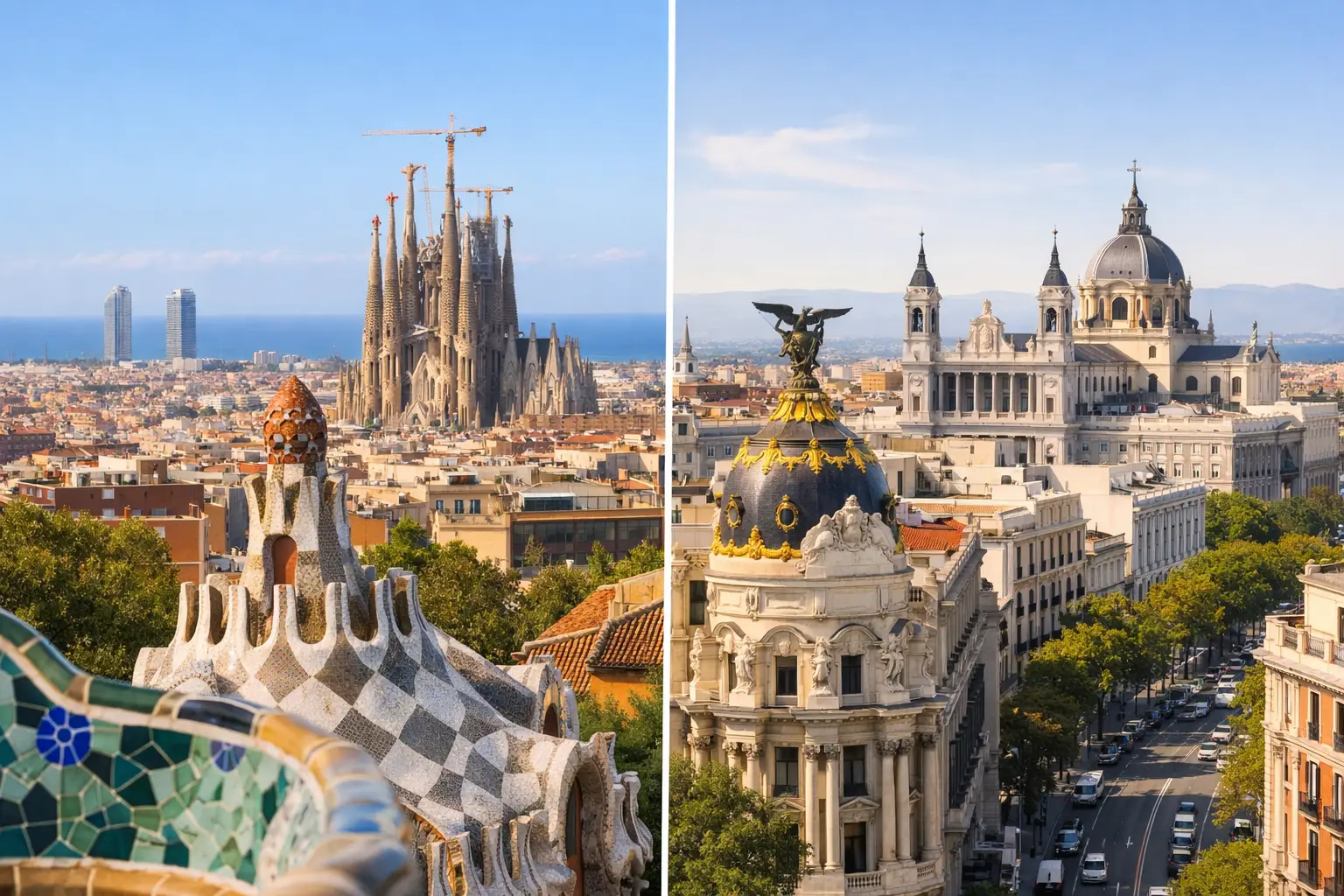
Barcelona generally feels more immediately visual. You can pair modernist architecture, the Gothic Quarter, markets and the waterfront in one day, then use a second day for a major landmark, a hilltop view or time by the beach. It is particularly straightforward for couples, first-time visitors to Spain and families who like having outdoor stops built into a busy sightseeing day.
Madrid rewards visitors who enjoy choosing a neighbourhood and settling into it. Its key attractions are more spread out, but the Metro is efficient and evenings can be wonderfully unhurried. It suits art lovers, food-focused travellers and anyone visiting outside the warmest months, when the lack of a beach matters less.
If you only have two full days, these are useful deciding factors:
- Pick Barcelona for coastal walks, famous architecture and a compact sightseeing route.
- Pick Madrid for major art museums, broad parks and a stronger late-night dining culture.
- Pick Barcelona if you prefer to walk between many of your planned stops.
- Pick Madrid if you are happy using the Metro and want more choice of traditional neighbourhood restaurants.
Neither city is a bargain destination in the way it may once have been. Accommodation and popular attractions can be expensive in both, especially at weekends and during school holidays. Booking the right area early makes a bigger difference than chasing a small saving on transport.
What two days look like in Barcelona
Barcelona is easiest when you group sights by area rather than trying to cross the city repeatedly. Start around the Gothic Quarter and El Born, where narrow streets, older buildings and small squares make a natural first morning. From there, walk towards the waterfront or use the Metro to reach the Eixample, home to many of the city’s best-known modernist buildings.
For your second day, reserve a timed visit to one major attraction well ahead. This is the city where advance booking matters most, particularly for landmark architecture and popular viewpoints. Build in breathing room afterwards: a stroll through a park, a long lunch, or time at the seafront is usually more realistic than trying to fit in another major ticketed sight.
The practical appeal is clear. The centre is dense, many routes are pleasant on foot, and public transport fills the gaps. The trade-off is crowding. Areas around the central old town and headline attractions can be busy from mid-morning onwards, and pickpocketing is a known issue in crowded places. Keep mobile phones and wallets out of back pockets, use a zipped cross-body bag, and avoid leaving valuables loose on café tables.
For where to stay, Eixample is a strong all-round choice: well connected, generally easier to navigate and close to restaurants. El Born works if you value atmosphere and walking access, but expect livelier streets. Gràcia is a sensible option for a more residential feel, although it adds a little travel time to the waterfront. Check exactly what is included before booking, as city taxes and breakfast arrangements can vary.
What two days look like in Madrid
Madrid has enough major sights for a week, so a weekend needs clear priorities. A sensible first day centres on the historic core: start near Puerta del Sol, continue through the older streets towards Plaza Mayor, then make time for the Royal Palace area and a proper tapas stop. These places are close enough to combine without a complicated route.
Use day two for the museum district and Retiro Park. Even visitors who do not normally plan holidays around galleries may find that one major museum is worth the time, but do not attempt several unless art is the main reason for the trip. A museum visit followed by a walk through the park gives the day a manageable rhythm and leaves space for a relaxed final evening.
Madrid operates later than many UK visitors expect. Restaurants may not fill until well after the time you would normally eat at home, especially on Friday and Saturday. You can eat earlier in tourist-focused places, but if you want the fullest choice and liveliest atmosphere, plan for a later dinner. Families and early risers may prefer to make lunch their main restaurant meal and keep the evening simple.
For accommodation, look at Sol or the area around Gran Vía for maximum convenience, accepting that noise can be an issue. Barrio de las Letras is central and useful for museum access, while Malasaña and Chueca offer more independent cafés and nightlife. Retiro is calmer and particularly good if park time and museum access are priorities. Read recent property details for air conditioning, lift access and room size, as central buildings can be charming but compact.
Costs, transport and booking priorities
Flights to either city can be good value when booked early, but the cheapest fare is not always the best option for a weekend. Compare airport times, cabin-bag rules and the cost of getting to your hotel before committing. An arrival late on Friday night or a very early departure on Sunday can remove much of the value of a low fare.
Both cities have practical public-transport links from the airport. In Barcelona, central areas are reachable by rail, bus and Metro connections, depending on the airport terminal and your hotel location. Madrid also has rail, Metro and bus options, with the best choice depending on where you are staying. Check the current route and fare before travel rather than relying on old screenshots or advice from previous trips.
For city travel, Barcelona can involve more walking than expected because visitors often spend time along the waterfront and in the older centre. Comfortable shoes are essential, not optional. Madrid is more spread out, so a contactless-friendly payment method and a charged mobile phone for navigation are useful. In either city, walking one way and using public transport back is often the easiest way to see more without tiring everyone out.
Book accommodation and any must-see timed entry first. Then book flights or rail travel, depending on your departure point. Restaurant reservations are worth considering for a special Saturday evening meal, particularly in Madrid, but leave at least one meal unplanned. Some of the best short-break moments come from choosing a busy local place after a walk rather than following an overfilled itinerary.
Food, weather and the right time to go
Barcelona offers excellent market food, seafood and casual dining, with plenty of options close to the main visitor areas. Madrid is especially strong for tapas, traditional taverns and long lunches. In both cities, eating within a few steps of the most crowded attraction can mean paying more for a less memorable meal. Walk ten minutes, check the menu and choose somewhere with a clear price list.
Barcelona has the advantage in warmer weather because the beach and waterfront give you an easy low-cost break from sightseeing. That does not mean every month is beach weather, and summer heat can make packed daytime plans tiring. Madrid can be very hot in summer and notably cooler in winter, while spring and autumn are often the most comfortable periods for parks, walking and outdoor tables.
Pack a refillable water bottle, particularly in warmer months, and refill it at your accommodation where possible. Carry a lightweight reusable bag for snacks or market purchases, rather than collecting single-use bags during the day. These small choices reduce waste without making your weekend less convenient.
Make the choice based on your actual weekend
Choose Barcelona when your ideal break includes recognisable sights, sea air and a route you can largely cover on foot. Choose Madrid when you would rather spend longer over meals, visit a standout museum and see a capital at its most sociable after dark. If your group has mixed interests, Barcelona is usually simpler for keeping everyone occupied; if food and culture are the shared priority, Madrid may offer the better fit.
Whichever city you book, leave one unscheduled hour each day. It gives you room for a delayed flight, a queue, a shaded café table or a neighbourhood you did not expect to like. That small margin is often what turns a tightly planned weekend into a holiday that actually feels like one.