Lake District Transport Passes: Your Guide to Best Value
Affiliate disclosure: This article contains affiliate links. If you click through and make a purchase, Stafford Affiliates Travel may earn a commission at no extra cost to you.
Missing the right bus in the Lakes can turn a simple day out into a long wait in the rain, so choosing the right Lake District public transport pass matters more than it sounds. The good news is that you usually do not need anything complicated. What you do need is a clear idea of where you are staying, how many journeys you plan to make, and whether you will be mixing buses, boats and trains.
For most visitors, there is no single pass that covers absolutely everything in the Lake District at the best price every time. That is where confusion starts. Some tickets are best for unlimited bus travel in a local area, some are designed for broader regional travel, and some become better value only if you are adding boat crossings or travelling on several consecutive days. If you are planning a car-free break, or simply want to leave the car parked and cut down on congestion, getting this choice right can save money and make your trip much easier to organise.
What does a Lake District public transport pass actually mean?
In practice, a Lake District public transport pass usually refers to one of several ticket types rather than one official pass used across the whole national park. Visitors often use the phrase loosely when they mean a day ticket for local buses, a rover-style ticket for wider bus travel, or a combined ticket that includes buses and boats.
That matters because the best option depends on your itinerary. A couple based in Ambleside doing short hops to Grasmere and Windermere needs something different from a family staying in Keswick and planning full-day outings around Derwentwater, Ullswater and Penrith. The ticket that looks cheapest at first can end up costing more if it excludes a key leg of the journey.
The main types of pass to look for
Local bus day tickets
These are often the simplest option if you are staying in one area and making multiple journeys in a day. In the central Lakes, local bus operators run popular routes linking places such as Windermere, Bowness, Ambleside, Grasmere and Keswick. If you expect to take two or more bus trips in one day, a day ticket can work out better than paying single fares.
The trade-off is coverage. A local ticket may be excellent value around one corridor but useless if you decide to head farther out than planned. It is a good fit for travellers with a fairly fixed plan, less so for people who like to improvise.
Multi-operator or wider-area bus tickets
These are closer to what many people imagine when searching for a Lake District public transport pass. They are designed for travellers who want broader flexibility across several routes or operators. If you are moving between key tourist bases rather than circling one town, these tickets are often worth checking first.
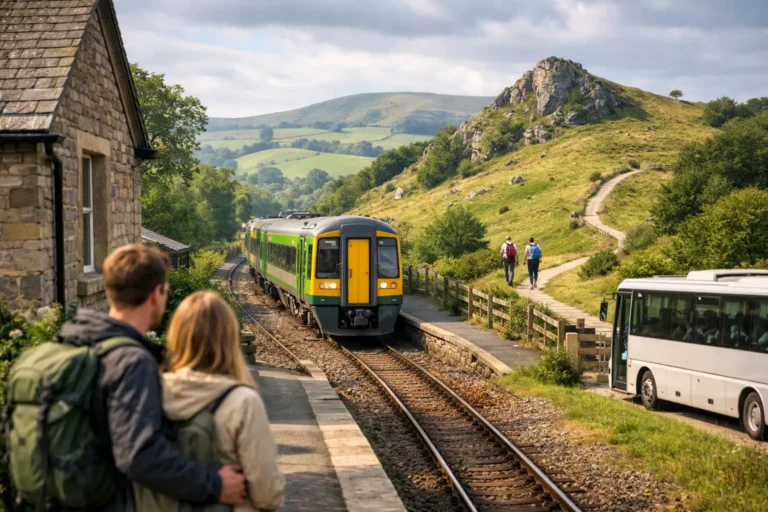
They suit car-free breaks especially well. You can arrive by train, use buses for walking routes and village visits, and avoid separate tickets every time you board. Just check whether your chosen routes are actually included, because not every service in Cumbria falls under the same fare scheme.
Combined bus and boat tickets
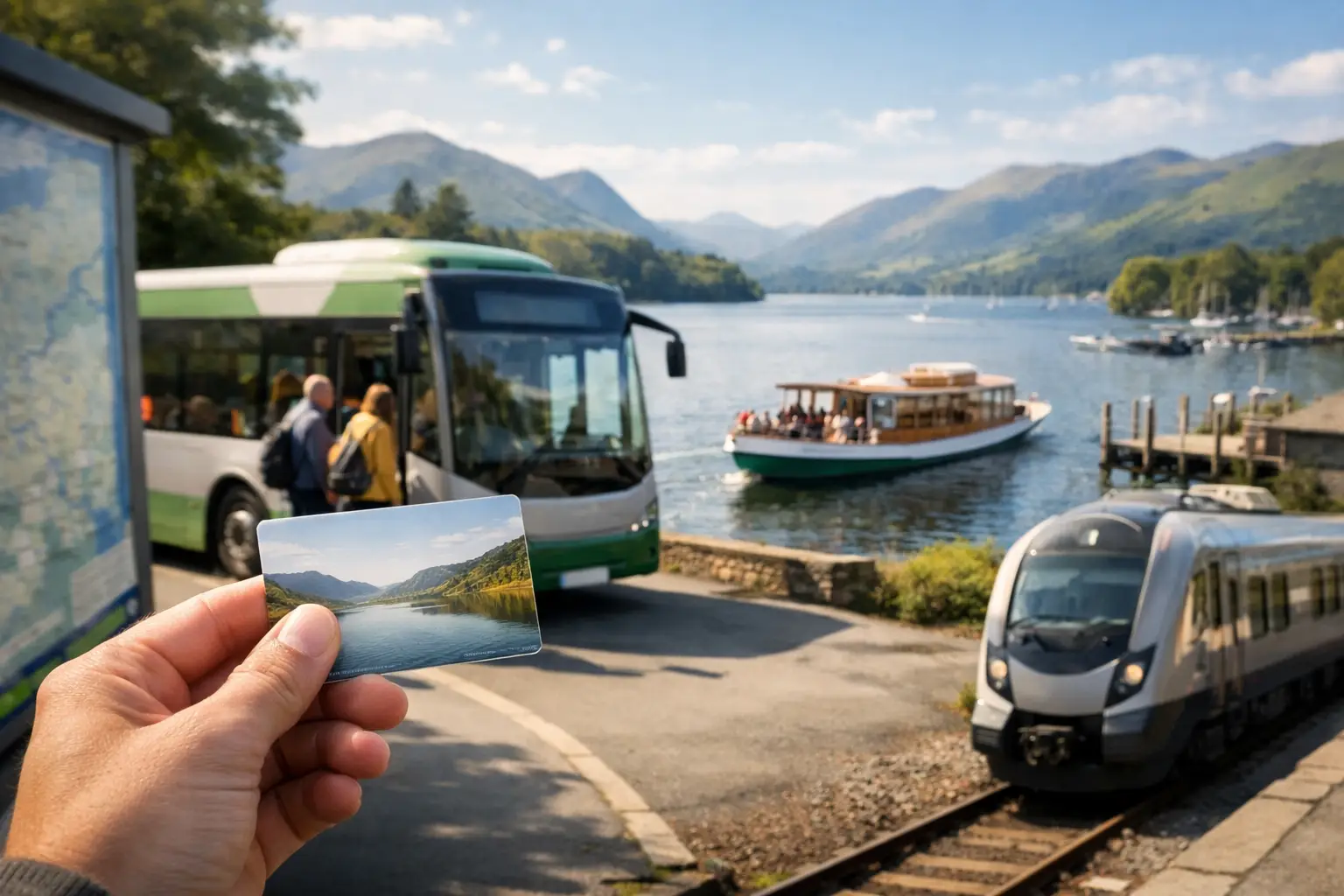
In the Lake District, boats are not just scenic extras. On some days they are practical transport, especially around Windermere, Derwentwater and Ullswater. Combined tickets can make sense if your plans genuinely involve both modes.
These passes are not automatically the best value. If you only want one short boat trip for the experience, paying separately can be cheaper. But if your day is built around moving from one side of a lake to the other and continuing by bus, a combined ticket can save both money and faff.
Rail-inclusive regional tickets
If you are arriving from elsewhere in the North West or building a wider Cumbria itinerary, a rail-inclusive ticket may be the strongest option. These can work well for travellers coming in via Oxenholme, Penrith or Carlisle and then connecting onward by bus.
This type of pass is more niche for short Lake District breaks, but it becomes useful if you are staying outside the national park or planning to move between several bases without a car.
How to choose the right pass for your trip
The quickest way to narrow it down is to start with three questions. Where are you sleeping, which routes do you definitely need, and are you travelling for one day or several?
If you are staying in Windermere, Bowness, Ambleside, Grasmere or Keswick and mostly using popular visitor routes, a local or wider-area bus day ticket is often enough. If you are adding lake crossings, compare the combined options. If you are arriving by train and not hiring a car at all, look at rail-plus-bus products before buying separate tickets.
Families should also do the maths rather than assuming a group pass is automatically best. Sometimes family tickets offer clear savings. At other times, child fares are low enough that separate tickets come out similar in price. The answer depends on ages, operators and how many travel days you have.
For walkers, flexibility matters more than the headline fare. A cheap pass is poor value if it leaves you stranded after a linear walk because the return service is excluded or infrequent. In the Lakes, the timetable can be as important as the ticket itself.
When a pass is worth it – and when it is not
A pass usually pays off if you are making at least two or three journeys in a day, especially on longer tourist routes where single fares add up quickly. It also helps if you want the freedom to stop somewhere unplanned without worrying about buying another ticket.
It may not be worth it if you are staying centrally and only need one return trip, or if you are combining public transport with a lot of walking and will barely use the network. The same applies if you are travelling in shoulder season and some services are limited – an unlimited ticket has less value when the timetable is thin.
There is also a convenience factor. Even where the savings are modest, one pass can remove a lot of decision-making during the day. For many travellers, especially on a short break, that ease is worth paying slightly more for.
Common mistakes people make with a Lake District public transport pass
The most common mistake is assuming all buses in the Lake District work under one simple system. They do not. Routes can be run by different operators, and ticket acceptance is not universal.
Another frequent problem is buying a pass based on geography rather than actual route coverage. A ticket may sound as if it covers the whole national park but still exclude the one service you need to reach your walk start or accommodation.
Visitors also underestimate seasonality. Some routes are far more useful in spring and summer than in winter. Before you buy any pass, check the current timetable and not just the route map.
Finally, do not assume boats run like turn-up-and-go urban transport. Weather, season and service frequency all affect whether a combined ticket is practical on the day.
Best fit by traveller type
If you are planning a classic weekend break and staying around Windermere or Ambleside, a bus day ticket or short multi-day bus pass will usually be the easiest choice. It keeps things simple and supports lower-waste travel without overcomplicating the budget.
If you are travelling with children and want a mix of attractions, villages and a lake cruise, compare combined tickets carefully. They can be good value, but only if the boat leg is something you would have paid for anyway.
If your trip is centred on walking, focus on the route map first and the price second. A slightly more expensive ticket with broader coverage is often the smarter buy.
If you are doing a fully car-free holiday, especially one linked to rail travel, a regional pass can offer the best overall value. It may not be the cheapest ticket on paper, but it can reduce friction across the whole trip.
Practical tips before you buy
Buy as late as you reasonably can, using current operator information rather than old forum advice or last year’s blog posts. Lake District transport changes with the season, and fares can change too.
Keep a screenshot of your ticket if it is digital and make sure your phone is charged. Signal can be patchy in parts of Cumbria, and this is not the place to discover an app will not load offline.
It is also sensible to build some slack into your plans. Public transport in the Lakes is useful, but it is not urban transport with a bus every few minutes. One missed connection can reshape the day, so leave room for that.
For many visitors, the best approach is not chasing the most comprehensive pass possible. It is choosing the one that covers the journeys you are genuinely likely to make, at a price that still feels sensible. In the Lake District, that usually leads to a smoother trip than paying for coverage you never use.