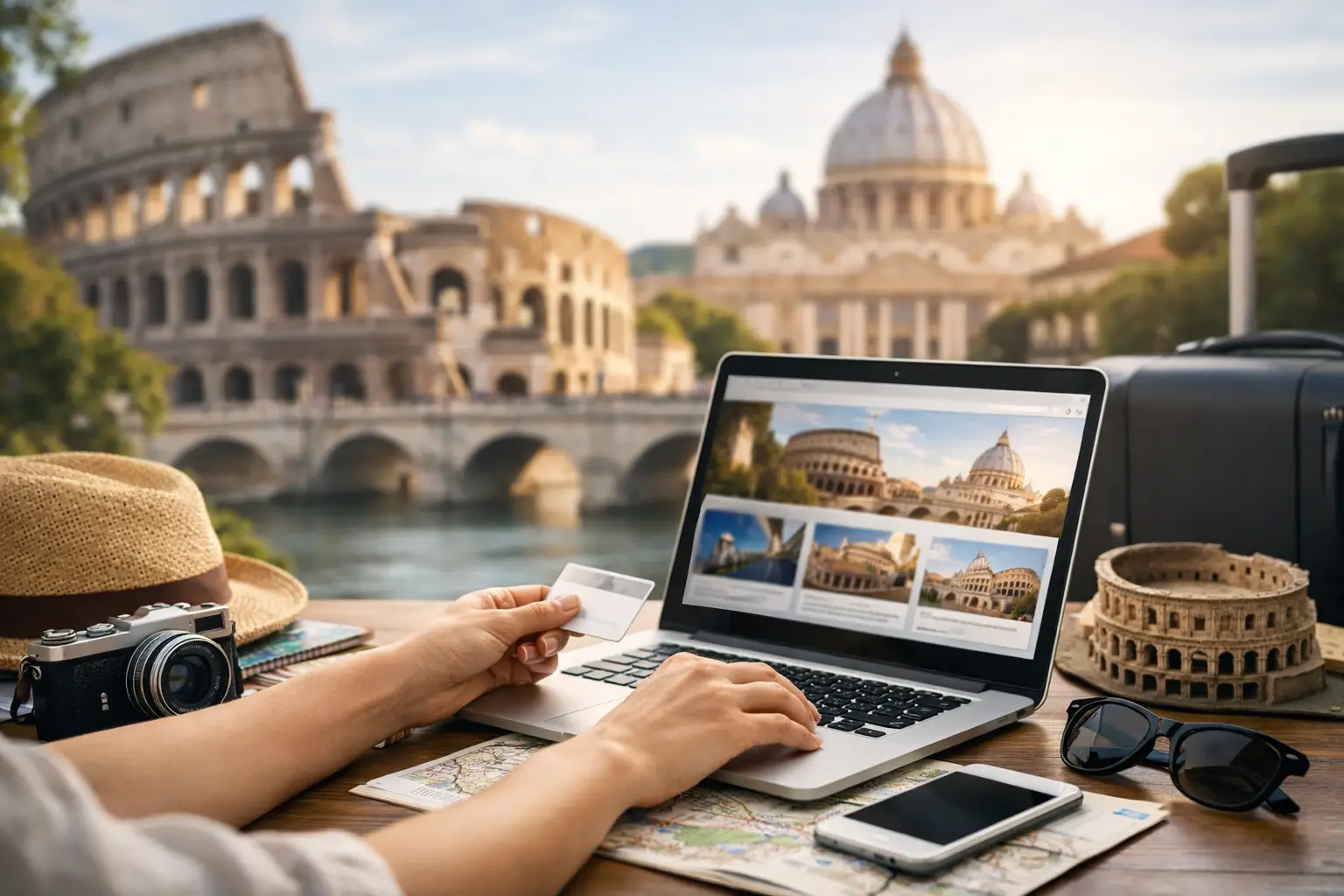
Rome Attraction Booking Guide for Short Breaks
Rome rewards an organised itinerary, but it can punish an overbooked one. This Rome attraction booking guide is designed for UK travellers who want to secure the major sights, avoid wasted queueing time and still leave room for the city’s piazzas, food and unplanned finds.
The main decision is not simply what to see. It is what needs a timed ticket, what can be visited flexibly and how much travelling across the city you are prepared to do in one day. Book the essentials first, then build a practical route around them.
Start your Rome attraction booking plan with dates
Before choosing tickets, fix your arrival and departure times, accommodation area and the number of full days you have in Rome. A three-night break rarely gives you three complete sightseeing days, especially if your flight arrives late or leaves early.
For most first visits, the Colosseum, Vatican Museums and either the Borghese Gallery or a guided historic-centre walk are enough pre-booked commitments. You can add more, but every timed entry reduces flexibility. Rome is best enjoyed at walking pace, and crossing the city repeatedly can take longer than the map suggests.
Check official opening days and seasonal hours before arranging anything else. Major attractions can close on particular weekdays, religious events affect access around the Vatican, and free-entry dates can bring much larger crowds. A ticket is only useful if it fits the day you can realistically use it.
Aim to book popular attractions two to six weeks ahead for ordinary dates, and earlier for school holidays, Easter, bank holiday weekends and peak summer. If your plans are uncertain, choose refundable accommodation and transport where the price difference is sensible, then buy less flexible attraction tickets once your travel is confirmed.
What to book before you travel
Timed entry is most valuable where demand is high and queues are predictable. Rome’s headline sites fall into four useful booking categories:
- Essential timed tickets: the Colosseum and Roman Forum area, Vatican Museums and Sistine Chapel, and Borghese Gallery.
- Worth booking for a specific experience: guided underground, arena-floor or upper-level Colosseum access; Vatican guided tours; and selected archaeological tours.
- Usually flexible: the Pantheon, Castel Sant’Angelo and the Capitoline Museums, although advance booking may still save time on busy dates.
- Free and untimed: Trevi Fountain, Spanish Steps, Piazza Navona, many churches and the surrounding historic streets.
The Colosseum ticket commonly covers more than one archaeological site, often including the Roman Forum and Palatine Hill. Read the validity period carefully. It may allow entry to the wider archaeological area over a set period, but the Colosseum itself normally has a specific reserved slot. Do not assume you can arrive whenever you like.
For the Vatican Museums, an early morning or late afternoon entry can be more comfortable than the middle of the day. Morning slots tend to suit travellers who want to move on to St Peter’s Basilica afterwards, while later slots can work well if you prefer a slower start. The trade-off is that later visits leave less margin if you are delayed on public transport.
The Borghese Gallery has limited visitor numbers and fixed visiting windows. It is a good choice for art lovers, but it is not a quick pop-in. Allow time to reach Villa Borghese, particularly if you are staying near Termini or across the river in Trastevere.
Choose the right ticket, not the most expensive one
Ticket names can be confusing. “Skip-the-queue” may mean timed entry rather than a separate fast-track lane, and a tour with priority access may still involve security checks. No booking removes airport-style screening or crowds at the entrance.
Pay extra for a guided tour when interpretation genuinely changes the visit. The Colosseum and Forum are easier to understand with a knowledgeable guide, particularly on a first trip. A tour can also be worthwhile if it includes an area unavailable on standard entry, such as underground sections or special-access viewpoints.
A basic timed ticket is often the better value if you prefer to explore independently, have already read about the site or are travelling with children who may not enjoy a long group tour. Check the language, group size, meeting point and duration before paying for an upgrade. A low headline price can become poor value if it includes little more than entry you could have booked yourself.
Build days by area, not by a checklist
The simplest way to avoid tiring days is to group attractions geographically. Book one anchor attraction, then add nearby places that do not require a strict slot.
A Colosseum morning pairs naturally with the Roman Forum, Palatine Hill and Monti. This is a demanding outdoor day, especially in warmer months, so take a refillable water bottle, use Rome’s public drinking fountains where appropriate and plan a proper lunch break. Comfortable footwear matters more here than it does on a museum-heavy day.
A Vatican day can include St Peter’s Basilica, Castel Sant’Angelo and an evening stroll around Piazza Navona or the Pantheon. Security queues at St Peter’s can be substantial even when museum entry is reserved, so avoid scheduling another paid activity immediately afterwards.
The historic centre works best without overplanning. Start early for the Trevi Fountain and Spanish Steps, then walk towards the Pantheon, Piazza Navona and Campo de’ Fiori. These areas are close together, but they are busy and full of tempting stops. Leave space for them rather than treating the route as a race.
Try not to schedule two major timed attractions on opposite sides of the city in one day. Rome’s metro is useful but limited in coverage, buses can be affected by traffic and the historic centre is often quickest on foot. A taxi may be justified when travelling with young children, luggage or a tight airport connection, but it should not be the foundation of an itinerary.
Are Rome passes worth buying?
A city pass can be useful, but only if it matches your actual plans. The common mistake is buying a pass because it sounds efficient, then adding attractions simply to “get value”. That can turn a short break into a queueing exercise.
Work out the cost of your chosen entries individually, then compare it with the pass price. Include any reservation fees, because some passes still require advance slots for major attractions. Also check whether the pass covers the exact version of the ticket you want. Special-access tours and evening experiences are often excluded.
A transport-inclusive pass may suit a family staying outside the centre or travellers planning several metro journeys each day. For many central stays, walking between districts is more practical and gives you a better feel for the city. If you will only use public transport occasionally, separate tickets can be cheaper and simpler.
Keep all ticket confirmations available offline. Save PDFs or screenshots to your phone before leaving Wi-Fi, and carry a portable charger. Screenshots also reduce paper waste and avoid the problem of searching through emails at a busy entrance. Use a small day bag and refill rather than buying multiple plastic bottles during long sightseeing days.
Avoid the booking mistakes that cost time
First, book through the attraction’s official channel where possible, especially for standard entry. Third-party sellers can be useful for specialist tours, bundled experiences or sold-out dates, but compare the total price and cancellation terms. Check whether the seller provides the actual ticket or asks you to meet a representative nearby.
Second, read arrival instructions. Many venues require you to be there 15 to 30 minutes before your slot, and late arrivals may not be admitted. Allow extra time for transport, security and finding the correct entrance. The Vatican area and the Colosseum have multiple access points, so relying on the pin from a general map search can cause avoidable stress.
Third, check names, ages and identification requirements. Reduced-price and child tickets may require proof, while some tours require every guest’s full name at booking. If you are travelling as a family, verify age bands carefully rather than assuming the same rules apply across every venue.
Finally, avoid booking every evening. Rome after dark is one of the reasons to visit: neighbourhood restaurants, floodlit ruins and relaxed walks are more memorable when they are not squeezed between ticket times. Reserve one evening activity only if it is a real priority.
A good Rome itinerary has a few firm bookings and plenty of usable space around them. Secure the sights that genuinely matter to you, keep nearby alternatives in mind, and let the rest of the day be shaped by your energy, the weather and the streets you happen to find.