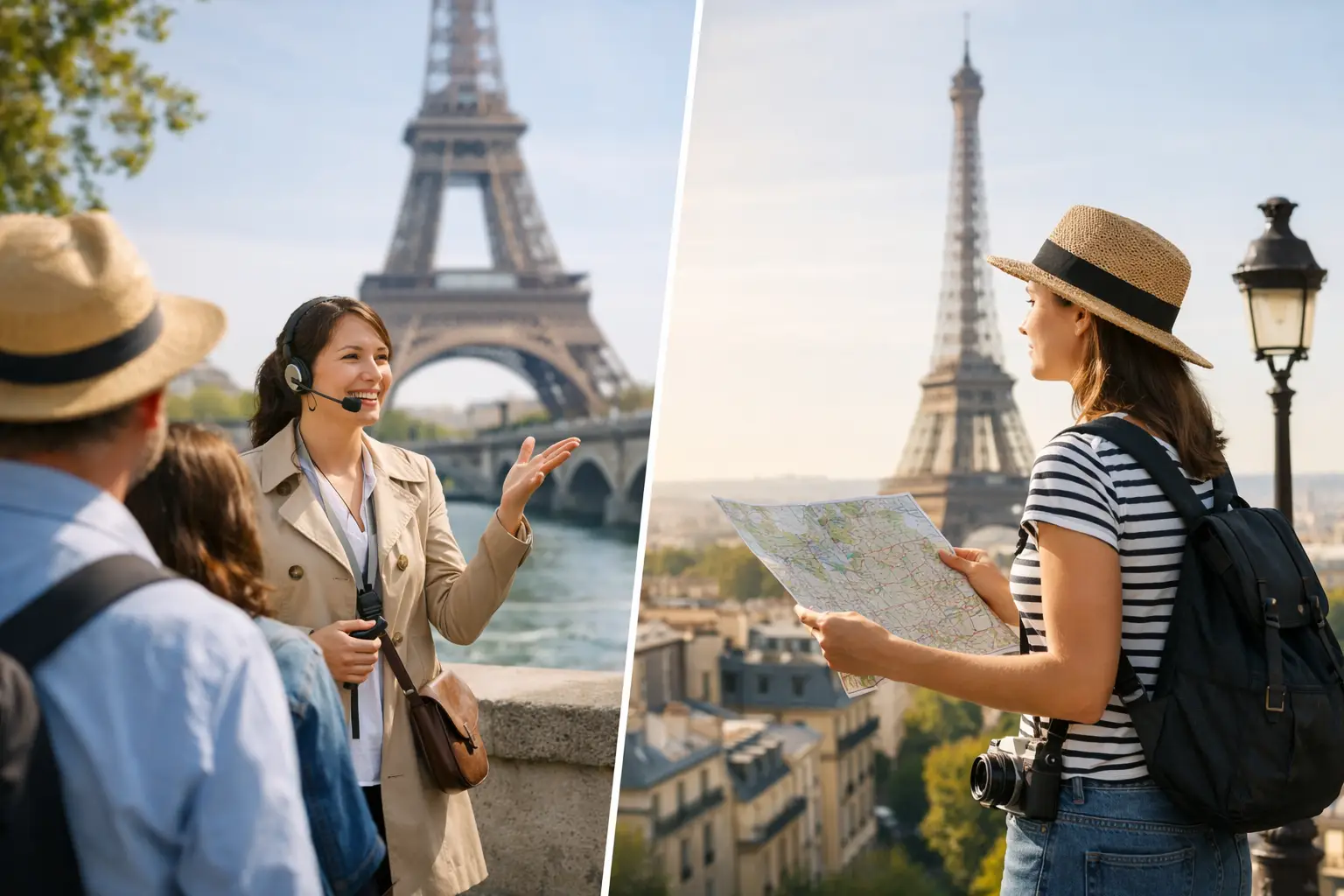
Guided Tour or DIY Paris: Which Suits You?
Introduction
You can tell a lot about a city break by what happens in the first three hours. If you land, reach your hotel smoothly, and know exactly what you are doing next, the trip usually starts well. If you are already juggling train tickets, timed entries and a confusing metro interchange, it can feel harder than it should. That is why the guided tour or DIY Paris question matters before you book anything.
For most UK travellers, this is not really a question of right or wrong. It is a question of where you want structure and where you want freedom. Some people want a local guide to remove friction, speed things up and add context. Others would rather keep costs down, move at their own pace and build a trip around their own interests. The best choice often sits somewhere in the middle.
Guided tour or DIY Paris: start with your travel style
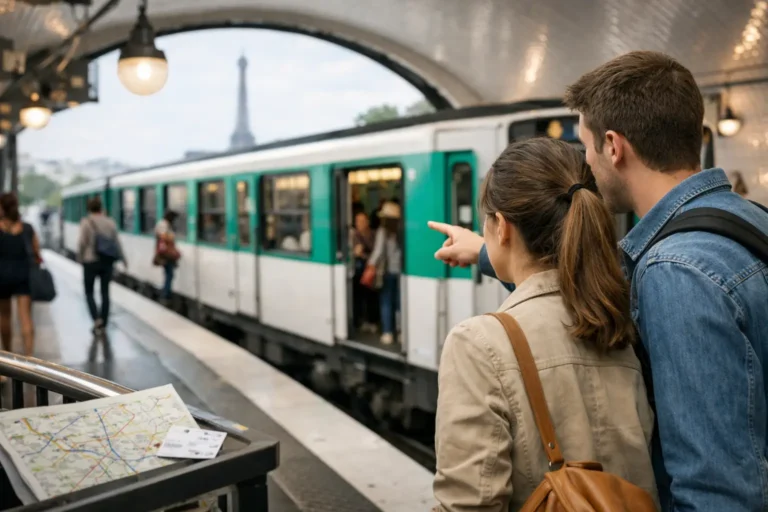
A guided trip works best when time is tight, confidence is low, or the logistics are doing too much of the heavy lifting. If you only have a weekend, a well-planned tour can cut out wasted time. You are not standing in the wrong queue, missing a timed slot, or trying to work out whether you need one metro line or two.
DIY travel suits people who enjoy planning and do not mind making decisions on the move. If you like choosing your own neighbourhood, stopping for lunch where you fancy, and changing plans because the weather turns, independent travel usually feels more natural. You are paying with time and effort rather than with tour fees.
The main mistake is treating this as an all-or-nothing choice. You do not need to spend your whole trip with a guide to benefit from one. Equally, booking everything yourself does not mean you need to navigate every museum, transfer and day trip without help.
Cost: DIY is often cheaper, but not always better value
On paper, DIY usually wins on price. You can compare accommodation, book public transport directly, and choose only the sights you genuinely want. You are not paying for a group structure, guide time or packaged convenience.
That said, cheapest and best value are not the same thing. A guided option can save money if it prevents expensive mistakes. This is especially true if you are travelling in peak season, visiting major attractions with timed entry, or trying to fit a lot into a short stay. Missed slots, last-minute taxis and poor routing can quickly eat into any savings.
Families often sit in the middle. If you are paying for several people, private guiding can look expensive fast. But if one organised day reduces stress, queues and arguments about where to go next, the value can still be there. For solo travellers, small-group tours can be a sensible compromise because they spread the cost while offering structure and company.
Time and convenience: this is where tours earn their keep
The strongest case for a guided tour is efficiency. A good guide knows how to sequence a day properly. That means fewer unnecessary crossings of the city, better timing around busy periods and clearer expectations about how much you can realistically fit in.
DIY travellers often underestimate how much time gets lost between places. Not just on transport, but on decision-making. Looking up routes, checking opening hours, working out where to eat and adapting to delays all take mental energy. That may be fine on a four-night break. It matters more on a one-night stop or a packed weekend.
If your priority is seeing key sights with minimal friction, guided touring has an obvious advantage. If your priority is wandering, sitting in cafés, browsing local shops and building in rest time, a DIY plan tends to suit better.
Flexibility: DIY wins, unless you dislike making choices
Independent travel gives you control. You can start early or late, spend two hours somewhere unexpected, or skip a stop that does not appeal on the day. That freedom is hard to beat if you travel for atmosphere as much as sightseeing.
Guided tours, even good ones, involve compromise. You move at a group pace. You may spend less time than you want in one place and more than you want in another. If you are the sort of traveller who gets frustrated by fixed schedules, that can wear thin quickly.
But flexibility is only useful if you actually want it. Some travellers do not want ten decisions before lunch. They want a clear meeting point, a sensible route and someone else to handle the details. For them, too much freedom can feel like work.
Depth and context: guides can improve what you are seeing
A guide is not just a human sat nav. The real benefit is context. You understand what you are looking at, why it matters and how it fits into the wider story of the city. That can turn a stop from a photo opportunity into something more memorable.
This matters most for travellers who enjoy history, architecture, food culture or neighbourhood detail. If you are visiting largely to tick off landmarks, a self-guided plan may be enough. If you want the trip to feel more connected and informed, even one guided walk can add a lot.
Audio guides and pre-planned self-guided routes sit somewhere in between. They keep the independence of DIY travel while adding structure and explanation. For many travellers, that is the sweet spot.
Stress levels: be honest about your tolerance
The guided tour or DIY Paris decision often comes down to stress, not money. Some people are perfectly happy navigating stations, reading transport maps and adjusting plans on the fly. Others find that draining, especially after an early flight or Eurostar journey.
There is no prize for doing everything independently if it leaves you too tired to enjoy the trip. Equally, there is no need to book escorted everything if you are comfortable with city travel and would rather keep things lighter and cheaper.
First-time visitors often benefit from guided support on day one. That could be an arrival transfer, a short orientation walk or one pre-booked sightseeing slot. Once you have your bearings, the rest of the break usually feels easier to manage alone.
When a guided trip makes the most sense
A guided approach is usually the stronger option if you have only one or two full days, are travelling with relatives who need a smoother pace, or feel unsure about local transport and timed-entry planning. It is also useful if you want to include a complicated day trip without spending your evening before it checking train platforms and backup routes.
It also suits celebration trips. If you are travelling for a birthday, anniversary or short break where you do not want admin taking over, paying for convenience can be sensible. Holidays are not a test of endurance.
When DIY is the better choice
DIY is often the right fit if you have three or more days, enjoy researching neighbourhoods, and want to balance major sights with slower, low-cost time. It works especially well for repeat visitors who no longer need to prioritise the obvious highlights.
It is also the better route for travellers trying to keep waste and spending down. Independent planning makes it easier to use public transport, carry refillables, avoid over-scheduled days and support smaller local businesses at your own pace.
The smart middle ground
For many people, the best answer is neither fully guided nor fully DIY. Book the pieces that are hardest to improvise, then leave the rest open.
That might mean arranging your arrival, reserving one or two major attractions, and adding a half-day guided walk early in the trip. After that, keep time for independent exploring. You get the confidence boost and efficiency of expert help without losing flexibility.
This hybrid approach also protects your budget. Instead of paying for a full package, you spend on the parts where guidance genuinely reduces stress or saves time.
A simple way to decide
If you are stuck, ask yourself four questions. How much planning do I realistically want to do before I leave? How upset will I be if queues or navigation problems waste half a day? Am I travelling to learn, or mainly to relax and look around? And do I enjoy making decisions as I go?
If your answers point to low planning tolerance, low stress tolerance and a short schedule, guided support is likely worth it. If you enjoy research, want freedom and have enough time to absorb the occasional delay, DIY is probably the better fit.
The best trip is the one that matches how you actually travel, not how you think you ought to. Choose the level of structure that gives you more head space, and the city will feel far easier from the moment you arrive.
Frequently Asked Questions
Disclaimer
Stafford Affiliates Travel provides this guide for informational purposes and is not a travel agency. The information contained in this guide is for general guidance only. While we do our best to ensure the information is up-to-date and correct, we make no representations or warranties of any kind about its completeness or accuracy.
Cruise line policies, itineraries, and loyalty programs are subject to change without notice. We strongly recommend that you verify all details directly with your cruise line or a certified travel agent before making any bookings or financial commitments.
We cannot be held liable for any financial loss due to the reader’s failure to follow the above advice.
Affiliate Disclosure
Many of the links are affiliate links, Stafford Affiliates Travel may receive a commission from qualifying clicks, orders or bookings at no additional cost to you. This income helps support our efforts to provide and improve our site and turn it into a one stop resource for travellers with a bias towards cruising.