
Guided Tour vs Self Guided: Which Suits You?
Introduction
You can usually spot the decision before a trip is even booked. One traveller wants everything lined up, timed properly and explained by someone who knows the place. The other wants room to change plans at breakfast and linger somewhere unexpected. That is the real guided tour vs self guided question – not which is better in general, but which one fits the trip you are actually taking.
For most people, the right answer changes by destination, budget, confidence level and who they are travelling with. A first weekend in an unfamiliar European capital may suit more structure than a return visit to a Costa del Sol resort where transport is straightforward and the main goal is to switch off. If you are planning with children, older relatives or a very tight schedule, the balance shifts again.
Guided tour vs self guided: what is the real difference?
A guided tour means someone else has done most of the route planning, timing and local interpretation for you. That could be a half-day walking tour, a day trip by coach, or a fully escorted holiday where hotels, transfers and activities are bundled together. You are paying partly for convenience and partly for expertise.
Self-guided travel puts you in charge of the shape of the trip. You choose the transport, book the accommodation, decide how busy each day should be and change course when needed. That does not always mean doing everything from scratch. Plenty of travellers now book trains, airport transfers and attraction slots in advance while still keeping the holiday independent.
The practical difference is not just control. It is also responsibility. On a guided trip, if timings run late or a route changes, the organiser usually handles it. On a self-guided trip, that admin sits with you.
When a guided tour makes more sense
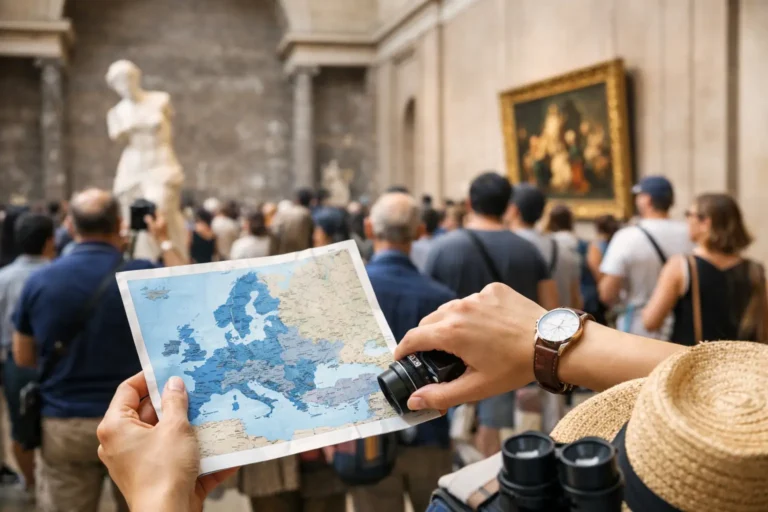
Guided tours tend to work best when time is limited and the destination is information-heavy. In a capital city with a lot of history, a good guide can save you hours of piecing things together from signs, maps and online searches. If you only have two days in a city, spending one of those days learning the layout properly can make the rest of the break easier.
They are also useful when logistics are awkward. Think rural sights with limited public transport, mountain routes with parking pressure, or day trips where several stops are spread far apart. In the Peak District, for example, a guided outing can be a sensible choice if you want scenic highlights without dealing with multiple bus changes, parking limits or narrow roads.
There is also a confidence factor. If you are travelling solo for the first time, visiting a place where you do not speak much of the language, or managing mobility needs, having a guide or organiser can reduce decision fatigue. The same applies to family groups where one person would otherwise end up doing all the planning.
That said, not all guided tours are equal. Some are tightly run and genuinely helpful. Others are rushed, padded with unnecessary stops or built around large groups that move at the pace of the slowest person. Before booking, it helps to ask what problem the tour is solving. If it is saving transport hassle or adding meaningful context, fair enough. If it is simply taking you to places you could reach easily on your own, the value may be weaker.
When self-guided travel is the better option
Self-guided trips suit travellers who value flexibility over efficiency. If your favourite part of travel is wandering, choosing where to eat on the day and changing plans based on weather or energy levels, organised tours can feel restrictive quite quickly.
This style often works especially well in destinations with strong public transport and clear visitor infrastructure. Many European capitals are easy to manage independently with a bit of prep. The same goes for resort stays where your days are split between the beach, the old town, a market and the odd pre-booked excursion. You do not need a full escort for that. You need a realistic plan, the right tickets and enough breathing room.
Self-guided travel can also be better value, but only if you plan it properly. Travellers sometimes assume independent always means cheaper. It can, but it can also become more expensive if you book late, rely on taxis because transport research was skipped, or waste money on poorly timed reservations. Freedom has a cost when the planning is weak.
The other advantage is pace. You can leave early, start late, revisit a neighbourhood you liked, or cut a museum short without feeling that you are holding anyone up. For many adults on a short break, that flexibility is the whole point.
Cost: the headline price is not the whole story
This is where people often compare the wrong numbers. A guided tour may look expensive at first glance, but it can include transport, entry fees and a guide who helps you avoid wasting half a day. A self-guided day may look cheaper until you add train fares, local buses, attraction tickets, luggage storage and the occasional mistake.
The better question is this: what are you paying to avoid?
If a guided option removes multiple separate bookings, reduces the chance of missed connections and helps you use limited time well, the extra spend may be justified. If the destination is simple to manage and you are comfortable using local transport, self-guided usually gives you more room to control costs.
Families should look particularly closely at this. Group tour prices can climb quickly, but so can independent travel when you need larger rooms, flexible meal stops and easy transport. Sometimes the cheapest-looking option is the one that creates the most friction on the day.
Planning effort and mental load
A lot of travellers underestimate how much energy trip planning takes. Researching where to stay, working out airport transfers, checking opening times, deciding whether to pre-book and keeping track of tickets all add up. If you enjoy that process, self-guided travel is rewarding. If you do not, a guided format can be money well spent.
There is also the mental load during the trip itself. On a self-guided break, one person often becomes the unofficial trip manager. They check train platforms, make sure everyone leaves on time, solve navigation issues and keep an eye on bookings. That is manageable for some groups and draining for others.
A guided trip shifts much of that pressure away. You lose some spontaneity, but you gain headspace. For travellers who want a proper rest rather than a second job in another country, that matters.
A hybrid approach is often the best choice
The guided tour vs self guided debate is not always either-or. In practice, many of the smoothest trips mix both.
You might book your city break independently, choose a well-located hotel near public transport, and then add one guided walking tour on the first morning. That gives you orientation and local context without handing over the whole holiday. Or you might stay in a resort independently but book a guided inland day trip because the route is awkward without a car.
This hybrid approach is often the sweet spot for UK travellers who want confidence without feeling over-managed. It also supports lower-waste choices quite well. If a guided day trip replaces several separate car journeys, or if a self-guided city stay is built around trains, buses and refill points rather than constant taxis and disposables, you can make the trip both easier and more responsible.
How to choose for your trip
Start with the destination. Is it easy to navigate, or does it involve complicated transfers and scattered sights? Then look at your time. A one-night or two-night break usually benefits from more structure than a longer stay.
Next, be honest about your planning style. Do you enjoy comparing routes, booking timed entry and building a realistic itinerary? Or do you leave details until the last minute and hope it sorts itself out? The second group often does better with at least some guided elements.
Finally, think about your group. Children, mixed interests, mobility considerations and different energy levels all affect how much flexibility you need. A guided tour can reduce friction, but only if the pace suits everyone. If not, a self-guided plan with just one or two anchor bookings may work better.
At Stafford Affiliates Travel, this is usually where practical trip planning matters most – not chasing a perfect travel style, but choosing the one that reduces stress for the specific break you are taking.
If you are stuck, use a simple test. If the main risk is getting lost, wasting time or missing key context, book a guide. If the main risk is feeling rushed, overscheduled or boxed in, go self-guided. Most good trips are built around knowing which problem you are trying to avoid.
The best choice is the one that lets you spend less time managing the holiday and more time actually enjoying where you are.
Frequently Asked Questions
Additional Resources

The Essential Cruise & Travel Shop

Disclaimer
Stafford Affiliates Travel provides this guide for informational purposes only and does not act as a travel agency or professional travel adviser. The information contained in this guide is provided for general guidance only. While we endeavour to keep the information up to date and correct, we make no representations or warranties of any kind regarding its completeness or accuracy. Tour itineraries, transport timetables, ticket prices, attraction availability and booking terms are subject to change without notice. We strongly recommend that you verify all specific details directly with the relevant tour operator, transport provider, accommodation provider or official ticketing authority before making any travel decisions, bookings or financial commitments. We cannot be held liable for any financial loss resulting from a failure to follow this advice.
Affiliate Disclosure
Many of the links are affiliate links, Stafford Affiliates Travel may receive a commission from qualifying clicks, orders or bookings at no additional cost to you. This income helps support our efforts to provide and improve our site and turn it into a one stop resource for travellers with a bias towards cruising.