
10 Lower Waste Travel Habits That Work
Introduction
You notice waste on a trip when your hotel bin fills up by day two – plastic bottles, snack wrappers, paper tickets, miniature toiletries and takeaway packaging from meals grabbed between train changes. Most of it is avoidable. Lower waste travel habits are not about making your holiday complicated or expensive. They are usually the small planning choices that make a trip run more smoothly.
For most travellers, the aim is not perfection. It is reducing the throwaway items that pile up when you are rushing, tired or badly prepared. If you are booking a city break, a week on the Costa del Sol or a few days in the Peak District, the same rule applies: the less you rely on single-use fixes, the easier your trip tends to be.
Why lower waste travel habits matter on real trips
Waste builds up fastest when convenience takes over. At the airport, that might mean buying another bottle of water because you forgot your reusable one. On a rail journey, it might be a meal deal wrapped in layers of plastic because you did not pack food. In a resort, it often shows up as beach shop purchases you did not plan for – inflatables, cheap towels, low-quality sandals and sun cream bought in tiny emergency bottles.
The practical benefit of lower waste travel habits is that they reduce these panic buys. They can also save money, cut down luggage clutter and make moving between places simpler. A refillable bottle means one less thing to keep buying. A small toiletry kit means fewer leaks and fewer last-minute pharmacy runs. Booking transport well means fewer printed documents and fewer expensive detours.
There are limits, of course. You will not always be able to avoid packaging, and some destinations make refills or recycling easier than others. The goal is to lower the amount of waste you create without making the trip harder to manage.
Start with packing, because that is where waste usually begins
Most lower-waste choices are decided before you leave home. If you pack badly, you end up replacing basics on the road. If you pack well, you avoid buying disposable versions of things you already own.
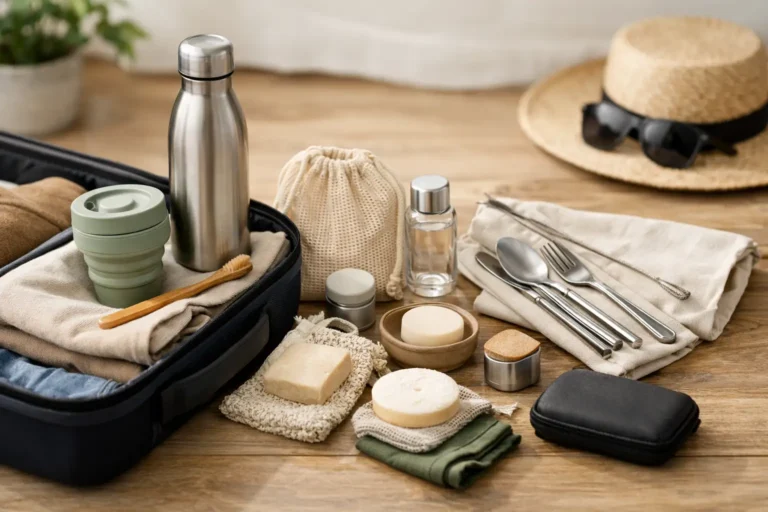
A refillable water bottle is one of the clearest examples. It is useful on trains, at airports after security, in stations, during day trips and while walking around cities. The same goes for a small coffee cup if you regularly buy hot drinks, though this only helps if you genuinely carry and use it. If it sits in your suitcase all week, it is just extra weight.
Toiletries matter too. Decanting shampoo, sun cream or moisturiser into small reusable containers is not glamorous, but it stops the cycle of buying travel minis for every trip. Solid toiletries can work well, especially for hand luggage, but they are not always the best fit for every traveller. Some people find bars messy or inconvenient in shared bathrooms. If liquids are more realistic for you, reusable bottles are still a solid option.
Clothing deserves a bit more thought than it usually gets. Fast, cheap holiday purchases often become waste within months. It is better to pack versatile items you will wear again than buy destination-specific pieces that only suit one trip. That matters for beachwear, walking layers and evening outfits alike.
Smarter transport choices can reduce more than emissions
When people talk about responsible travel, transport often turns into a debate about flights. In reality, lower waste travel habits around transport are often much more immediate and practical.
Digital boarding passes and train tickets cut paper waste, but they also make your documents easier to manage. An eSIM can be useful here as well, especially if it helps you avoid buying plastic SIM packaging at the airport or station. More importantly, it keeps your maps, booking details and public transport apps working when you need them.
Public transport usually creates less waste than a string of taxis and service station stops, partly because it encourages more deliberate planning. If you know your route from airport to resort, or from station to city centre hotel, you are less likely to rely on disposable coffees, packaged snacks and printed maps while figuring it out on the move.
That said, convenience matters. A family arriving late with children and luggage may reasonably choose a transfer over multiple transport changes. Lower waste should support a workable trip, not ignore real-world constraints.
Food and drink habits make a bigger difference than souvenirs
Many travellers focus on reusable shopping bags and forget that food packaging is often the biggest source of day-to-day holiday waste. This is especially true on short breaks, where every meal is bought out.
The easiest fix is to avoid being caught hungry. Packing a few snacks for the journey, carrying a refillable bottle and knowing roughly where you will eat can reduce a surprising amount of packaging. If your accommodation includes a kettle or small fridge, a quick grocery stop can cover breakfasts, drinks and simple lunches with far less waste than constant takeaway buying.
In cities, sit-down meals often create less waste than grab-and-go options because there is less disposable packaging involved. In self-catering accommodation, buying larger shared items rather than repeated individual portions can help too, though only if you will actually use them up. On a two-night break, a giant bottle of something may create more waste than a small one left unfinished.
This is where judgement matters. Lower waste is not just about choosing the least packaging in theory. It is about choosing the option that is realistic for the length and style of your trip.
Better booking habits lead to lower waste travel habits
People do not usually connect booking decisions with waste, but they should. The way you book shapes what you end up consuming.
Staying somewhere with refill points, decent public transport access or basic kitchen facilities can reduce single-use purchases throughout the trip. A hotel near a station or bus route may remove the need for repeated car journeys and service stop shopping. Accommodation with a proper breakfast setup can cut down on packaged convenience food. Even choosing a place close to what you plan to see can reduce unnecessary transport and impulse spending.
It also helps to book the right length of stay. Overstuffed itineraries tend to create waste because they push you towards rushed meals, excess transport and forgotten items bought twice. A slower plan with fewer base changes is often both calmer and less wasteful.
For travellers using straightforward planning resources, this is where the biggest gains often happen. Good itinerary structure does more than save time. It reduces the chain of avoidable purchases that come from poor timing and bad logistics.
Souvenirs, beach gear and day-trip extras need a reality check
A lot of holiday waste comes from things bought with good intentions and abandoned soon after. Resort shops and tourist areas are full of them. Cheap hats, novelty mugs, plastic toys, extra chargers, low-quality bags and emergency towels all have one thing in common: they solve a problem that better planning could often prevent.
If you expect to need beach items, walking gear or picnic supplies, decide in advance whether to bring them, hire them or buy something durable that you will use again. Hiring can make sense for bulky or occasional-use items. Buying can also make sense if the quality is good and the item fills a genuine gap. What usually creates waste is buying the cheapest version because it is there.
The same goes for souvenirs. Practical local products, food you will actually consume or one well-chosen item generally age better than armfuls of low-value trinkets. Supporting local businesses is positive, but thoughtful buying matters more than buying a lot.
How to build lower waste travel habits without overthinking them
The best habits are the ones you can repeat. A complicated system tends to fall apart halfway through the journey. Keep it simple: a refillable bottle, a compact toiletry kit, a fabric tote, digital tickets, a few snacks and a basic plan for transport and meals. That alone can remove a large share of single-use waste from a typical trip.
It also helps to review what you threw away last time. If you always end up with unused mini toiletries, stop packing them. If you repeatedly buy bottled water, solve that before your next departure. If you keep purchasing cheap extras at your destination, make a short packing note and fix the gap.
Travellers often assume responsible choices take more effort than they are worth. In practice, the most useful lower-waste habits are often the same ones that make a trip tidier, cheaper and less stressful. That is a rare travel win worth keeping – not because it sounds good, but because it works the next time you pack.
Frequently Asked Questions
Additional Resources

The Essential Cruise & Travel Shop

Disclaimer
Stafford Affiliates Travel provides this guide for informational purposes and is not acting as a travel agency or professional adviser. The information contained in this guide is for general guidance only. While we do our best to ensure the information is up-to-date and correct, we make no representations or warranties of any kind regarding its completeness or accuracy. Transport schedules, accommodation facilities, local recycling regulations, and service provider policies are subject to change without notice. We strongly recommend that you verify all important details directly with the relevant transport operators, accommodation providers, local authorities, or official service providers before making any bookings, decisions, or financial commitments. We cannot be held liable for any financial loss caused by a failure to follow this advice.
Affiliate Disclosure
Many of the links are affiliate links, Stafford Affiliates Travel may receive a commission from qualifying clicks, orders or bookings at no additional cost to you. This income helps support our efforts to provide and improve our site and turn it into a one stop resource for travellers with a bias towards cruising.