Peak District Without Car Example for 2 Days
Introduction
Arriving at a village station with only a small bag changes the shape of a Peak District break. You have to choose your base carefully, check the last bus rather than assume one will appear, and plan walks that finish where public transport starts. This Peak District without car example shows how that can work for a two-night trip, without turning the holiday into a timetable exercise.
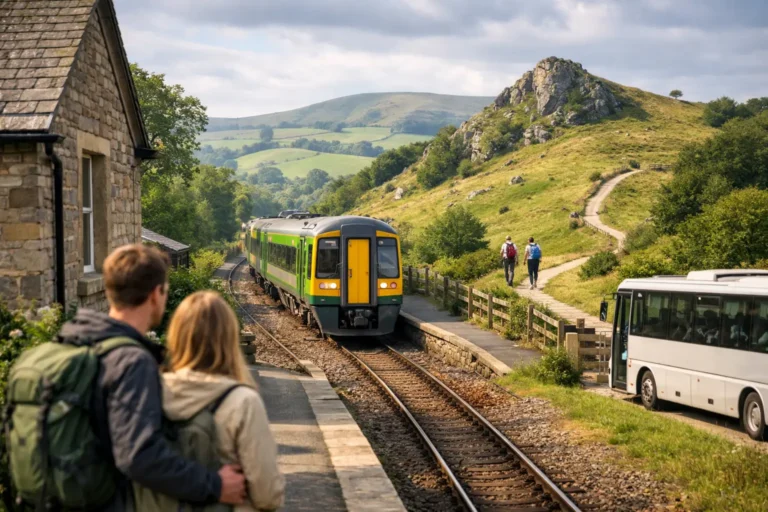
The practical answer is to base yourself near the Hope Valley railway line. It gives you direct access to several well-known walking areas, keeps transfers simple from Sheffield or Manchester, and avoids paying for a car that will spend much of the weekend parked. It is also a lower-waste choice, particularly if you travel with a refillable bottle, packed snacks and a reusable cup.
Why the Hope Valley works without a car
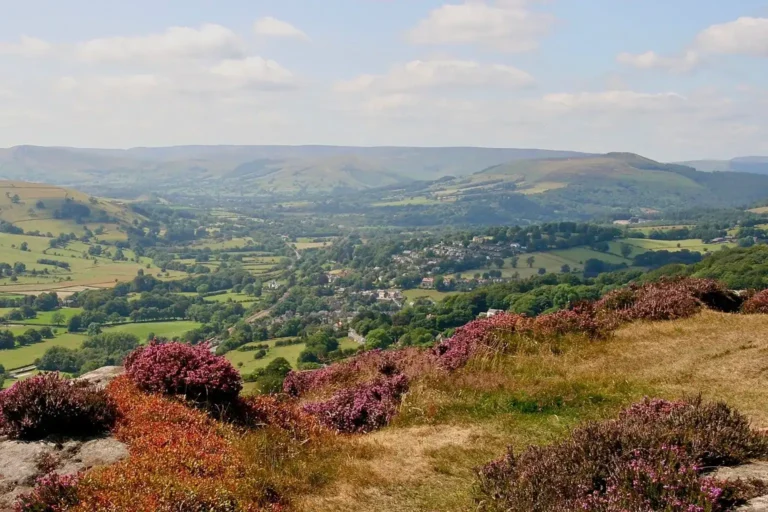
The Hope Valley is one of the most useful parts of the national park for car-free visitors because the railway serves stations including Hope, Edale and Hathersage. From these points, local buses and walking routes open up villages such as Castleton and the surrounding hills.
For a first visit, stay in Hope or Castleton. Hope is generally the easier choice for rail access, while Castleton puts pubs, shops and the start of several popular walks on your doorstep. The trade-off is simple: Castleton may require a bus or a walk from Hope station, and services can be less convenient on Sundays, bank holidays and in the evening.
If your priority is a bigger choice of food, shops and accommodation, Hathersage is another sensible base. It is less central for the classic Mam Tor area but is straightforward by train and works well for gentler valley walks. Edale is excellent for walkers who want immediate access to trails, though its limited facilities mean it suits travellers happy to plan meals and supplies in advance.
A Peak District without car example: two nights in Hope Valley
This itinerary assumes arrival on a Friday or Saturday, with two nights in Hope or Castleton. Before committing to accommodation, check the current train and bus times for your exact dates, especially the final service of the day. Rural transport is useful, but it is not a turn-up-and-go system in the way city travellers may expect.
Day 1: Arrive by rail, then explore Castleton
Travel to Sheffield or Manchester and continue by train towards Hope Valley. If you are staying in Hope, drop your bag first. If you are based in Castleton, use the local bus when it fits your arrival time, or take a taxi for the short final transfer if you arrive late or have luggage. Building in this small contingency can prevent a promising weekend starting with a long roadside wait.
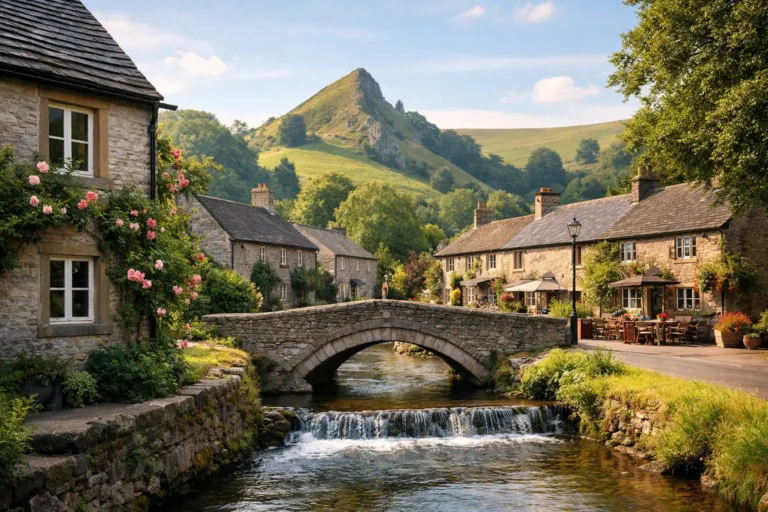
Spend the afternoon in Castleton. The village is compact enough to explore on foot, with independent places to eat, small shops and access to the dramatic limestone landscape around it. A short walk through Cave Dale offers a good introduction to the area, although the ground can be uneven and slippery after rain. Proper footwear is worthwhile even for a brief route.
If conditions are clear and you arrive early enough, walk up towards Mam Tor for sunset. Do not force it if cloud, wind or daylight make it a poor choice. The ridge is exposed, and an early supper in the village is a better outcome than navigating muddy paths in the dark. Book a table ahead at busy weekends, particularly if you have dietary requirements or are travelling as a family.
Day 2: Mam Tor and the Great Ridge
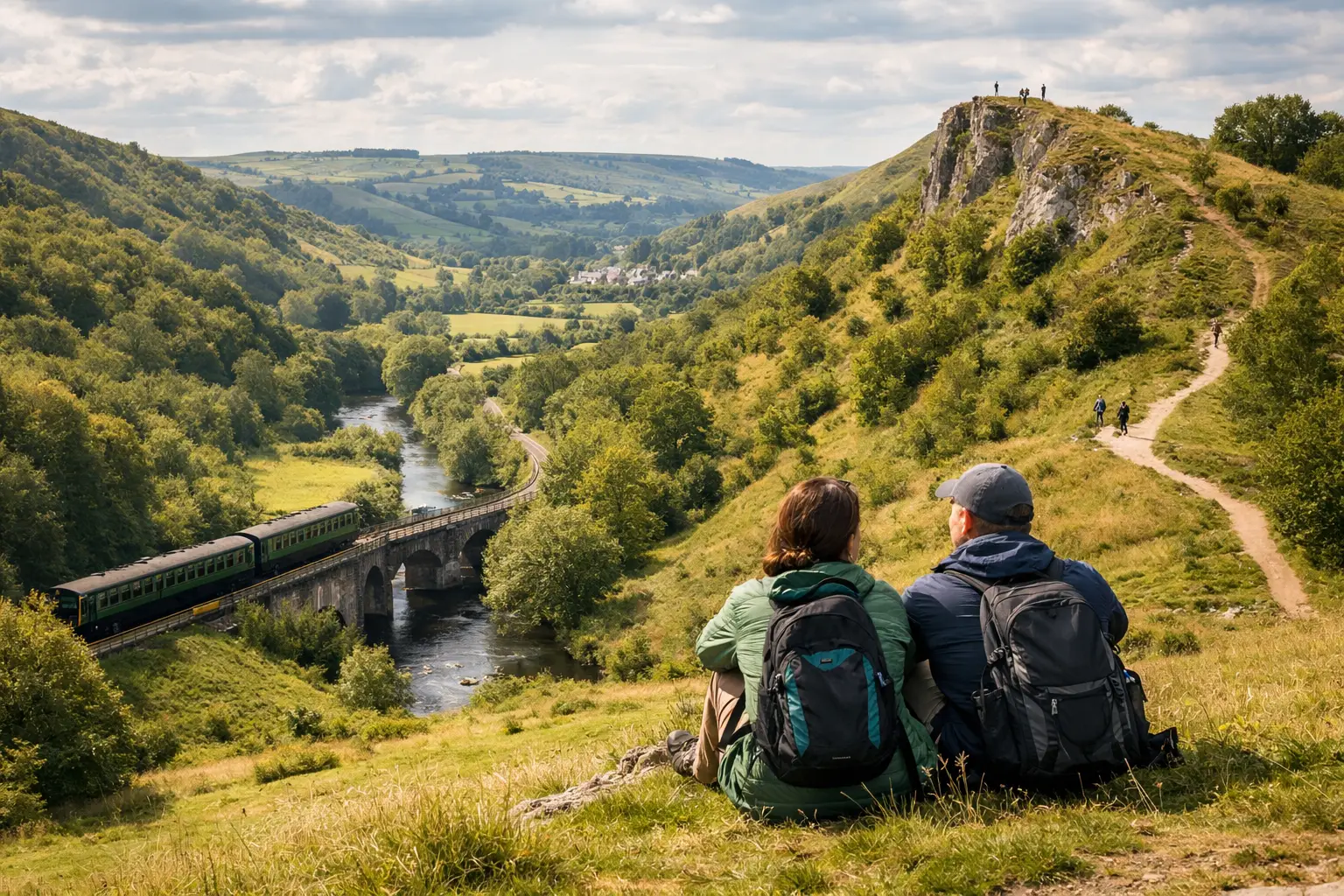
Make this your main walking day. From Castleton, the route via Mam Tor and the Great Ridge gives a classic Peak District experience without needing a car park or a shuttle. You can adjust the distance to suit your confidence, weather and return transport.
A manageable option is to climb from Castleton towards Mam Tor, follow the ridge in the direction of Hollins Cross, then return to the village. More experienced walkers may extend the route towards Lose Hill and finish near Hope, but this makes the day longer and more exposed. The right choice depends on daylight, wind speed, ground conditions and the least confident person in your group.
Take enough water, but avoid buying several single-use bottles. Fill up at your accommodation before setting off and carry a spare bottle if it is warm. Pack lunch from a local shop or bring reusable containers from home. There are few places to buy supplies once you are on the hill, and keeping wrappers in your daypack protects the paths and grazing land.
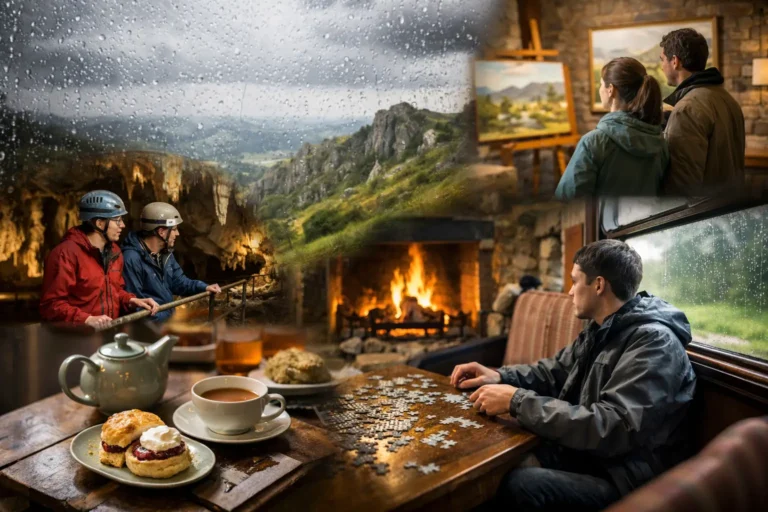
In the afternoon, return to Castleton for a slower finish. The village can be busy in high season, so a pre-booked cave visit may suit families or anyone who wants a guaranteed indoor activity if the weather changes. If you would rather avoid the crowds, use the time for a quieter valley walk or sit down for an early meal.
Day 3: Edale before the journey home
After breakfast, use the train to reach Edale or walk there only if you have allocated enough time and are comfortable with the route. Edale is a practical final stop because the station makes it easy to finish a walk and continue home without retracing your steps by car.
For a relaxed morning, explore the village and choose a short out-and-back walk in the valley. For a more active finish, walk a section of the Pennine Way, then return to Edale station. Do not feel obliged to tackle a long route just because you are near a famous trail. A two-day break works best when the last morning remains flexible enough for weather, tired legs and train times.
Allow time to collect luggage if it is stored at your accommodation, then take the train back via Sheffield or Manchester. Keeping the final walk close to a station reduces the risk of a delayed bus affecting your onward journey.
What to book before you travel
A car-free break needs a little more preparation than driving to a village and deciding later where to stop. The key bookings are your rail tickets, accommodation and the first or last-mile transfer between station and stay if you are not within walking distance.
When comparing places to stay, do not just look at the nightly rate. Check the walking distance to the station, whether breakfast is available, where you can refill water, and whether there is somewhere nearby for an evening meal. A cheaper room far from a station can create taxi costs and limit your choices after dark.
Weekend rail services can be affected by engineering work, so look at your route again a few days before departure. Save tickets and accommodation details offline on your phone, but also write down the property address and key transport times. Signal can be patchy in valleys, and a printed note weighs almost nothing.
Common mistakes to avoid
The most common mistake is treating the Peak District like a compact town. Distances on a map can look short, but hills, gates, mud and poor visibility slow progress. Plan one main walk a day rather than trying to fit in several villages, a cave visit and a long ridge route.
Another is relying on one infrequent bus without a backup. If a particular service is essential, plan to arrive early and know the walking or taxi alternative. It is also sensible to carry a small power bank, as navigation and transport apps use battery quickly in cold weather.
Finally, do not assume every path is suitable for prams, wheelchairs or limited mobility. Some accessible options exist around villages and stations, but surfaces vary considerably. Check route details before booking a stay, and choose a base that supports the mobility needs of everyone travelling.
A good car-free Peak District break is not about seeing every landmark. Choose a rail-connected base, leave room for the weather to change your plans, and let the journey between village, station and footpath be part of the holiday rather than a problem to solve.
Frequently Asked Questions
Additional Resources

The Essential Cruise & Travel Shop

Disclaimer
Stafford Affiliates Travel provides this guide for informational purposes and is not a travel agency. The information contained in this guide is for general guidance only. While we do our best to ensure the information is up-to-date and correct, we make no representations or warranties of any kind about its completeness or accuracy.
Cruise line policies, itineraries, and loyalty programs are subject to change without notice. We strongly recommend that you verify all details directly with your cruise line or a certified travel agent before making any bookings or financial commitments.
We cannot be held liable for any financial loss due to the reader’s failure to follow the above advice.
Affiliate Disclosure
Many of the links are affiliate links, Stafford Affiliates Travel may receive a commission from qualifying clicks, orders or bookings at no additional cost to you. This income helps support our efforts to provide and improve our site and turn it into a one stop resource for travellers with a bias towards cruising.